Free NewsletterPro Login

Warning: Undefined variable $stocks in /var/www/briefs.co/htdocs/wp-content/plugins/oxygen/component-framework/components/classes/code-block.class.php(133) : eval()'d code on line 448

Warning: foreach() argument must be of type array|object, null given in /var/www/briefs.co/htdocs/wp-content/plugins/oxygen/component-framework/components/classes/code-block.class.php(133) : eval()'d code on line 448

Warning: Undefined variable $funds in /var/www/briefs.co/htdocs/wp-content/plugins/oxygen/component-framework/components/classes/code-block.class.php(133) : eval()'d code on line 472

Warning: foreach() argument must be of type array|object, null given in /var/www/briefs.co/htdocs/wp-content/plugins/oxygen/component-framework/components/classes/code-block.class.php(133) : eval()'d code on line 472
/* the link was here */
×
Free investor livestream — Nov 17

How To Use ChatGPT & Claude To Research Stocks Like A Pro

01
The prompt we use to break down any stock
02
How to fact-check what AI tells you
03
How to compare two stocks in minutes

Energy chiefs tell firms to plan for permanent disruption

Published Nov 3, 2026
Share:
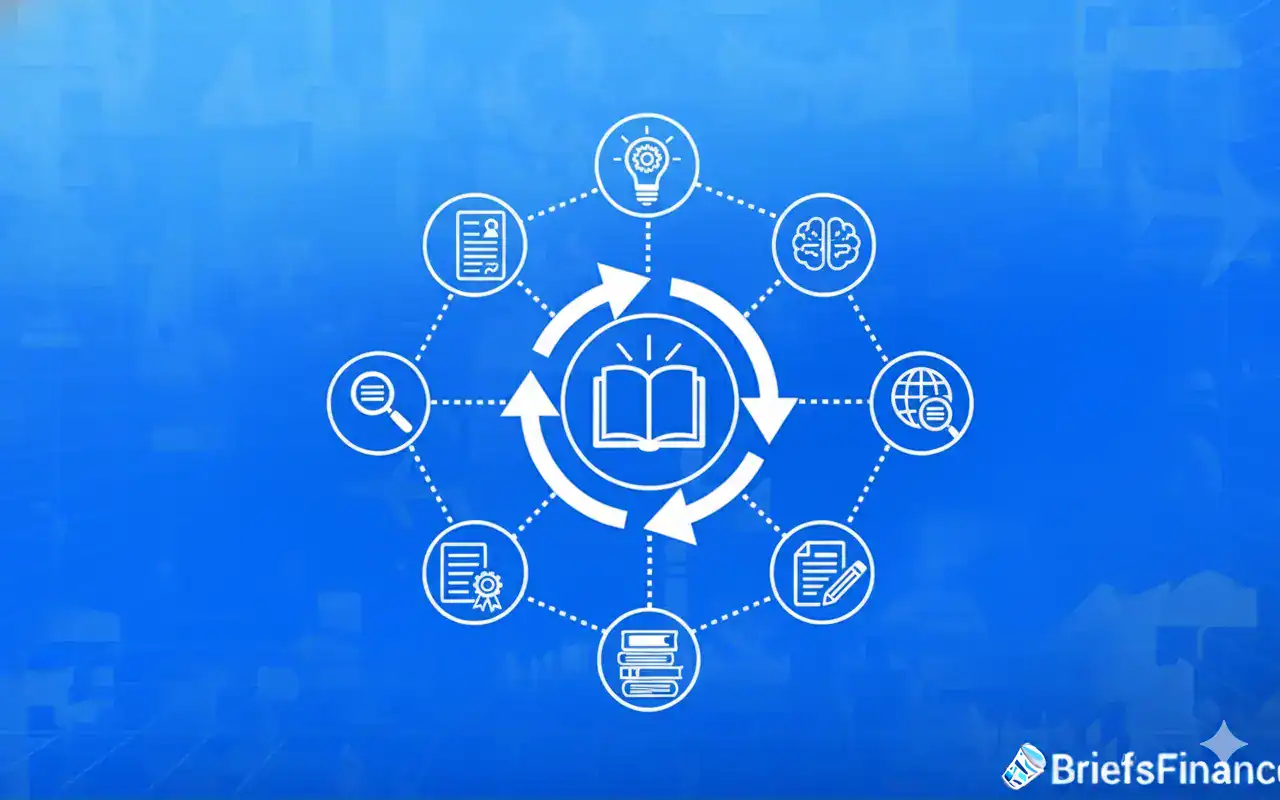
A central open book icon is surrounded by eight circular icons representing knowledge, ideas, documents, research, and global connectivity—signifying how investors seek guidance during economic uncertainty—all connected by arrows on a blue background.
Summary:
  • At Adipec in Abu Dhabi, executives said disruption is now a constant and called for backup capacity, diversified routes, and security-first spending.
  • Saipem CEO Alessandro Puliti said "Disruption is no more the black swan," adding that logistics headaches have become a top concern in the C-suite.
  • Baker Hughes CEO Lorenzo Simonelli and Adnoc gas chief Fatema Al Nuaimi urged bigger, more flexible systems, extra inventories, and investment that bakes in adaptability.

Big picture from Adipec

At the Middle East's largest industry gathering in Abu Dhabi, energy leaders said companies should assume turmoil is part of the operating model. Their shortlist: hold backup capacity, use multiple supply pathways, and tilt investment toward security of supply.

Alessandro Puliti of Saipem put a point on it: "Disruption is no more the black swan." He said logistics snags that rarely reached a CEO's desk are now the main worry.

Where the pressure is coming from

Executives tied the recent strain to the US-Iran war, describing vessels stuck outside ports and the scramble to find alternative suppliers for critical equipment. They said the push to secure supply is increasingly driving energy infrastructure spending.

Baker Hughes chief Lorenzo Simonelli argued the fix is a bigger, broader energy system, including more inventories to cushion future shocks. Looking to 2027 and 2028, he foresees additional hurdles - among them rising energy demand from artificial intelligence - and noted the system must toughen up, cover every energy source, and lean more on regional resources. "We are going to need not just in time, but just in case," he said.

The tools investors use to stay resilient through disruption are evolving for the better. We're hosting our first ever investor livestream on 11/17 to show you how to use ChatGPT and Claude to invest like a pro, hosted by Briefs Finance CEO Jaspreet Singh. Save your seat.

He also urged companies and governments to stay focused after the immediate strain fades. "Let's not forget, and let's use the crisis," he said.

How companies are responding

According to Simonelli, Baker Hughes runs ongoing checks for vulnerabilities in its supply chain and secures backup vendors to sidestep bottlenecks. It has also delegated greater decision-making power to regional groups and has recognized staff who took action amid the upheaval. "Sometimes the worst thing you can do is not make a decision," he said.

Fatema Al Nuaimi, who leads Adnoc's natural gas division, said scenario planning by itself will not cover every crisis and stressed the need to invest. "The future is for those who are not just predicting every possible scenario," she said. "It's for those who build within their system enough flexibility that enables them to mitigate whatever situations they are faced with."

Why it matters for your portfolio

Follow the capex shift. Executives signaled more spending on security of supply, added inventories, and a larger, more resilient system that uses all energy sources and leans more on regional resources. With leaders highlighting continued challenges into 2027 and 2028, including AI-driven demand, watch for companies that disclose ongoing supply chain testing, alternative sourcing, and clear decision frameworks around disruption readiness.

Learning to use smarter tools can give investors a clearer view and steadier hands. On 11/17, our CEO Jaspreet Singh goes live for our first ever investor livestream on how to use ChatGPT and Claude to invest like a pro. Register to join him.

Disclosure

Recent News

1 2 3 … 117

Get Market Briefs delivered to your inbox every morning for free!

No fluff. No noise. No politics. Just finance news you can read in 5 minutes.

Blogs

November 2, 2026
Credit Utilization: How Paying Down Cards Can Help Your Score
  • Credit utilization is your card balances divided by your credit limits, checked overall and card by card.
  • Lower is generally better, and Experian says the effect becomes more noticeable around 30%.
  • Paying down balances and keeping new charges off your cards are the main ways to lower it.
Read More
November 2, 2026
How to Calculate Your Net Worth, With a Worked Example
  • Net worth is what you own minus what you owe, and it can be negative early on.
  • Use today's value for your assets and today's payoff balances for your debts.
  • Recalculate on the same date each quarter or year, since the trend matters more than the starting number.
Read More
November 2, 2026
How to Get Out of Debt on a Low Income, Step by Step
  • List every debt with its balance, APR, minimum and due date, then pause new charges.
  • An extra $50 a month on a $3,000 card at 22% cuts the payoff from about 44 months to about 26.
  • If nothing is left over, call your lenders and a nonprofit credit counselor, and avoid anyone who charges fees before settling debt.
Read More
November 2, 2026
How to Save Money on a Low Income, With a Budget Example
  • Saving 10% of a $2,000 paycheck is $200 a month, which reaches a first $2,000 in 10 months.
  • Set the transfer for payday and keep the money in a separate savings account.
  • Lower your biggest bills, cancel unused subscriptions and check programs like Lifeline and the EITC.
Read More
November 2, 2026
How to Budget With an Irregular Income, Even in Lean Months
  • Build your budget on your lowest recent month, not your average, so slow months don't leave you short.
  • Pay yourself a fixed salary from a holding account, and keep extra from good months as a cushion.
  • If no one withholds tax from your pay, set tax money aside every month.
Read More
November 2, 2026
How to Track Your Spending in 15 Minutes a Week
  • Start with last month's bank and card statements, receipts and any cash purchases.
  • Sort every purchase into a few groups that match your budget, like groceries and eating out.
  • Spend about 15 minutes each week adding purchases, checking each group and picking one change.
Read More
November 2, 2026
Should You Invest or Pay Off Debt? How to Decide
  • Card interest is a cost you can see ahead of time, while investing returns can go up or down.
  • A $3,000 card balance at 24% costs about $60 in interest in the first month.
  • Check whether you have a cushion, how high your rate is, whether your employer offers a match and how you'd handle a market drop.
Read More
November 2, 2026
Pay Yourself First: What It Means and How to Automate It
  • Paying yourself first means moving money to savings and investing on payday, before bills and spending.
  • The 75/15/10 split puts at least 10% toward savings and at least 15% toward investing.
  • Start smaller if money is tight, and automate the transfers so you only make the decision once.
Read More
November 2, 2026
What Is a Good Credit Score? Ranges and What Moves Yours
  • On the FICO scale, a good credit score is 670 to 739, and very good starts at 740.
  • Payment history (35%) and amounts owed (30%) are the two biggest parts of your score.
  • Paying every bill on time and paying down card balances are the two best places to start.
Read More
November 2, 2026
How to Lower Your Credit Card Interest Rate, With a Call Script
  • Before you call, have your APR, balance, card history, on-time record and any lower-rate offers ready.
  • Use the script to ask for a lower rate, then ask for a temporary cut or a hardship program if the answer is no.
  • On a $5,000 balance paid at $200 a month, dropping from 26.99% to 23.99% saves about $430 in interest.
Read More
1 2 3 … 31
Share via
Copy link