How Oman quietly pulled ahead
Oman, a 5.4 million person Gulf monarchy, is turning regional turmoil into an opening. The IMF expects real growth of 4.1% this year even as the rest of the GCC contracts. Investors took note as the benchmark index climbed about 24% this year while major indexes in the UAE and Saudi Arabia slipped.
Geography is doing heavy lifting. Much of Oman's port capacity sits beyond the Strait of Hormuz, giving direct access to the Gulf of Oman and the Arabian Sea. As Jihad Azour, the IMF's Middle East director, said, "For this shock in particular, geography, existing infrastructure in ports that are outside allowed Oman to be less affected, but also to benefit from this access." The country has largely escaped Iranian attacks, though drones struck storage tanks for fuel at the Port of Salalah in March.
Diplomacy helped, too. Muscat has discussed how Hormuz should be managed with Iran, and in recent days China's President Xi Jinping hosted Sultan Haitham bin Tariq in Beijing, underscoring Oman's rising geopolitical profile.
Building a longer runway
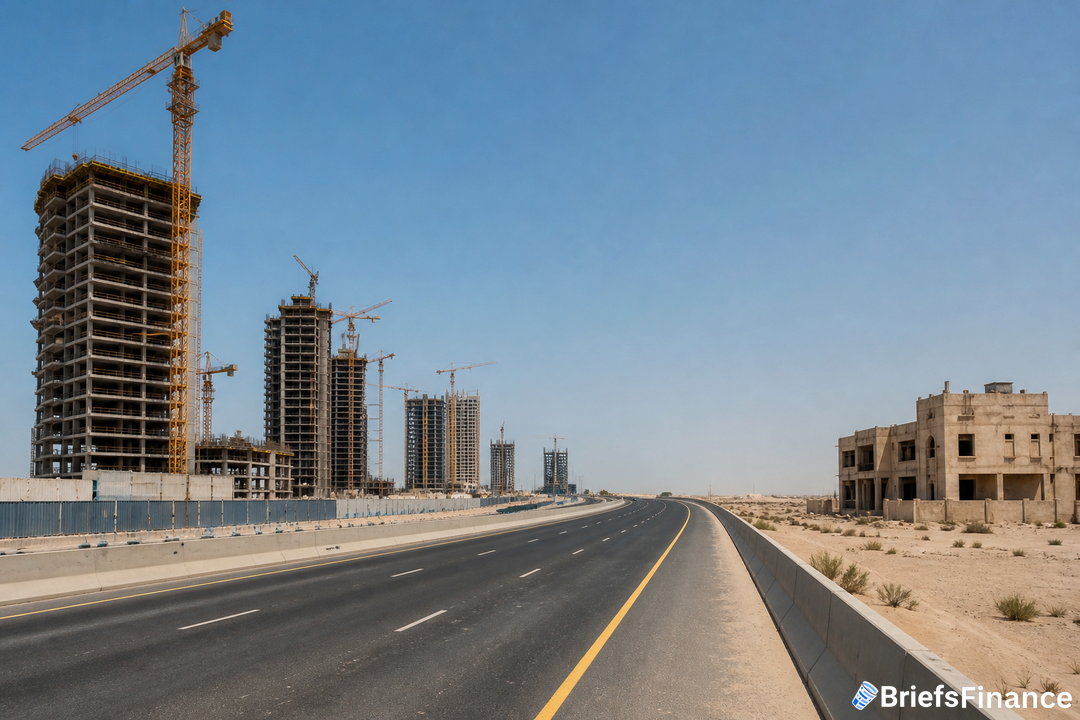
Muscat is trying to lock in gains. It is courting investors for port assets and promoting Duqm, Sohar and Salalah as strategic anchors. According to Sheikh Humaid Al Maani, who leads the Diplomatic Academy within the Ministry of Foreign Affairs, those ports are strengthening the country's standing. He added that the combination of the ports and outreach to international shipping players creates benefits for the domestic economy and the "region and the world," pointing to the Muscat Maritime Resilience Forum in October, organized by Asyad Group with the transport and foreign ministries.
Transport Minister Saeed bin Hamoud Al Maawali said the government is in talks to sell stakes in important terminals to international companies and Gulf investors. Al Maawali said certain companies active in the Gulf have already chosen to base export capacity in Oman, focused particularly on India and Africa. "So that will bring some long term benefit," he said. Deals are landing: in June, France's CMA CGM and Asyad inked a $400 million deal to build and run a logistics terminal at Sohar Port.
Finance is next. Muscat rolled out a blueprint for an international financial center, targeting company registrations later this year and full operations in 2027. Privatizations have helped propel Oman past London in IPO volumes in 2024, and FTSE Russell has placed the exchange on its watch list for a possible move up to emerging-market status.
Tech is another push. Muscat is poised to finalize an agreement with the UK's Yamna to build an AI facility of significant scale in Salalah, with the first stage projected to exceed £1 billion (about $1.3 billion). Oman still trails Saudi Arabia and the UAE on data center capacity and deals with global AI firms, but the war exposed vulnerabilities elsewhere that could make Oman more attractive.
Smart investors look for new tools that can give them a thoughtful edge. We're hosting our first ever investor livestream on 11/17 to show you how to use ChatGPT and Claude to invest like a pro, hosted by Briefs Finance CEO Jaspreet Singh. Save your seat.
Tourism is still adding high-end options even as the country leans on its natural landscapes and varied climates. Nikki Beach plans to debut in Muscat next year.
The political and security tightrope
Oman is threading a careful line. Its talks with Iran over managing Hormuz drew a sharp response from US President Donald Trump, who said earlier this year, "Oman will behave just like everybody else," and warned that otherwise "we'll have to blow them up." Trump has frequently claimed he would settle the Iran dispute one way or another, and at points cautioned that strikes could resume after the midterms.
Unlike elsewhere in the Gulf Arab region, the US does not have troops or permanent bases in Oman. The two countries still cooperate militarily, and defense agreements allow American forces to access Omani facilities for some operations. The country's role has also drawn online pushback, with several Saudi accounts on X voicing frustrations during the conflict.
What this means for your portfolio
Oman's comeback sets the backdrop. Only a few years back, after all three big rating agencies pushed its debt into junk, concerns mounted that it might require support from wealthier neighbors. A mix of fiscal reforms, rising oil prices and asset sales through privatization cut debt and brought back investment-grade ratings.
The 2024 listing of OQ Exploration & Production enabled the government to raise a record $2 billion. The sovereign wealth fund stands at $60 billion and is less prolific than those of neighbors, but asset sales are adding deal flow. According to a company spokesperson, OQ Exploration & Production has named a panel of banks to scout international acquisitions chiefly in the Middle East, East Africa and North Africa. The government is also exploring stake sales in strategic terminals.
There are limits. Last year, Oman unveiled plans to introduce an income tax - making it the first Gulf state to take that step to diversify revenues beyond oil - a decision that could hinder expatriate recruitment compared with tax-free competitors. Steffen Hertog of the London School of Economics said Oman offers some margin of safety for heavy industry but cautioned that logistics ambitions face constraints. "Oman's Southern ports are far from Iran and Hormuz so could work as stops along longer routes between Asia, Africa and Europe," he said. "But they are not connected to the rest of the GCC and will struggle to become global hubs given the scale this would require."
The bottom line: "Oman's economy is likely to outperform its GCC peers in the short term while the Iran conflict remains unresolved, the flow of shipping through the Strait of Hormuz remains impaired and the risk of further escalation persists," said Farouk Soussa, Goldman Sachs's economist for the Middle East and North Africa. Development of the non-oil economy will be gradual, and the advantage may diminish when the war concludes. For portfolios with Gulf exposure, Oman is a live case study in how geography, policy and timing can lift an index and open deal pipelines, and how quickly those supports can shift.
Learning how to use emerging tech can quietly improve long term investment decisions. On 11/17, our CEO Jaspreet Singh goes live for our first ever investor livestream on how to use ChatGPT and Claude to invest like a pro. Register to join him.