A Record Quarter With a Warning
Apple reported its June-quarter results on July 30, saying the period was its "strongest June quarter ever."
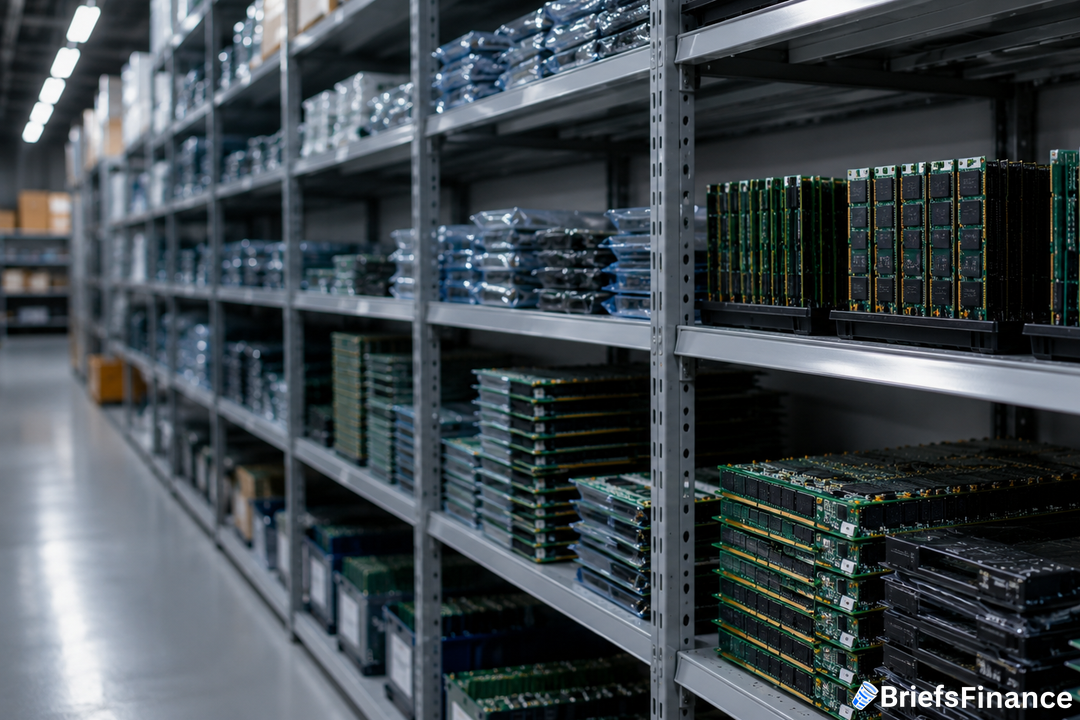
The catch: Apple has been accumulating inventory as it braces for supply constraints. That move runs counter to the minimal-inventory discipline Cook has championed for years.
Cook has long emphasized minimizing inventory. Building reserves now is a clear concession to the AI-fueled memory crunch.
Outgoing CEO Tim Cook told investors that demand stays high but the supply chain has little flexibility. "We continue to expect high levels of demand. However, with less flexibility in supply chain, we expect the impact from the supply constraints to increase significantly sequentially," Cook said on Apple's quarterly earnings call.
The Memory Crunch Behind the Numbers
The problem traces back to the AI boom. The generative AI surge is creating heavy demand for components, and Apple expects the memory drought nicknamed RAMageddon to worsen. Memory prices have climbed so fast that Cook described the situation as "a hundred-year flood [on] memory pricing."
Get the market news that matters in a five-minute read with Market Briefs, our free daily newsletter
That matters for Apple in two ways. First, Apple's greatest headache is securing advanced memory for its custom A-Series and M-Series chips, the brains of iPhones and Macs. Second, the supply chain has almost no slack to fill the gap.
"We're seeing some very significant constraints currently with limited flexibility in the supply chain to remedy it," Cook said. The inventory build-up is a direct response to the memory market. Locking in supply now can help Apple avoid paying even higher prices later.
Apple is not the only company affected. Meta, Samsung, Microsoft, and Sony have also increased hardware prices. Apple raised Mac and iPad prices last month, a move Cook said the company made "reluctantly."
The shortage is now broad enough that Apple is changing how it buys memory. Instead of ordering only as needed, Apple is trying to secure supply ahead of expected demand. With Apple, Meta, Samsung, Microsoft, and Sony all chasing advanced memory chips, suppliers have little spare capacity to absorb extra orders.
A Slowdown, and a New CEO in September
For the September quarter, Apple expects revenue growth of 9% to 11% year over year. Recent quarters have brought roughly 16% year-over-year growth.
John Ternus, currently Senior VP of Hardware Engineering, will take over as CEO in September, possibly during a rough patch. Cook said, "We're going to be scrambling on the supply side, essentially."
What It Means for Your Money
This report is not only about Apple. The AI boom has pushed up component demand, leaving Apple and other hardware companies with limited supplies. Those costs are showing up in prices that consumers pay.
For customers, the near-term outlook means higher prices and possible shortages. Apple's guidance still points to solid growth, but the company is clearly preparing for a period when it may not be able to build enough devices to match demand. And if memory prices keep climbing, further price increases could follow.
Join Market Briefs, our free daily newsletter, for a quick daily rundown of the markets