What happened and where
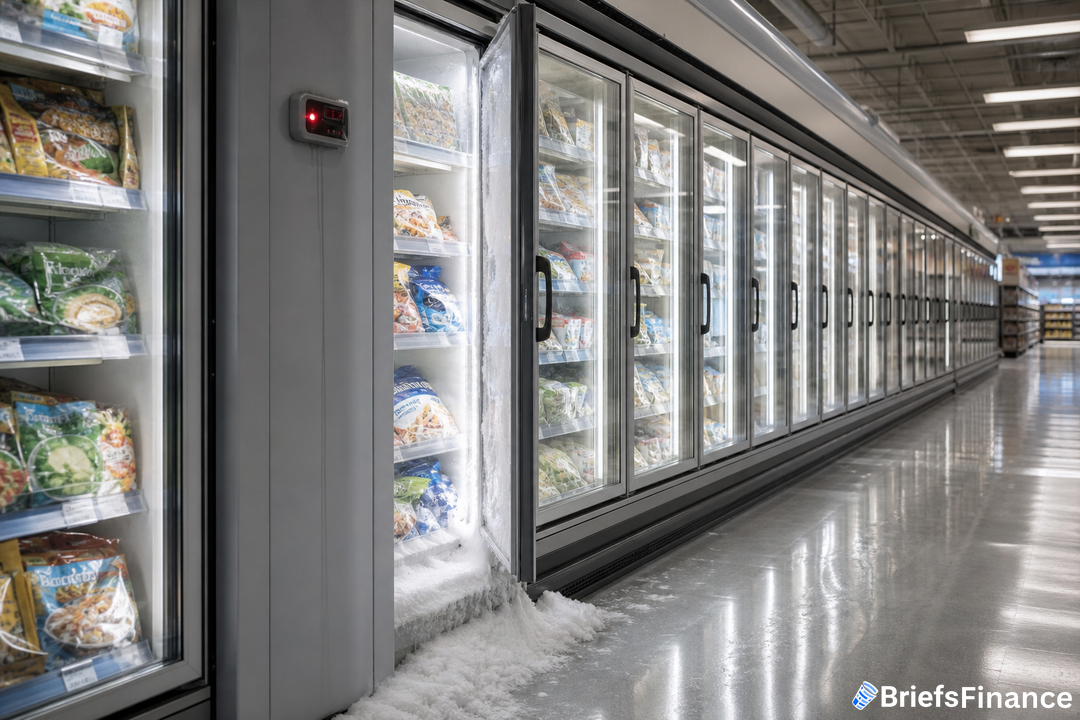
On Monday, supermarket refrigeration systems from Sweden to Belgium were tampered with, sending temperatures higher and forcing emergency responses. Some freezers were pushed to 50 degrees Celsius.
Ahold Delhaize and Colruyt said a nighttime IT issue struck cooling systems at dozens of outlets spread across Belgium and Luxembourg. Colruyt reported that five outlets saw their refrigeration systems targeted. Carrefour said 15 of its 700 Belgian stores were impacted.
In Sweden, ICA and Coop reported similar problems. ICA said in an email that a limited number of stores saw their refrigeration and freezer systems affected overnight. At an ICA franchise in Stockholm, sales manager Engla Ingwall said, "There has been a cyberattack and all our freezers reached 50 degrees (Celsius)," noting the intrusion happened at 2 a.m. (0100 GMT) but only came to light hours later. "Everything is destroyed." Speaking to the Swedish newspaper Aftonbladet, Coop said six of its stores were hit; the company did not provide an immediate comment when asked.
An Estonian supermarket chain also saw temperatures set to 50 C, according to technology supplier Kitman Coldtech, which spoke to public broadcaster ERR. In Ireland, wholesaler Musgrave said a cyber incident affected refrigeration in 13 SuperValu stores, leading it to pull some chilled and frozen goods. "Our monitoring systems alerted us to the issue, and we took immediate action," the company said. "Our investigation is ongoing." A Reuters photo from Linkebeek, near Brussels, showed empty refrigerated shelves at a Delhaize Shop & Go after overnight cooling failures at a number of the chain's stores in Belgium and Luxembourg on November 2, 2026.
How operators and experts described the attack
Sabcobel chief executive Stephan Moelans, whose Belgian refrigeration company operates Delhaize's systems, said in an interview with the Belga news agency it was a cyberattack that flipped evaporators into defrost mode. "I've been awake since 2 a.m. We've been working all night and morning to disconnect the affected units from the network," he said. His office declined further comment.
According to Tom Hegel, a researcher with cybersecurity company SentinelOne, these operations typically fall into extortion, political, or state-backed buckets, and that the lack of payment demands in recent supermarket cases points to sabotage. "Retail is an easy target because retail chains run enormous estates of refrigeration controllers, building management systems, door access panels and point-of-sale gear," he said. "Grocery margins are thin and stock perishes within hours, so any disruption hurts quickly and in public."
Investors who adapt to new tools often find clearer signals and steadier confidence. We're hosting our first ever investor livestream on 11/17 to show you how to use ChatGPT and Claude to invest like a pro, hosted by Briefs Finance CEO Jaspreet Singh. Save your seat.
The backdrop and who is probing
The incidents follow an October case in France in which police said hackers took over cooling units at hundreds of supermarkets, leading to fires and food losses. Ahold also notified police of a cybersecurity incident last month. No one has claimed responsibility for the latest disruptions or the October events in France. Reuters could not determine who carried out Monday's attacks or whether they were connected to those earlier.
Sweden's national cybersecurity center said it is handling several incidents affecting grocery stores and would not speculate on attribution. "We have in recent weeks... identified we have quite a lot of exposed operational technology devices in Sweden that we have been clear about the necessity to update or patch," said John Billow, who heads the center. Following Russia's 2022 invasion of Ukraine, European officials have raised broader worries about hybrid tactics; Moscow has repeatedly denied any role in sabotage or hybrid warfare.
Local damage and the investor angle
The losses were immediate for some operators. Luc De Laet, who founded the Belgian butcher chain De Laet & Van Haver, said he arrived at his Hove store, south of Antwerp, after a 3:30 a.m. alert to find fridges as high as 18 C. He estimated roughly €15,000 ($16,764) of meat was spoiled. "It's very scary. They are hacking the system that is doing the registration of the temperature, and they can program it at a distance," he said, adding he had contacted police and believes the intent is to destabilize European economies.
Why it matters: Cold-chain uptime is core infrastructure for grocers with thin margins and highly perishable inventory. Forced product removals, equipment shutdowns, and incident response raise operating costs quickly, and repeat hits spotlight security spend and resilience as a line item to watch across European food retail and their suppliers.
Smart use of evolving technology can give investors a thoughtful edge in markets. On 11/17, our CEO Jaspreet Singh goes live for our first ever investor livestream on how to use ChatGPT and Claude to invest like a pro. Register to join him.