Inside the courtroom, and the tab running past $100 million
A packed London courtroom heard Mercuria Energy Group lay out its case as a group of Norwegian executives from Oslo-listed Hunter Group ASA watched from the back. Hunter says Mercuria has been paying less than agreed, breaching the contract and running up arrears.
"As of now, it's more than $100 million total accrued charter income, losses and interest," Hunter Chairman Morten Astrup said in an interview with Bloomberg News in London. A Mercuria spokesperson declined to comment.
Hunter's unpaid bill underscores the web of contracts that could be touched by the ruling. The quarrel stems from a charter tied to TD3C, the main indicator for very large crude carrier rates, where billions of dollars in physical and derivatives trades reference its levels.
The benchmark fight and a moving legal target
The core question is whether the Baltic Exchange was right to keep printing rates for voyages that start inside the Persian Gulf and head to China after the Iran war began. Mercuria argues the exchange should have paused TD3C from early March until July 3, when crude flows through the Strait of Hormuz had nearly stalled as Tehran targeted vessels in the choke point linking the Gulf to global waters.
The Baltic Exchange says brokers could still gauge freight risk using their assessments even after Hormuz shipments were severely hit in the period that followed the outbreak of the war. TD3C is built from broker views of what it would cost to move a VLCC from Saudi Arabia's Ras Tanura to China, and it anchors both shipping contracts and a large stack of derivatives.
Mercuria is asking the court to find the Baltic Exchange breached its obligations and has repeatedly shifted what remedy it wants. This week, it said it is no longer pushing for the index to be suspended or restated after the fact and now seeks only a declaration that TD3C should not have been published from March to July. Earlier iterations asked the court to deem values since March to have no effect and to suspend the index retroactively.
Legal disputes remind investors that clarity of data and tools matters more than ever. We're hosting our first ever investor livestream on 11/17 to show you how to use ChatGPT and Claude to invest like a pro, hosted by Briefs Finance CEO Jaspreet Singh. Save your seat.
Mercuria, which also accused the exchange of leaning on brokers to submit assessments, has withdrawn a claim for losses. What those changes mean for the separate arbitration Hunter launched to recover what it says it is owed remains unclear.
The tanker, the trades and why Hunter's margin exploded
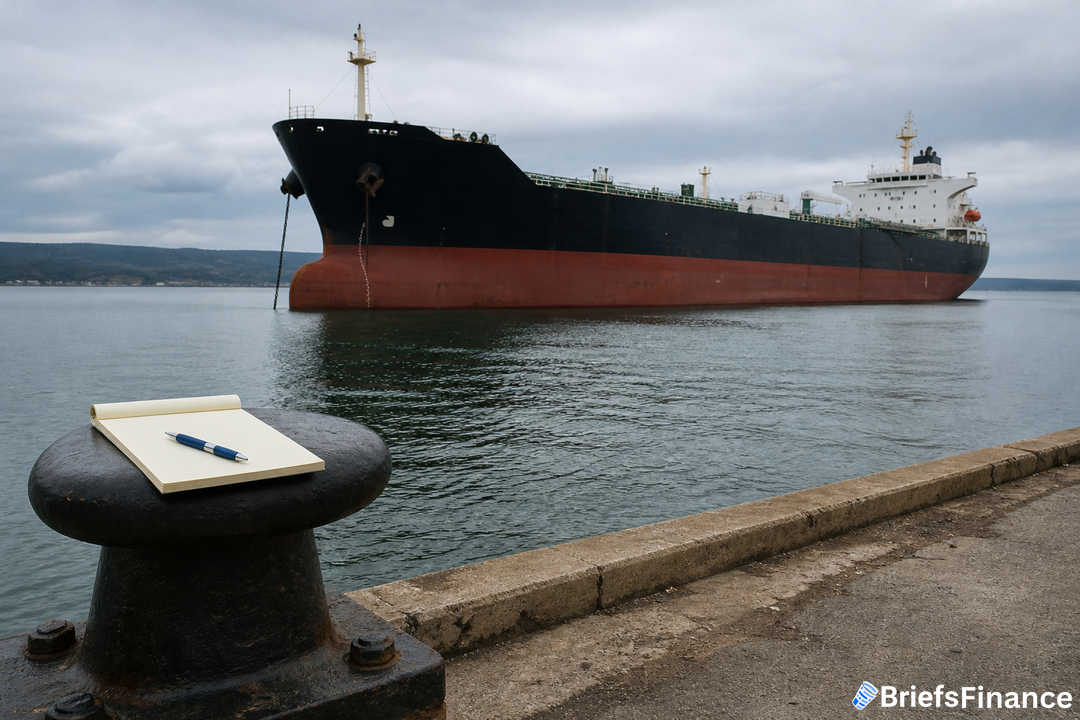
The vessel at the center is the 10-year-old DHT Puma. Mercuria obtained the ship via a time-charter agreement with DHT Holdings Inc. that runs until the first quarter of 2027. Court evidence shows Mercuria then let the ship to Hunter at a fixed $52,000 per day, while taking it back from Hunter on a floating deal tied to TD3C, which surged after the war broke out.
That structure supercharged Hunter's earnings as the benchmark spiked. In the second quarter, Hunter reported an average time charter margin of $401,172 a day, defined as the spread between its fixed daily hire and spot market pricing in the period. On Oct. 9, the company disclosed that an unnamed counterparty owed it $67.8 million at the close of September, an amount that likely grew as October rates rose. Meanwhile, crude supertanker hire costs jumped to record territory, well above $1 million a day, as cargoes were moved out of Hormuz despite rockets and drones.
The windfall showed up in Hunter's financials and stock. Second-quarter profit jumped 13 times year over year to $47 million. Hunter, which has shifted from owning ships to chartering them out, has seen its shares soar 882% this year, valuing it at roughly $255 million. According to Astrup, Mercuria later chartered the DHT Puma to Ga-Hyun Chung's Sinokor Group, a player that has been influential in shaping TD3C. Notably, Hunter has not named Mercuria in its exchange disclosures.
What it means for investors
Ships often get passed along chains of fixed and floating deals, with owners locking in steady revenue and traders flipping capacity if the numbers work. The legal outcome here could ripple across those chains, because it tests whether a key benchmark remained usable during a period when Hormuz traffic was close to frozen.
For your portfolio, that matters because benchmarks do not just set today's price - they set who owes whom across linked freight contracts and derivatives. However this ruling lands, it will be a signal for how courts treat index publication during market breakdowns and how invoices pegged to TD3C and similar measures get honored or disputed.
Learning to use smarter tools can give investors a calm, lasting advantage. On 11/17, our CEO Jaspreet Singh goes live for our first ever investor livestream on how to use ChatGPT and Claude to invest like a pro. Register to join him.