What the companies put on the table
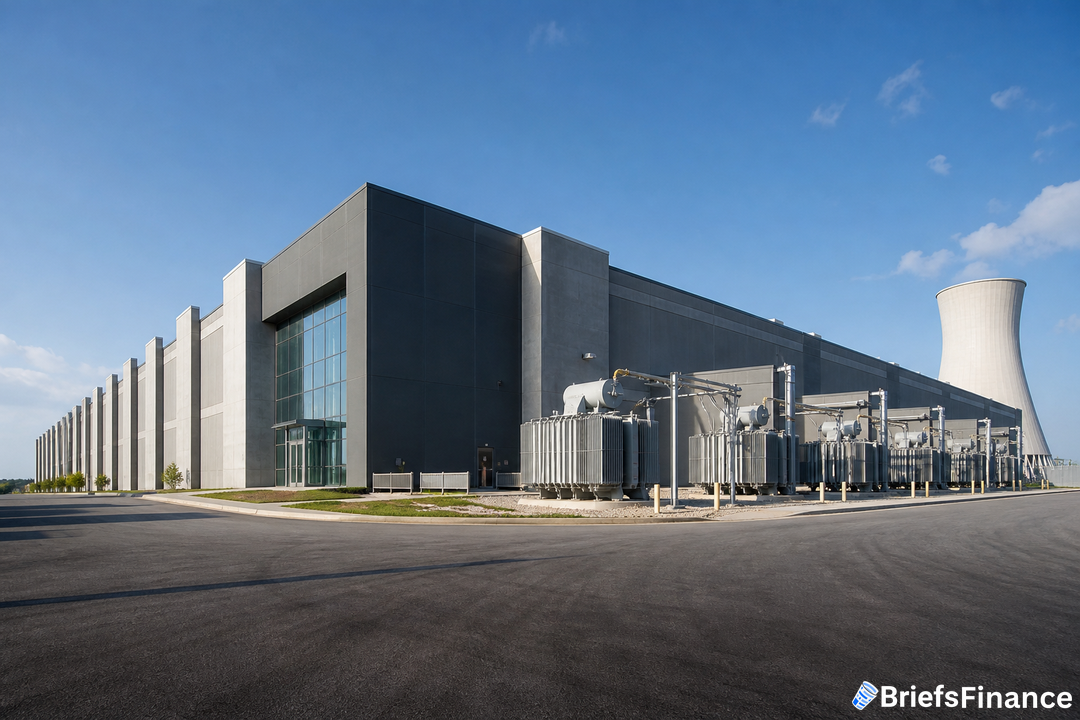
Four heavyweight developers said they will open up about key operational details in the places they build. Blackstone Inc.'s QTS, Vantage Data Centers, Compass Datacenters and Digital Realty committed to disclose electricity requirements, water consumption and who owns what to local communities. They are doing this under the banner of Infrastructure for America, where they are listed as founding members.
Separately, the companies told Bloomberg they do not require non-disclosure agreements from state and local governments, addressing a flashpoint that has angered residents seeking clarity. The firms concede the promises are voluntary, but executives involved say the goal is to set expectations and push out the worst habits.
Energy, water and the grid
The commitments include dropping an approach to cooling that can waste significant amounts of water. Evaporative cooling is especially problematic in dry regions, and more developers have been opting for "closed loop" systems that reuse water. The four companies also said they will foot the bill for the power grid upgrades that serve their own facilities and back rate structures designed to prevent their costs from landing on household electric bills. They added they will, when practical, join utility and regulator programs that ask big customers to curb power use during emergencies or heavy strain.
That stance dovetails with political pressure. The Trump administration has pushed data center operators to cover their own energy and infrastructure costs, while trying to balance AI expansion with voter frustration over rising electricity prices.
Politics, public heat and who is steering the effort
Scrutiny is rising fast. According to Data Center Watch, opposition campaigns halted or delayed at least 45 U.S. data center projects during the second quarter. Meanwhile, the facilities have become an election-year target, with calls in Congress to ban NDAs. Democratic U.S. Senators Elizabeth Warren, Chris Van Hollen and Richard Blumenthal have asked tech companies to explain their use of nondisclosure deals and tax incentives, a sign their party could tighten oversight if it gains control of Congress.
Voter sentiment has also been mapped. In a survey of about 800 U.S. voters commissioned by Infrastructure for America, some respondents said they would look more favorably on candidates who back data centers that pay the full cost of electricity, cut water use and noise, and create local jobs with competitive pay. The organization plans advertising to argue that data centers support employment and growth.
Understanding how companies manage resources can give investors a clearer long term perspective. We're hosting our first ever investor livestream on 11/17 to show you how to use ChatGPT and Claude to invest like a pro, hosted by Briefs Finance CEO Jaspreet Singh. Save your seat.
"The questions around data centers are valid," said Dana Adams, Vantage's president of North America. "We as an industry need to address them, and in many cases have been addressing them for many years."
FTI Consulting, which counts ExxonMobil and Chevron Corp among past clients, is advising Infrastructure for America. Leading the effort are Steve Everley, an FTI senior managing director - he previously advised Energy in Depth, the public relations program of the Independent Petroleum Association of America - and Erin McPike, who leads FTI's Americas telecom, media and technology practice.
The founding members come with heavyweight backers tied to the AI build-out. Silver Lake invests in Vantage and Brookfield Asset Management backs Compass. Blackstone bought QTS in 2021, placing it at the center of the firm's roughly $200 billion data center platform. Digital Realty trades publicly with a market value north of $66 billion.
The investor take
Why this matters: the industry is trying to defuse local and political pushback by standardizing disclosures and paying more of its own way on energy and infrastructure. The bottom line: opposition has already disrupted dozens of projects, and the firms are signaling cost sharing and resource stewardship to keep construction moving - but the measures are voluntary. For your portfolio, watch whether these pledges become common practice and if regulators codify them, because that will shape timelines, capital spending and power pricing risk across data center names and their financiers.
Paying attention to operational transparency helps investors make more informed, confident decisions. On 11/17, our CEO Jaspreet Singh goes live for our first ever investor livestream on how to use ChatGPT and Claude to invest like a pro. Register to join him.