Free NewsletterPro Login

Warning: Undefined variable $stocks in /var/www/briefs.co/htdocs/wp-content/plugins/oxygen/component-framework/components/classes/code-block.class.php(133) : eval()'d code on line 448

Warning: foreach() argument must be of type array|object, null given in /var/www/briefs.co/htdocs/wp-content/plugins/oxygen/component-framework/components/classes/code-block.class.php(133) : eval()'d code on line 448

Warning: Undefined variable $funds in /var/www/briefs.co/htdocs/wp-content/plugins/oxygen/component-framework/components/classes/code-block.class.php(133) : eval()'d code on line 472

Warning: foreach() argument must be of type array|object, null given in /var/www/briefs.co/htdocs/wp-content/plugins/oxygen/component-framework/components/classes/code-block.class.php(133) : eval()'d code on line 472
/* the link was here */
×
Free investor livestream — Nov 17

How To Use ChatGPT & Claude To Research Stocks Like A Pro

01
The prompt we use to break down any stock
02
How to fact-check what AI tells you
03
How to compare two stocks in minutes

Binance Says Security Breach Hit $6.3 Billion of Client Assets

Published Oct 30, 2026
Share:
Summary:
  • Binance, the world's largest crypto exchange, said about 6.3 billion dollars of client assets were impacted, with around 3 billion dollars frozen on chain, a scale unmatched by any prior crypto breach.
  • The exchange began recovering assets and pledged to cover customer losses via its Secure Asset Fund for Users, created in 2018.
  • Withdrawals were paused as Binance overhauls security; the FBI is engaged and firms flagged potential North Korean links.

What happened

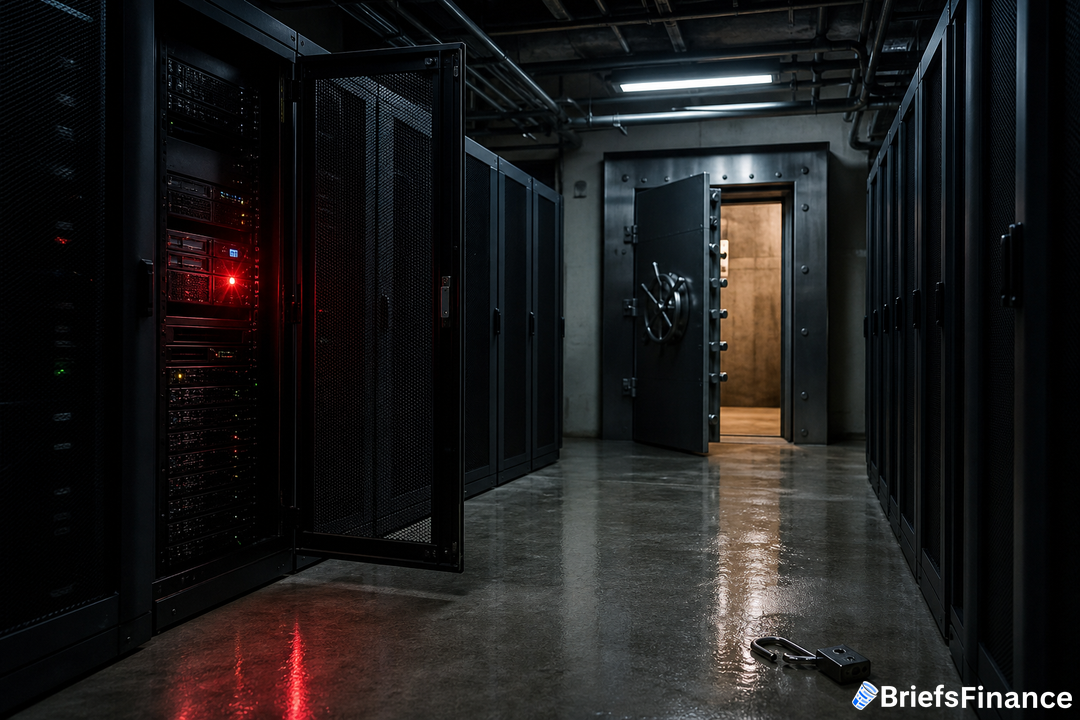
On Friday, Binance said a security incident affected roughly 6.3 billion dollars of client assets and about 3 billion dollars was frozen on chain, setting a new record as the biggest hack in the crypto industry. The company said it has begun clawing back assets linked to the breach and pledged to make customers whole using its Secure Asset Fund for Users, created in 2018 as an insurance-like pool for user protection if a hack occurs.

Early statements suggested the breach might have involved "a compromised DevOps engineer's laptop, which allowed an attacker to gain access to a service container and submit unauthorized withdrawal transactions." According to Co-CEO Richard Teng, the intrusion turned out to be more intricate than a lone engineer's permissions being abused. Binance added, "We have found no evidence of any wallet private key leak. We will share a detailed technical post-mortem once the investigation is complete and the facts are fully verified."

The response and who may be behind it

Binance temporarily halted withdrawals while it upgrades withdrawal security and revoked authorizations for affected addresses, according to Teng. Deposits remained unaffected, co-founder Yi He said, and the company said withdrawals could start coming back online in the next 48 hours. The exchange said it is collaborating with law enforcement and blockchain analytics/intelligence companies to track and recoup the stolen assets. The announcement came after multiple crypto companies had already moved to lock down funds linked to the breach.

On Friday, the FBI said it was aware of what happened and was coordinating with "relevant public and private partners to understand the scope of the activity, evaluate potential impacts, and coordinate appropriate investigative steps." Attribution remains uncertain. TRM Labs - an investigations outfit focused on blockchain intelligence and AI - said North Korean hackers were likely responsible, writing, "Several features of this attack match earlier North Korea-linked heists, including the Bybit hack and the KelpDAO hack in April 2026: small Tornado Cash withdrawals funding an operator wallet, staging that began well before the theft, and signatures obtained in advance then executed in one burst."

Chainalysis said this appears to "be the work of North Korean cybercrime group TraderTraitor. This group has repeatedly targeted the cryptocurrency industry, exchanges, DeFi protocols, and investors, to raise funds for the regime. We base our intelligence assessment on on-chain activity observed in the hours following the hack."

Smart investors look for new tools that help manage risk and uncover opportunities. We're hosting our first ever investor livestream on 11/17 to show you how to use ChatGPT and Claude to invest like a pro, hosted by Briefs Finance CEO Jaspreet Singh. Save your seat.

Several firms moved to block suspect assets. According to Circle CEO Jeremy Allaire on Thursday evening, the company had locked down in excess of 800 million worth of USD Coin tied to the incident. On X, Tether CEO Paolo Ardoino said the firm took action to freeze over 1.5 billion units of its stablecoin, potentially connected to a breach. Jack McDonald, Ripple's executive overseeing stablecoins, said the company was actively placing holds on impacted RLUSD funds, its U.S. dollar-backed stablecoin.

Markets and the regulatory angle

Bitcoin slid more than 4 percent to 77,187.60 dollars on Friday, with the hack pressuring crypto markets. Security exploits are not rare in crypto. In 2025, Bybit suffered roughly 1.5 billion dollars in losses due to a hack, and more recently Bitget incurred losses exceeding 350 million dollars due to a cyber theft. In recent years, malicious actors have siphoned off billions of dollars from decentralized exchanges.

"This week's breach proves our exact point in proposing regulations for crypto markets earlier this month," CFTC Chairman Michael Selig said Friday on CNBC. On Oct. 5, the U.S. derivatives regulator unveiled a framework that would, in practical terms, place crypto exchanges under federal oversight after Congress failed to pass legislation to regulate the asset. "The real issue here is that these are unregulated offshore exchanges, and they don't have the same sorts of safeguards that we have in our financial markets here in the United States. We want to offer a federal option to these exchanges to come and register with the CFTC, and they would be subject to the same sorts of cyber security safeguards that we have in our markets today," he said.

What this means for your portfolio

In plain English: a top venue paused withdrawals and prices moved lower, with Bitcoin at 77,187.60 dollars. Binance says deposits stayed open and it will use its Secure Asset Fund for Users while working with authorities and intelligence firms to trace and recover assets. The bottom line: continued operational risk at centralized platforms and fresh momentum for tighter exchange oversight.

Learning how technology reshapes markets can give investors a subtle but lasting advantage. On 11/17, our CEO Jaspreet Singh goes live for our first ever investor livestream on how to use ChatGPT and Claude to invest like a pro. Register to join him.

Disclosure

Recent News

1 2 3 … 114

Get Market Briefs delivered to your inbox every morning for free!

No fluff. No noise. No politics. Just finance news you can read in 5 minutes.

Blogs

October 23, 2026
Are We in a Recession? 5 Threats to the Economy and Where the Money Is Moving
  • The S&P 500 is up about 13% this year, but without AI it's in a bear market, with nearly 40% of its companies down more than 20% for four months or longer.
  • Jackson, Briefs Finance's head of investing research, sees five threats: rising interest rates, sticky inflation, an economy propped up by AI, a struggling UK, and high oil prices.
  • The opportunities he's watching mostly sit outside the dollar: rising economies like Brazil and Indonesia, US-backed emerging market bonds paying 7% to 9%, and the shifts that fear creates.
Read More
October 16, 2026
How Boring Math Makes You Rich: The Briefs Money Spreadsheet, Explained
  • Briefs Money shows you what to do with every paycheck, and in what order: how much to spend, save, and invest, when to build an emergency fund, and which debt to pay off first.
  • The Climb to Wealth course walks you through the system step by step, and the Personal Finance Spreadsheet is where you track your own numbers.
  • Investing is one piece of building wealth. The system that gets money to your investments, and keeps it there, decides the outcome.
Read More
October 16, 2026
Common Investing Mistakes: Why a Stock Grade Is One Tool, Not the Whole Toolkit
  • The Briefs Score shows growth, income, and wealth preservation investors how well a stock fits their goal, with a separate letter grade for each one.
  • The most common mistake is treating the letter as an instruction. An A tells you a stock scores well for one goal, not that you should buy today.
  • Research works best as one input in a process you own. The grade shows how a stock stacks up. You supply the goal, the timeline, and the rules for being wrong.
Read More
October 16, 2026
How to Read a Company's Numbers Without a Finance Degree (Using Briefs Terminal)
  • Briefs Terminal lets you size up any public company in about ten minutes: what the stock costs, what it earns, how fast sales are growing, and what it pays you, all on one page.
  • It lines those numbers up against the company's closest competitors for you, so you can tell if a number is impressive or just average.
  • Below that are the income statement, balance sheet, and cash flow statement from the company's SEC filings, the latest news, and transcripts of its earnings calls.
Read More
October 16, 2026
What Type of Investor Am I? The Three Investor Archetypes, Explained
  • Briefs sorts its stock grades and monthly reports by three investor goals: growth, income, and wealth preservation. Pick yours and you know which report and which grade to read first.
  • Growth investors want stocks that beat the S&P 500. Income investors want to get paid in cash. Wealth preservation investors want stocks that hold up when the market drops.
  • The same stock can score an A- for one goal and a D- for another, so picking your goal comes before picking any stock.
Read More
October 16, 2026
How to Build a Stock Watchlist That Isn't Just Stocks You Heard About
  • A watchlist on Briefs Terminal lets you group stocks by the idea you're tracking and follow each one's price, one-day move, and 52-week high and low in one place.
  • Each list has its own name and description, so you always know why a stock is on it, and you can make as many lists as you have ideas.
  • The monthly growth, income, and wealth preservation reports under the Briefs Research tab hand you new themes to track that you didn't hear about online.
Read More
October 16, 2026
How to Choose an ETF That Matches Your Idea (Using the ETF Planning Tool)
  • The ETF planning tool takes an idea like "I want to invest in fast food companies," asks what you mean, and finds the ETFs that match, with the reasons, the holdings, and the sources.
  • Build a Plan then shows what your money could grow to in those ETFs over the years you choose, with conservative, expected, and optimistic estimates next to the S&P 500.
  • It gets you from an idea to an actual plan without researching dozens of companies one at a time.
Read More
October 16, 2026
Is This Stock a Good Buy? How to Use the Briefs Score to Tell If a Stock Fits the Way You Invest
  • The Briefs Score shows growth, income, and wealth preservation investors how well a stock fits their goal, with a separate letter grade for each one.
  • One stock can score very differently for each. Nvidia showed an A- for growth and a D- for income, because it grows fast and pays almost no dividend.
  • Seven sub scores under each grade show what earned the letter, so you can see exactly where a stock is strong or weak for your goal.
Read More
October 16, 2026
How to Tell an Asset From a Liability: The One Question to Ask Before You Buy Anything
  • The typical American household earned more in 2025 than in any year on record, yet only 30% of Americans say they could pay a surprise $1,000 bill from savings, so the problem isn't income but what the income gets spent on.
  • An asset puts money in your pocket and a liability takes money out, and the wealthy buy assets first, then let the assets pay for the fun stuff.
  • Before you buy anything, ask one question: does this put money in my pocket, or take money out of my pocket? Then you need a plan for the money you keep.
Read More
October 16, 2026
How to Build Your First $2,000 Emergency Fund and Wipe Out Every Debt Over 10%
  • Your first money goal isn't investing, it's $2,000 in its own account named Do Not Touch, built by moving 10% of every paycheck into it automatically.
  • More than a third of American adults couldn't cover a $400 surprise bill with cash or savings, according to the Federal Reserve, and that's how one bad day turns into years of credit card payments.
  • Once the $2,000 is there, attack every debt charging more than 10% interest, highest rate first, because you can't out-invest a 22% credit card so paying it off is the investment.
Read More
1 2 3 … 29
Share via
Copy link










