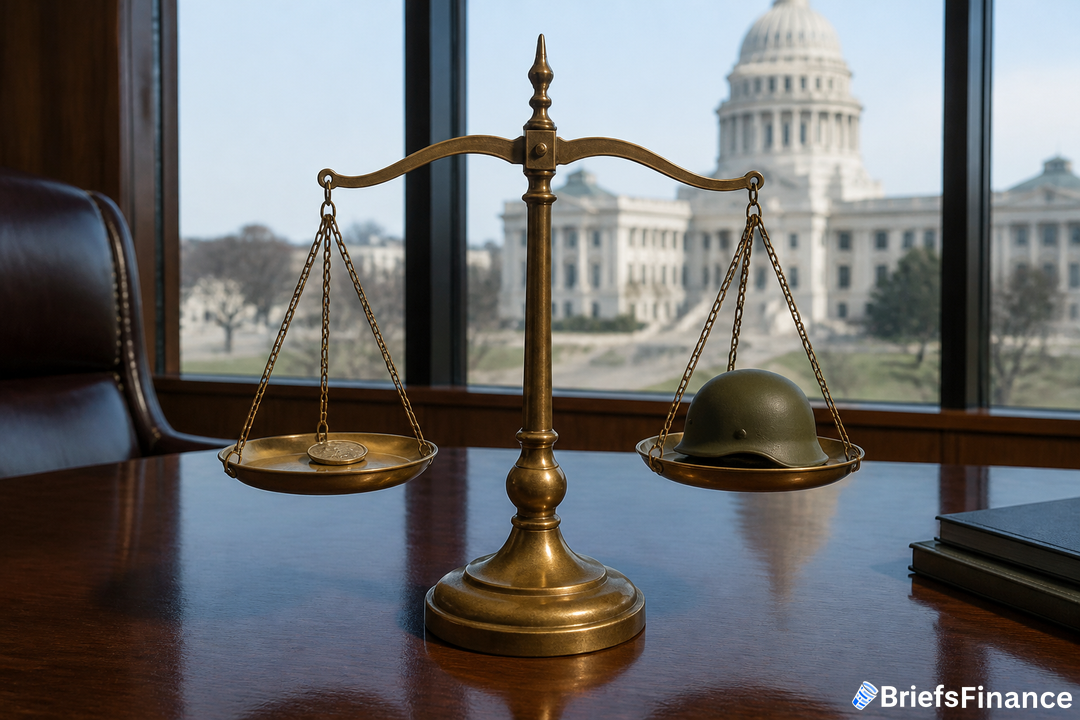
What Healey actually did in his first budget
Healey unveiled a bundle of small steps to ease household pressures, led by a £100 energy payment that totals £2.6 billion and an overall £4.1 billion of near-term "breathing space." It was a far quieter package than his predecessor's two budgets, which put the tax burden heading toward a post-World War II peak to finance Labour's public service and investment aims.
He also squeezed in more individual measures than any budget since 2010, even though, measured as a share of GDP, the typical measure came in at a little more than one-quarter of the usual scale. The timing matters: giveaways land now, while tax rises begin next year and focus on banks, gaming firms, landlords and savers.
Defense, funding and the politics behind the numbers
Healey talked about defense more than any chancellor in a budget speech since World War Two, topping even the early 1950s Korean rearmament era and Gordon Brown's 2003 post-Iraq address. He committed to lift military spending to 3% of national output by decade's end.
How to fund that move is deferred to next year's spending review. For now, he patched a shortfall in this year's defense investment plans by reallocating capital budgets, a switch costing £4.7 billion across three years. Earlier this year, his resignation as defense secretary over funding contributed to the downfall of then prime minister Keir Starmer, and he says bigger calls are coming in a 10-year defense plan plus welfare and spending reviews.
Who won, who lost, and how voters reacted
Business groups were underwhelmed, with only a few of their pre-budget asks granted, based on Bloomberg's analysis of data from the 2030 Prosperity Alliance that tracks requests from companies and trade bodies. The most common pitches were for lower business rates, no new tax hikes, and relief on national insurance. Even so, there were some pro-business measures: a tax cut for retail, hospitality and leisure firms, and additional billions for the National Wealth Fund and the British Business Bank.
The biggest single money-raiser was not a headline tax but an HMRC crackdown. Healey is giving the tax authority funding "to improve compliance and stronger powers to collect overdue tax from those who can clearly afford to pay but ignore repeated contact." Measures to narrow the tax gap raise almost £8 billion over six years. By contrast, the bank surcharge increase raises £1.5 billion and is in force for 15 months, while the £100 energy payment is the largest cost at £2.6 billion.
Investors often find that fresh tools can quietly improve long term decision making. We're hosting our first ever investor livestream on 11/17 to show you how to use ChatGPT and Claude to invest like a pro, hosted by Briefs Finance CEO Jaspreet Singh. Save your seat.
On households, the Resolution Foundation criticized "a complete failure to target help at those who need it most." Their calculation: by the end of next year, the poorest half gain £158 on average from cost-of-living support, only £14 more than the richest half. Politically, the budget arrived on Burnham's 101st day in office, and Bloomberg's look at Mark Pack's polling database shows that administration has delivered the third-largest 100-day polling boost since 1955. Still, Luke Tryl of More in Common said a voter focus group gave a "mixed reaction" - the voter group liked the energy payment and the bank tax, yet also pressed for greater detail.
Growth, forecasts and what it means for your portfolio
The OBR nudged up this year's growth outlook to 1.2%, trimmed next year, and increased its inflation forecast. The watchdog told Bloomberg it locked the forecast ahead of the ONS's second-quarter GDP upgrade and prior to robust July and August prints. Speaking to Times Radio, former Goldman Sachs chief economist Jim O'Neill said he is "baffled," expects growth "somewhere not far off 2%," and added, "It is almost like the OBR hasn't paid any attention to the past three months' worth of data."
The fiscal path is backloaded: measures add £7.6 billion to borrowing this year, then deliver an £11.7 billion reduction by 2031-32. By the end of 2031, taxes are projected to climb to a record 39% of GDP. The OBR's figures also indicate that, in this parliament, real household disposable income per person is on course for the second-weakest 10-year period since the 1950s. Or as Paul Johnson put it on X: "What an unbelievably awful decade."
Learning how to use new methods can make steady gains feel more attainable. On 11/17, our CEO Jaspreet Singh goes live for our first ever investor livestream on how to use ChatGPT and Claude to invest like a pro. Register to join him.