What the study says
The World Bank released Sub-Saharan Africa's Urban Awakening on Thursday, and its message is direct. Paschal Donohoe, the World Bank Chief Knowledge Officer, writes: "Decisions made now about where and how cities grow can help create jobs, raise productivity, and attract private investment for decades to come." He adds: "Shape urban expansion early, before today's choices become tomorrow's constraints."
The analysis argues that uncontrolled growth is scattering job hubs, lifting costs for businesses and commuters, and holding back output. As the report puts it, "Jobs are spread thinly rather than forming dense centers in key locations that can stimulate productivity," a pattern that "stymies both private investment and the realization of the agglomeration economies that are typically associated with high levels of population density."
The numbers and the pressure points
The region's city and town populations are on track to be almost twice today's size by 2050 - about 1.7 billion people, based on World Bank and European Commission Joint Research Centre projections. Come mid-century, Luanda is projected to expand to about 20 million residents - an increase of 78% - and will overtake Lagos as the region's largest metropolis. At least 15 African cities are projected to exceed 7 million residents by then, up from five in 2025.
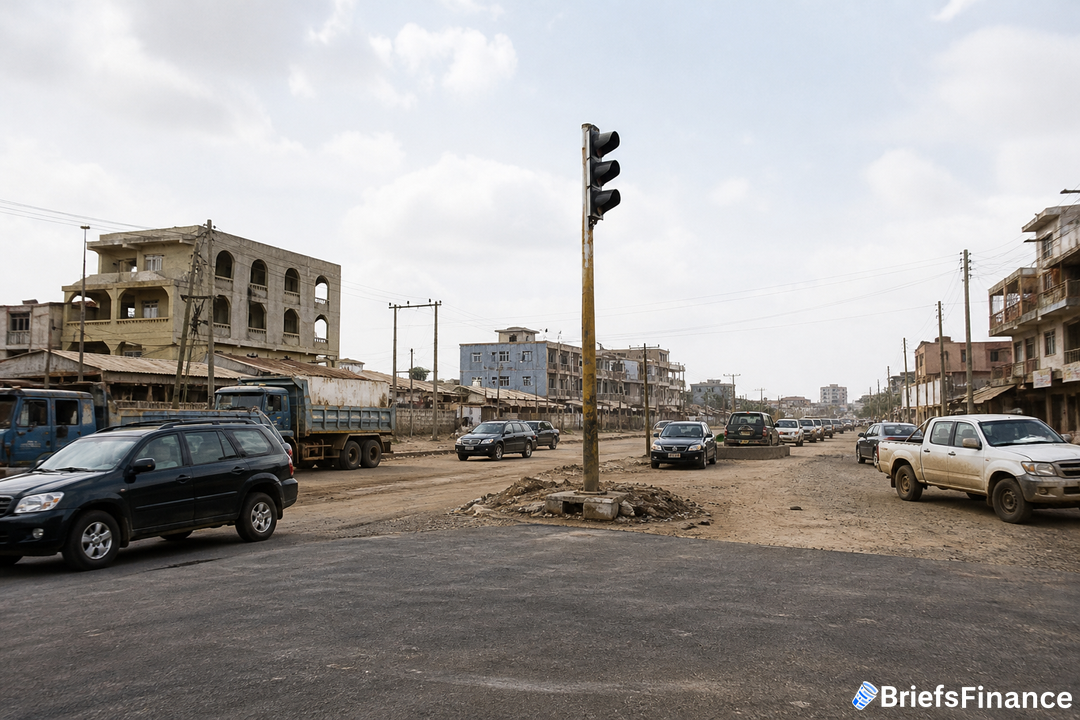
Commuting is costly. On average, urban workers in sub-Saharan Africa pay 42% more for transport than their counterparts in other regions and spend more time getting to work. Basic services are also a drag on business: across the region, 71% of firms say they grapple with power outages; one in four lacks water; and the same share rates transport as "a major or very severe constraint" to operations. The study also highlights a significant shortfall of qualified architects and urban planners relative to advanced economies.
Thoughtful investors look for new tools that reveal opportunities amid change. We're hosting our first ever investor livestream on 11/17 to show you how to use ChatGPT and Claude to invest like a pro, hosted by Briefs Finance CEO Jaspreet Singh. Save your seat.
Policy steps and what it means for your portfolio
To address these gaps, the World Bank recommends enabling cities to collect a larger share of local tax revenue, shifting more decision-making to municipal governments, and permitting cities to borrow directly. It underscores how rare that last piece is today: "Beyond South Africa, Addis Ababa remains virtually the only sub-Saharan African city to have financed substantial amounts of foundational physical infrastructure through contractual debt."
Why it matters: city finance and planning shape where jobs cluster, how productive firms can be, and what private investment follows. If authorities expand local taxing power, enable borrowing, and push decisions closer to city halls, the map of economic activity could change - and with it, which sectors and markets show up in your portfolio's winners and laggards.
Curiosity about smarter analysis can help investors gain a clearer long term view. On 11/17, our CEO Jaspreet Singh goes live for our first ever investor livestream on how to use ChatGPT and Claude to invest like a pro. Register to join him.