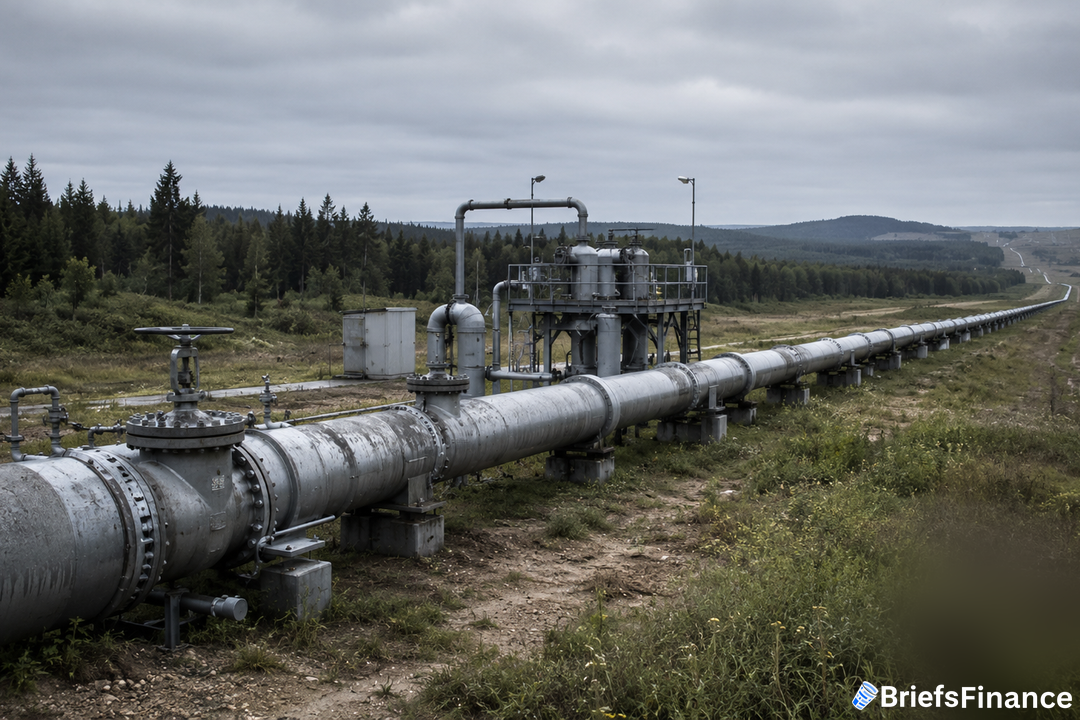
Most of NATO's fuel pipelines sit in western Europe, built decades ago to supply troops during the Cold War. Today, the countries closest to Russia rely on trucks and trains to move fuel for military vehicles. Those methods are slow, easy to jam up, and vulnerable to attack.
The Central Europe Pipeline System, originally built in the 1950s and 1960s, spans over 5,000 kilometers across Belgium, France, Germany, Luxembourg, and the Netherlands. Its extension eastward has been discussed for years but never funded at this scale. The new plan represents a major shift in NATO infrastructure priorities.
Constructed during the Cold War, the Central Europe Pipeline System was designed to deliver fuel to NATO forces based in western Europe. It never reached the eastern allies that joined the alliance later. This deficiency has long been regarded by defense strategists as a major weak point, and the new pipeline project is intended to remedy it.
The strategic gap has become more acute following Russia's full-scale invasion of Ukraine in 2022, which underscored the need for rapid reinforcement of NATO's eastern flank. Without a dedicated pipeline, fuel convoys would be exposed to airstrikes and sabotage, slowing any defensive buildup. The new infrastructure would allow continuous supply even during hostilities, a capability that road and rail cannot guarantee.
Get your free investing masterclass bonus when you join Market Briefs, our free daily newsletter
Why NATO Needs to Move Fuel East
For nations on NATO's eastern edge - Poland, the Baltic states, Romania, Bulgaria, and Turkey - there is no direct pipeline feeding into the alliance's existing fuel network. A NATO military planner said, "road and rail transport won't be fast enough to keep tanks and planes running near Russia's border."
The new expansion would stretch the old pipeline system into these countries. At a cost that could hit $30 billion over two decades, it would be the largest single investment NATO has ever made. The alliance would provide most of the money and oversee the work.
What the Summit Will Bring
The alliance is set to make the formal announcement during its yearly gathering in the Turkish capital on Wednesday. People familiar with private talks say member countries are near a final agreement.
But the deal is not yet complete. Technical details like how the money will be split among members and which sections get built first still need to be worked out in the coming weeks. The countries that benefit most - Poland, the Baltic states, Romania, Bulgaria, and Turkey - will likely push for a quick start.
What to Watch
The exact funding structure and the order of expansion remain open questions. NATO has not said which pipeline segments will be built first or how the $30 billion will be divided over two decades.
Subscribe to Market Briefs, our free daily newsletter, and claim your bonus investing masterclass