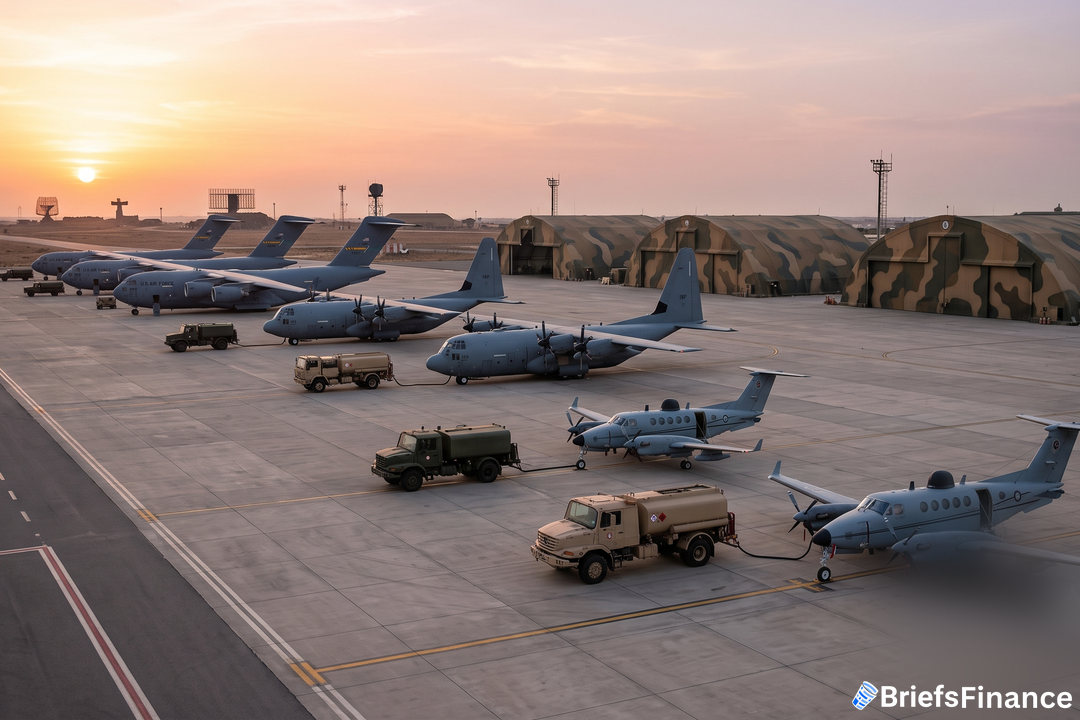
At a defense trade conference in Ankara on Tuesday - the same city hosting the alliance's annual summit - NATO's chief, Mark Rutte, outlined several of these procurement agreements.
Some contracts indicate a shift toward European sourcing for equipment previously obtained from the U.S. Rutte remarked that the Boeing planes "have served us well and continue to do so," but added they "are reaching the end of their life."
Others solidify relationships with American manufacturers. According to the diplomat, four Nordic and Baltic countries - Denmark, Finland, Germany, and Norway - are purchasing up to five Northrop Grumman Triton surveillance aircraft at a cost of $2.7 billion.
Get your free investing masterclass bonus when you join Market Briefs, our free daily newsletter
President Trump has long criticized NATO, arguing that Europe and Canada benefit from U.S. defense without investing enough. In response, alliance members have boosted military spending, partly driven by Russia's invasion of Ukraine, which heightened European security concerns.
Background and Context
The ongoing dispute over defense spending has been a recurring theme in transatlantic relations, with successive U.S. administrations urging European allies to bear a greater share of the burden. The 2014 Wales Summit pledge to move toward spending 2% of GDP on defense was a direct response to such pressures. However, Trump's more confrontational approach, including threats to withdraw from the alliance, galvanized action. The $50 billion in contracts announced at the Ankara conference represents a concrete step toward meeting these demands, though analysts note that European defense industries still lag behind the U.S. in several key areas.
Furthermore, seven member states pledged to acquire Airbus SE's A400M military transport plane, which provides airlift and tanker functions, for $4.3 billion. Separately, Rutte said allies will invest over $40 billion in counter-drone capabilities over the next five years.
The new products "will ensure" NATO's capabilities are "strong and credible for decades to come," Rutte said. The Triton equipment "gives us the situational awareness we need to make the decisions we need and stay ahead of threats," he added.
Despite these moves, Europe is still far from being militarily self-sufficient, unable to manufacture essential modern arms including drones and sophisticated air defense systems. The announced deals aim to address some of those gaps.
The Europe-first approach has created tension with the U.S., which wants allies to spend more on defense but still buy American. Tensions escalated after the European Union created a €150 billion ($172 billion) defense loan scheme and a €90 billion loan to Ukraine that prioritize local companies.
In certain critical areas, Europe still cannot find its own equivalents for American products, as reflected in Tuesday's contracts. For example, the Triton maritime surveillance system is a capability Europe has not yet developed.
Subscribe to Market Briefs, our free daily newsletter, and claim your bonus investing masterclass