From Taipei pitch decks to Phoenix dirt
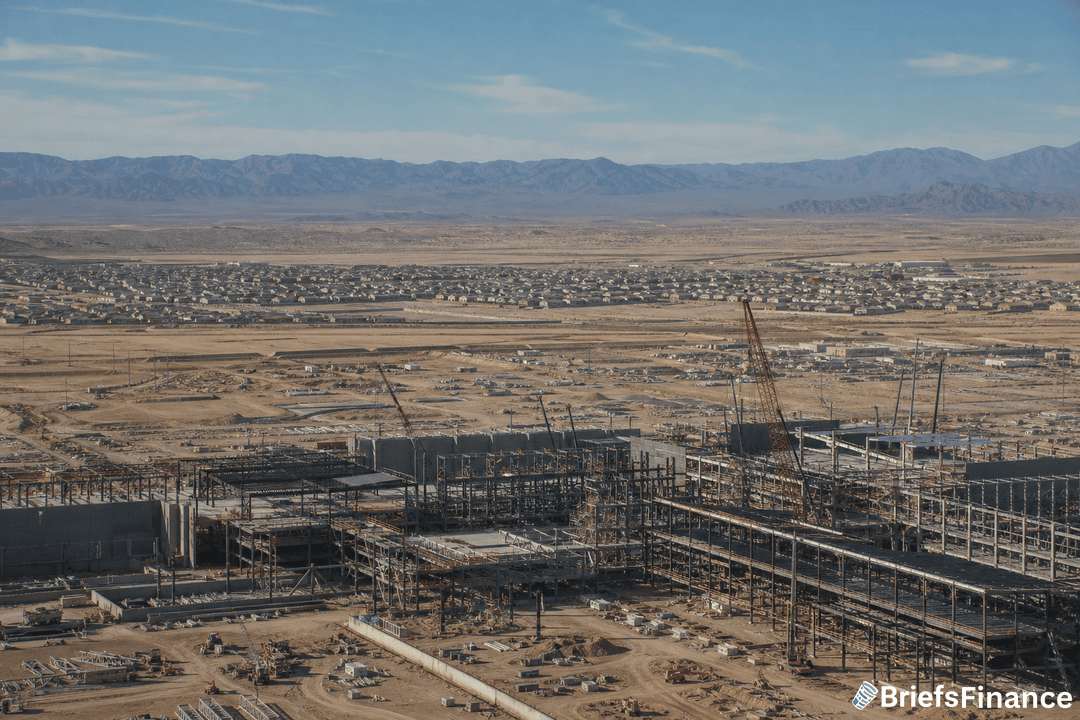
On a sticky Taipei afternoon, dozens of would-be buyers packed a conference room to hear how to put money to work in the Arizona desert, 7,000 miles away. Wealth managers and property investors got briefed on US taxes, rental trends and even what cultural quirks to expect around north Phoenix - home to Taiwan Semiconductor Manufacturing Co.'s planned 2,000-acre hub.
The networking chatter was pointed: housing for supplier staff, or amenities that would feel familiar to new Taiwanese arrivals. That curiosity tracks with what Phoenix brokers report - late night calls from Asian investors that open with one question about any parcel: how close is it to TSMC?
TSMC picked Phoenix in 2020 for its first US advanced manufacturing site. One fabrication plant has been completed, and the company says two more will be operating before the decade closes. Earlier this year, it tacked on an extra $100 billion to the plan, taking its Arizona commitment to $265 billion - described as the largest foreign investment in US history - and Bloomberg reported in October that it is weighing new facilities in Texas.
Capital and construction follow the fabs
Suppliers have been setting up around northwest Phoenix, and that pocket now leads the wider metro in demand for warehouses and factories. According to Colliers International, vacancies in that area slid to 8% in June, compared with 16% a year prior, even as the broader metro tightened by just two percentage points.
Investors from Taiwan are adding fuel. Since 2021, they have deployed about $500 million in the region, roughly matching flows from Canada, the Greater Phoenix Economic Council says.
Connectivity is tightening too. Starlux and China Airlines now operate nonstop Taipei-Phoenix routes, and earlier this year the Taiwanese government launched an economic and cultural office - effectively a consulate - in the state capital, reflecting the trade office that Arizona established in Taiwan in 2023.
Housing, mega-projects and a new skyline
North Gateway and Desert View had been laggards before the chipmaker arrived. Since then they have closed the gap, with average home values up about 53% over the past six years, versus 42% citywide, based on Zillow data covering May 2020 through August 2026. Even during the post Covid cooldown, properties closer to the fabs held up better.
Builders are moving. Across Phoenix, Taylor Morrison Communities Inc. and Lennar Corp. are in growth mode, and an area west of TSMC expects 3,300 new homes - the most development there since the early 2000s, according to Phoenix-based Belfiore Analytics.
When big projects reshape local economies, investors who adapt find opportunities. We're hosting our first ever investor livestream on 11/17 to show you how to use ChatGPT and Claude to invest like a pro, hosted by Briefs Finance CEO Jaspreet Singh. Save your seat.
Developers are thinking in decades, not quarters. One year after TSMC's initial Arizona bet, Howard Hughes took over a long-delayed tract and rebranded it Teravalis, a 37,000-acre master planned community to the west of Phoenix. The Pershing Square-backed developer already liked the area, Chief Executive Officer David O'Reilly said, but TSMC "is the inflection point that changed the timeline on commercial development."
Private capital from Taiwan is stepping in nearby. Backed by Taiwanese tech and property executives, Washington DC-based Taicoon Property Partners - led by CEO Hai Chien Wang - agreed to pay $88 million for two parcels roughly 10 minutes from TSMC's campus. The initial plan outlines a $1 billion mixed-use project with worker housing and a multilevel mall featuring Taiwanese staples like Din Tai Fung and Eslite Bookstore.
Labor, policy and the investor angle
The hiring surge is real and complicated. TSMC has brought on about 3,500 people in Arizona and plans to add 2,500 more. Many jobs are currently held by Taiwanese employees on company-sponsored visas because the Phoenix labor market does not yet supply all the needed specialized skills. The company has also clashed with local unions, and a former worker filed a class-action discrimination lawsuit alleging it favors East Asian employees.
TSMC declined to comment on the litigation. "TSMC believes strongly in the value of a diverse workforce, and we hire and promote without regard to gender, religion, race, nationality, or political affiliation because we respect differences, and believe that equal employment opportunities strengthen our competitiveness," a spokesperson said. The company says many Taiwanese staff are on temporary assignment and that it is recruiting at US universities and through local semiconductor training efforts.
Policy risk is part of the backdrop. Last month, the administration put several big tech companies on indefinite hold from the initiative that facilitates permanent residency sponsorships for foreign workers. Arizona State University was likewise named, along with eight other universities, in a visa-fraud investigation citing its comparatively high count of foreign graduate students. ASU said its hiring is in complete compliance with US policy and law, and, working with TSMC, the Tempe-based school rolled out a semiconductor technician training program, with classes available in the Phoenix area.
Locally, the boom has brought construction, rising rents and some friction with residents and labor. So far, TSMC has avoided federal anti-immigration enforcement actions, even as other big tech firms and manufacturers from Asia have not. That uneasy calm may not last forever. Arizona State University professor Wei Li cautioned that we may be in an early grace period: "Because TSMC has the bilateral and bipartisan support and is treated as a showcase, everything has to do well," she said. TSMC cannot escape everything."
The bottom line: TSMC's heft reaches far beyond real estate. Many in Taiwan also see the company as strategically vital given China's claim on the self-governed island of 23 million and Taipei's rejection of that claim. For portfolios tied to property, logistics or local services, north Phoenix has turned into prime hunting ground - tighter warehouse vacancies, faster home price gains next to the fabs and overseas buyers still active. As broker Nancy Tseng of Funwoo said, her clients may not know Phoenix well, but they are repeating a playbook that worked in Taiwan.
Learning how new technologies influence neighborhoods can give investors a thoughtful edge. On 11/17, our CEO Jaspreet Singh goes live for our first ever investor livestream on how to use ChatGPT and Claude to invest like a pro. Register to join him.