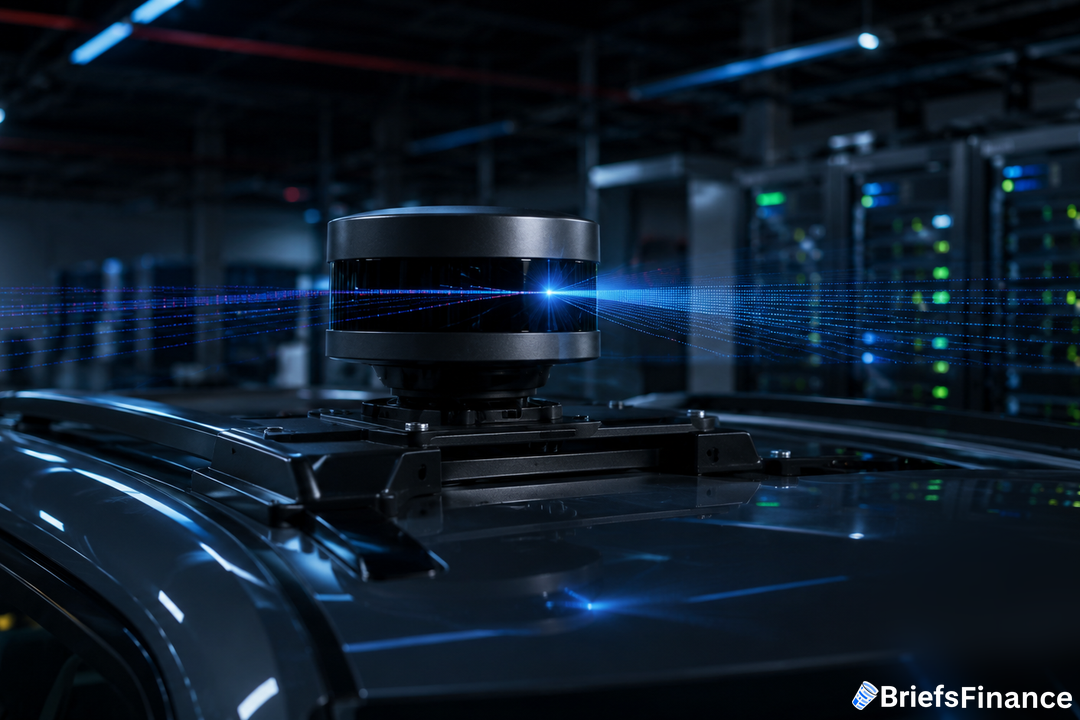
A Shanghai company that makes lidar sensors has been branded a Chinese military firm by the Pentagon. Yet it still sells those same sensors to American robotaxi and trucking companies. The contradiction is sharp: national security concerns on one side, and a booming autonomous driving market on the other.
The Blacklist and the Business
The Pentagon blacklist now includes 187 companies and subsidiaries.
"In the DOD case, I don't feel there is sufficient evidence, and it's not logical," David Li said. Hesai's sensors are also installed at JFK Airport in New York, tracking people and vehicles at security areas and gate entrances.
Get your free investing masterclass bonus when you join Market Briefs, our free daily newsletter
Critics see a danger. Craig Singleton, the senior director and head of the China Program for the Foundation for Defense of Democracies, argued that lidar data is so precise it "could be weaponized by a hostile foreign power if they ever wanted to target our infrastructure." He also said, "Whether they want to transmit that information or not isn't a question, it's mandated by law." Li added, "Hesai's partners are responsible for securing the data the sensors collect and that Hesai has no control over that."
Li further dismissed the idea that Beijing could obtain data via Hesai. Singleton remarked that the fast rollout of self-driving technology is exceeding the level of security review. "It's a tale as old as time with Chinese tech," he said.
The Nvidia Connection
The U.S. chipmaker now includes Hesai sensors among the choices available to car manufacturers for use in its autonomous driving systems. Nvidia CEO Jensen Huang said, "Our vision is that some day, every single car, every single truck will be autonomous. And we have been working towards that future." In fiscal year 2026, Nvidia's automotive segment revenue rose 39% year-over-year, fueled by uptake of its autonomous driving technology.
Risks and Reactions
Firms headquartered in China are required to disclose certain risks to the SEC. Hesai's SEC filings acknowledge that the Chinese authorities maintain "significant oversight in regulating our operations and may influence or intervene in our operations at any time." According to Singleton, this implies Hesai could be forced to hand over data obtained from its lidar devices to Beijing.
Hesai is not alone. Take Huawei, a Chinese telecom behemoth: it was added to the Pentagon's list in 2021, yet American firms continued to use its offerings.
What to Watch
Subscribe to Market Briefs, our free daily newsletter, and claim your bonus investing masterclass