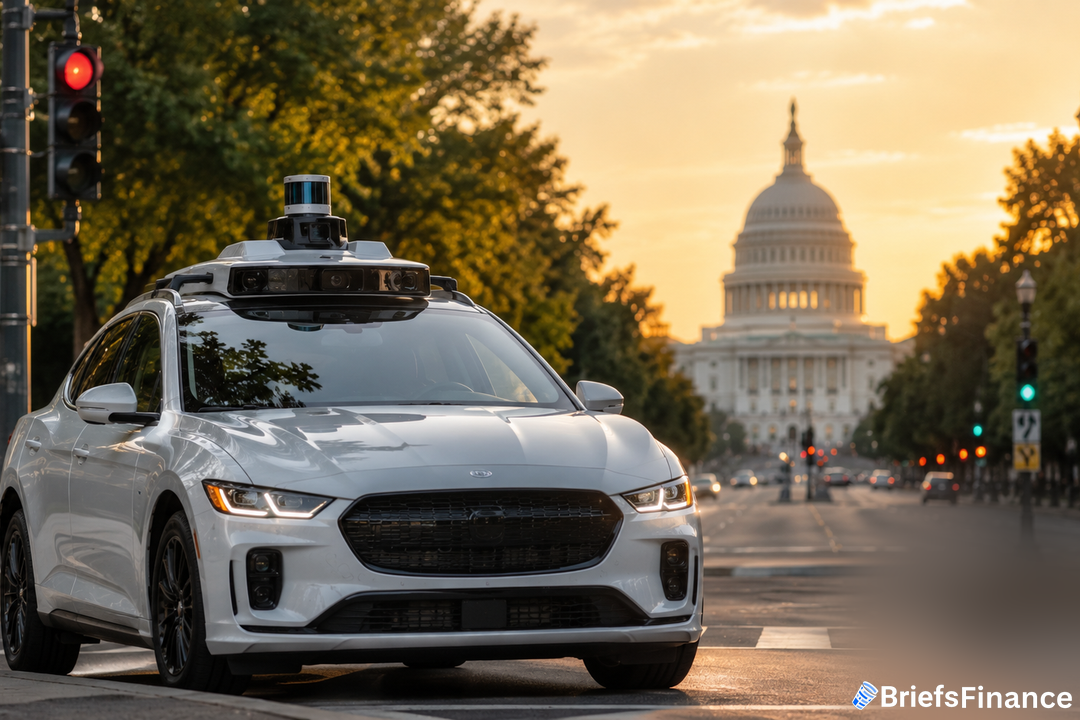
OPENING: Uber wants to keep its grip on ride-hailing. But a new D.C. bill could let robotaxis roll without human drivers. Uber says that would hurt the people who drive for its app. Its fix: force robotaxis to share the same app as human drivers.
The Bill and Uber's Hybrid Model
The bill, which Councilmember Charles Allen put forward in May 2026, would permit driverless autonomous vehicles on D.C. roads. Robotaxi operators would pay a tax of 15 cents per mile driven. Half of that money would go to public transit. The other half would fund education and job training for drivers who might lose work to machines.
Uber wants the rules changed. The company argues that any robotaxi service should be required to also offer human-driven rides on the same platform. "Consumers should have the ability to access both," said Javi Correoso, Uber's U.S. policy lead. "There should be a requirement for consumers to be able to take an Uber that's driven by a human." Uber calls this a "hybrid model." Think of it like a restaurant that must serve both meat and vegetarian dishes - you can't just offer one.
Get the market news that matters in a five-minute read with Market Briefs, our free daily newsletter
The company says the current bill would let Waymo, its business partner, dominate the market. Waymo already provides 500,000 weekly rides across 11 cities. Uber's COO, Andrew Macdonald, wrote on LinkedIn that the company now partners with cities instead of confronting them.
The Opposition and the Hearing
Waymo supports the bill as written. Spokesperson Ethan Teicher said the company would "welcome changes clarifying that different types of networks can operate in the District." Waymo argues that competition - not a forced hybrid model - benefits riders.
Other critics say Uber's proposal hurts consumer choice. Greg Rogers, who leads The Innovation Majority, will address the hearing on July 14. He said forcing a certain business model "does not improve people's mobility choices" and risks "entrenching interests and charging rent on anyone who seeks to operate AVs in the district."
Uber's head of AV policy, Harry Hartfield, submitted testimony arguing that public policy should be designed around a hybrid future, not an "AV-only future that does not exist." The Coalition for Accountability and Road Safety, a New York anti-robotaxi group with ties to labor unions, also opposes the bill. Its funding source is unclear.
The bill requires autonomous vehicles to report crash data within 8 hours for commercial fleets and within 72 hours for privately owned AVs. In January 2027, Mayor Muriel Bowser's term ends, and many parties hope the bill passes before then.
What to Watch
A day-long hearing on July 14 will let both sides air their arguments. Uber plans to lobby for its hybrid model in other cities and states as they write new autonomous-vehicle laws. The outcome in D.C. could set a precedent for how robotaxis are regulated across the country.
Join Market Briefs, our free daily newsletter, for a quick daily rundown of the markets