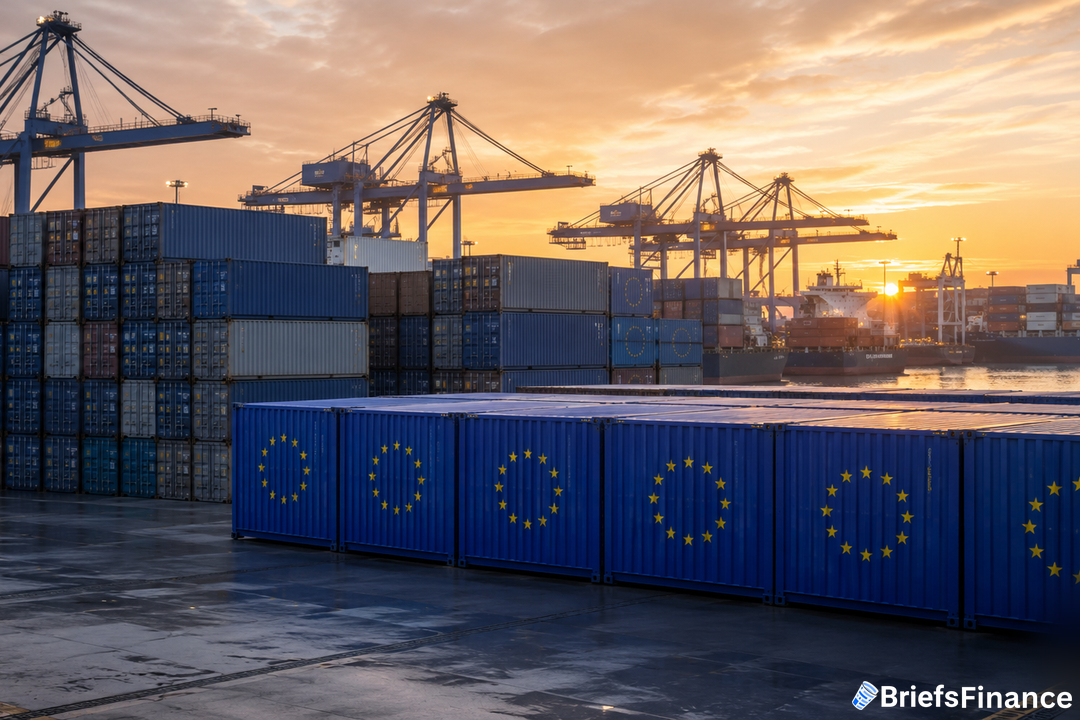
The EU runs a €360 billion trade deficit with China. Now it is rewriting its public procurement rules to steer taxpayer money toward European suppliers. This move aims to boost economic sovereignty - but it also risks angering major trading partners.
What the Proposal Says
Public procurement is how governments buy goods and services - from office supplies to energy grid equipment. The new draft rules, seen by Bloomberg News, let public buyers "apply European preference requirements, including by restricting participation, requiring minimum Union or covered origin, or granting evaluation preferences."
The regulation covers contracts for essential services such as natural gas provision, mining of energy resources, water and power grids, rail systems, seaports, airports, and mail delivery. Other areas identified as vulnerable to supply-chain disruptions encompass energy, transportation, healthcare, digital networks, water systems, and financial market infrastructure.
Why the EU Is Acting
The European Commission wants to reduce dependence on foreign suppliers, especially China. A European Commission spokesperson said the goal is to "make public procurement simpler, and to create the right framework to optimise the use of public money to match our strategic objectives."
Get the market news that matters in a five-minute read with Market Briefs, our free daily newsletter
Security is a big driver. The EU is concerned about vulnerabilities in its supply chains, especially regarding semiconductors and rare earth elements.
This policy shift reflects the EU's broader effort to shore up its economic resilience in the face of global supply chain disruptions and geopolitical tensions.
The EU's growing trade imbalance with China, especially in high-tech sectors, has accelerated this push. Semiconductors and rare earth elements, critical for electronics and defense, are heavily imported from outside the bloc, raising reliability and security concerns. These new procurement rules are part of a wider strategy to fortify European economic sovereignty.
Impact on Non-EU Countries
Not every country is treated the same. Firms from the United States and United Kingdom may still be covered because both nations have signed the World Trade Organization Government Procurement Agreement. That deal guarantees reciprocal access.
China, however, has not signed the GPA. Its suppliers could face much tougher barriers. The proposal also allows the EU to strip benefits from non-European operators if their home countries do not give EU firms equal access to their own public procurement markets.
Exemptions are possible if there is no European company capable of fulfilling the order, if no acceptable offers were received over the past two years, or if adhering to the rules would result in excessive expense.
What to Watch
The European Commission is expected to formally propose the new rules after the summer break. Investors should track progress of the proposal in the coming months.
Join Market Briefs, our free daily newsletter, for a quick daily rundown of the markets