Headline inflation is falling fast, but core inflation is declining much more gradually. In Q1 2026, Mexico's GDP shrank by 0.6% due to weak consumer spending and investment, while the central bank holds its rate steady.
The Inflation Breakdown - A Two-Speed Story
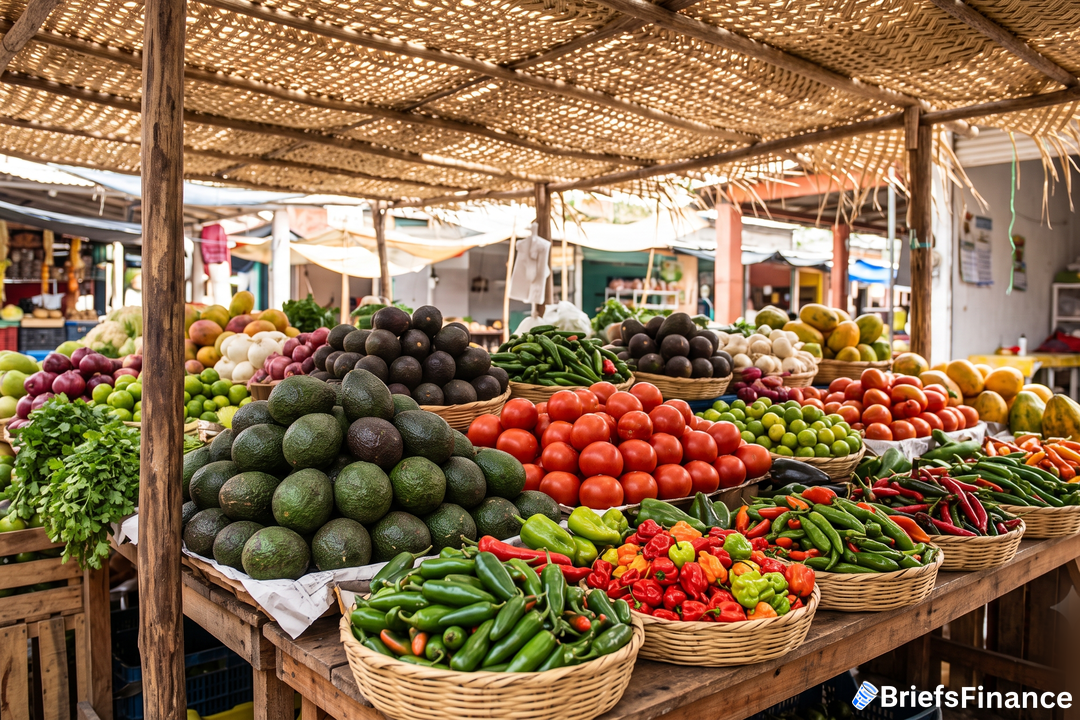
The big drop in headline inflation came almost entirely from lower non-core prices. In June, price increases for owner-occupied housing, potatoes, tubers, and avocados pushed up headline inflation, but this was partially counterbalanced by lower costs for tomatoes, eggs, serrano peppers, and poblano peppers.
The source includes charts that show the inflation data. "The charts show that headline inflation has moved back towards the middle of Banxico's target range, almost entirely because of lower non-core inflation, while core inflation has declined much more gradually," said Andrés Abadía, the Chief Latin America Economist at Pantheon Macroeconomics Ltd.
Get the market news that matters in a five-minute read with Market Briefs, our free daily newsletter
Weak Demand and a Paused Central Bank
Analysts anticipate that this slack will continue, which should lower demand-side inflation risks, though services prices and cost pass-through still pose challenges. Weak demand, ongoing economic slack, and early indications of a cooling labor market are providing a buffer for the inflation outlook.
Governor Victoria Rodríguez Ceja said: "There is no predefined length. "This stance is appropriate for addressing the challenges of the macroeconomic environment, and also allows us to assess the implications of recent inflation trends for our forecasts"."
According to the minutes from their June meeting released after the inflation data, Banxico's board indicated that inflation is still the primary limiting factor for policy. Most members stated that price risks remain skewed upward, although they acknowledged that the current policy stance suits the economy's challenges. Every board member credited the recent inflation decline to non-core elements, and one member noted that price increases were lower than predicted and that indicators suggest a downward trajectory. Nevertheless, the majority of policymakers viewed long-term prices as slightly elevated, highlighting wariness about whether the price reductions will be sustained.
The Iran conflict was cited by policymakers as a significant threat to prices, strengthening the argument for maintaining current borrowing costs. Additional risks comprise shocks from trade policy, geopolitical upheavals, climate impacts, cost pressures, and depreciation of the peso. The central bank continues to forecast that inflation will reach its target by the second quarter of 2027.
What Bloomberg Economics Says
"The undershoot Mexico's June CPI report shows an improved inflation outlook despite an outsize contribution from lower food prices. The big surprise will help moderate inflation expectations, while a lower core shows price pressures are slowly moderating. Alongside weak activity and domestic demand, that'll likely spur debate among policymakers on additional interest-rate cuts. We still see the central bank holding rates in the near future, waiting for a lower core before proving more accommodation." - Felipe Hernandez, Latin America economist
Join Market Briefs, our free daily newsletter, for a quick daily rundown of the markets