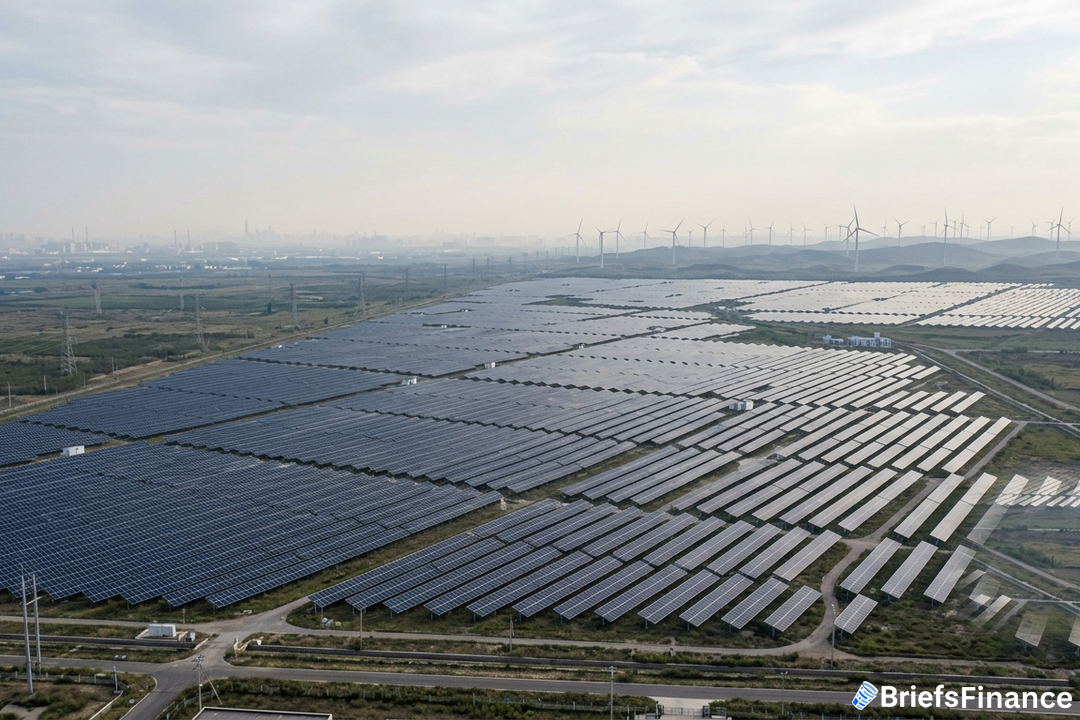
China is the planet's biggest source of greenhouse gases. Its emissions finally fell in 2025 - just a little. Now the country is releasing a new climate plan.
But the goal is not just building more wind and solar farms. The plan pushes factories and data centers to actually use that clean power.
The Numbers Behind the Plan
The United States contributed just 11%. President Xi Jinping has pledged China will hit carbon neutrality by 2060 and that its emissions will peak before 2030.
The five‑year plan covers through 2030. It marks a shift from simply building clean‑energy capacity to making sure that capacity is actually used.
Get the market news that matters in a five-minute read with Market Briefs, our free daily newsletter
The plan targets factories, data centers, and transportation to increase their use of renewable power.
The slight emissions decline in 2025, though modest, marks a turning point after years of steady increases. "Analysts at Carbon Brief and CREA said, 'China's emissions fell by roughly 1% last year, driven by a surge in renewable generation and a slowdown in heavy industry.'" However, coal power generation continues to rise in some regions, highlighting the tension between short-term energy security and long-term climate goals. The plan incorporates additional storage capacity, expanded transmission networks, and greater electrification to enhance the practicality of renewable energy. It also promotes green hydrogen - hydrogen made with clean power instead of fossil fuels - and calls for low‑carbon industrial parks and data centers.
Why China Is Acting Now
China is dealing with a slowing economy. These pressures are pushing Beijing to cut emissions while keeping the lights on. The new plan builds on a general direction set at the country's annual political meeting in March 2026.
China's previous five-year climate plans have often fallen short of their targets, partly due to competing economic priorities. The 2025 emissions dip provides a positive signal, but sustained reductions will require stricter enforcement and investment in grid modernization. The new plan also aligns with China's broader strategy to dominate global green technology markets, including solar panel manufacturing and electric vehicle production.
What's Next for China and the World
The next five years will determine whether China can meet Xi's 2060 carbon‑neutrality target and begin seriously reducing emissions. Observers expect the plan's loose targets may disappoint advocates of faster action. The plan does not impose a hard cap on the rapidly expanding coal‑to‑chemicals sector; instead, it requires efficiency improvements, lower coal usage per unit produced, and a phased replacement of certain fossil‑derived materials and energy sources with renewables and green hydrogen.
U.S. emissions rose in 2025, according to the Rhodium Group. That makes China's progress critical for limiting climate change.
What to Watch
The next five years will show whether China can turn its plans into real cuts in pollution.
Join Market Briefs, our free daily newsletter, for a quick daily rundown of the markets