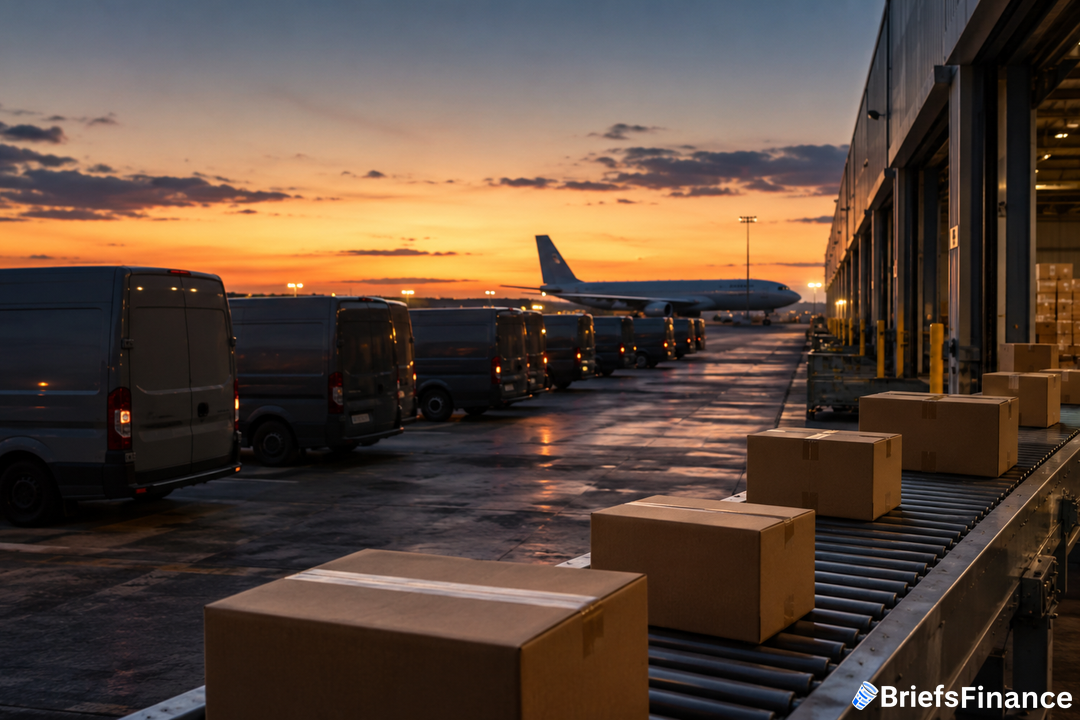
An analyst said Amazon is now offering low-cost and fast parcel delivery to outside customers. That raises the competitive threat to traditional shipping companies.
Analyst Warning Sparks Selloff
The warning came from Ravi Shanker, an analyst at Morgan Stanley. At 2:33 p.m. New York time, UPS and FedEx shares had erased earlier gains and were nearly flat. Earlier in the day they had been up.
The decline in share prices followed the release of Shanker's analysis. At the time, UPS stock cost $109.98. FedEx was $310.81.
Amazon's stock was $244.70.
Get the market news that matters in a five-minute read with Market Briefs, our free daily newsletter
The note was dated July 9, 2026. Shanker's note draws attention to the fact that Amazon's rates are now on par with or cheaper than those of its rivals.
Amazon's Growing Logistics Footprint
Amazon has been building its own delivery network for years, starting with last-mile delivery and gradually expanding to air cargo and trucking. Amazon Logistics, the company's delivery division, now manages a large share of its own parcels and has extended its services first to third-party merchants and then to outside consumers. This move directly threatens the core business of UPS and FedEx, which rely heavily on e-commerce parcel delivery.
According to a report from Supply Chain Dive, the numbers show Amazon is not just matching prices. It is often charging less - even less than the U.S. Postal Service. The trade publication Supply Chain Dive reported on Amazon's pricing comparisons.
"We believe it is likely not long before that becomes an option as well," Shanker said.
Amazon's expansion into logistics is not slowing down. The company is expected to soon add overnight shipping options. Amazon's logistics service is already available to third-party customers.
What to Watch
Investors are now watching whether Amazon will cut into more profitable areas like healthcare logistics. The company has shown it can leverage its delivery network for specialized services, and any expansion beyond standard parcels could further pressure UPS and FedEx margins. Meanwhile, traditional shippers are investing in automation and cost-cutting to defend their market share, but Amazon's scale advantages may prove difficult to overcome.
Amazon's logistics ambitions date back to 2014 when it began launching its own delivery stations. Over the years, it has invested heavily in sorting centers, aircraft, and trucking capacity. This infrastructure allows Amazon to bypass traditional carriers and offer competitive rates. The threat is especially acute as e-commerce growth slows, forcing shippers to fight for market share more aggressively.
Amazon's logistics network has been under development for over a decade, with the company investing billions in infrastructure including delivery stations, sorting centers, and a fleet of cargo aircraft. This massive scale enables Amazon to offer competitive rates while maintaining fast delivery times. As e-commerce growth slows, the pressure on traditional carriers like UPS and FedEx intensifies, as they must compete not only with each other but also with a tech giant that can afford to operate at thin margins.
Join Market Briefs, our free daily newsletter, for a quick daily rundown of the markets