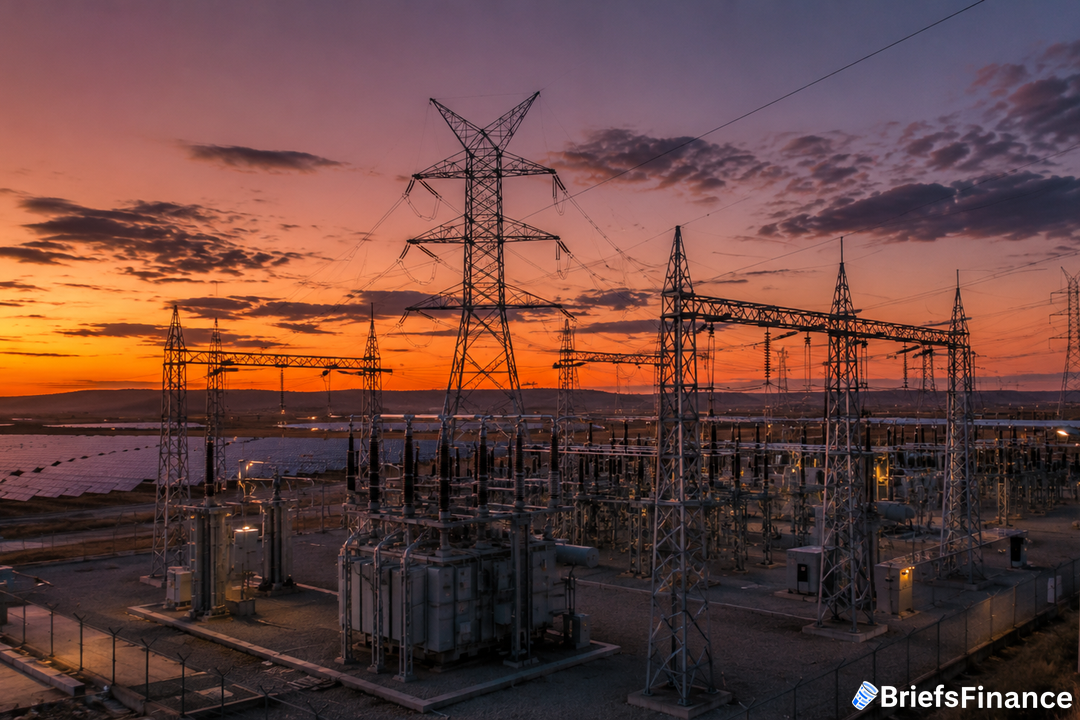
But as evening came and solar output faded, the grid lurches into danger.
The Near-Miss
Grid frequency is the speed at which electricity flows through the system. The legal range is 49.5 to 50.5 hertz, but the grid operator, National Energy System Operator (NESO), normally keeps it between 49.8 and 50.2 hertz.
Montel analyst Noemie Baud, whose previous role was a senior trader specializing in intraday power at Convex Energy, said: "When I was a trader, we were always saying summer is boring. "This is not the case anymore. Summers are as interesting, if not more, than the winters"."
A NESO spokesperson said the electricity system "remained secure." Baud added: "They were not in a comfortable situation. "I can't say how close it was to a blackout"."
Get the market news that matters in a five-minute read with Market Briefs, our free daily newsletter
Why It Happened
The heat wave combined with low wind output and high electricity demand. Grid operators had to reduce wind power output due to transmission limitations.
Because wind generation was minimal, Britain had to increase gas plant output to their highest point since March to compensate for the shortfall. Weaker-than-forecast wind generation further tightened supplies.
In the weeks leading up to June 23, NESO had already put out three calls for extra power. Shadow Energy Secretary Claire Coutinho alleged that NESO kept information secret and endangered the grid, pointing to whistleblowers who reached out to her regarding activities on June 23. NESO denies wrongdoing. After the event, a NESO spokesperson said: "We will continue our analysis of operational data and implement any lessons learned."
The Challenge of Solar's Rapid Sunset
The incident highlights a critical vulnerability in modern power systems. Solar farms produce abundant electricity during sunny afternoons, but when the sun sets, output can plummet by tens of gigawatts within an hour. Grid operators must already have fast-ramping backup - typically gas plants or battery storage - ready to replace that lost generation.
On June 23, the rapid decline in solar coincided with unusually high evening demand as people returned home and switched on fans and air conditioners in the heat wave. NESO's ability to call on gas plants and interconnector imports prevented a more severe outcome, but the frequency drop showed how thin the safety margin had become.
What to Watch
NESO has launched a detailed review of the near-miss. Political scrutiny is rising as summer heat waves make electricity demand less predictable and more risky for grid operators across Europe. This incident highlights a wider problem for Europe as heat waves become more intense, prolonged, and common, and electricity networks depend more and more on renewables that are influenced by weather.
The event also underscores the growing importance of flexible resources such as battery storage and demand response. As solar capacity continues to expand, grid operators will need to ensure that sufficient fast-ramping generation or storage is available to cover the evening ramp-down. Britain's current mix of gas plants, interconnectors, and a small but growing battery fleet was enough to prevent a blackout this time, but narrower margins in future could lead to more frequent emergency interventions.
Join Market Briefs, our free daily newsletter, for a quick daily rundown of the markets