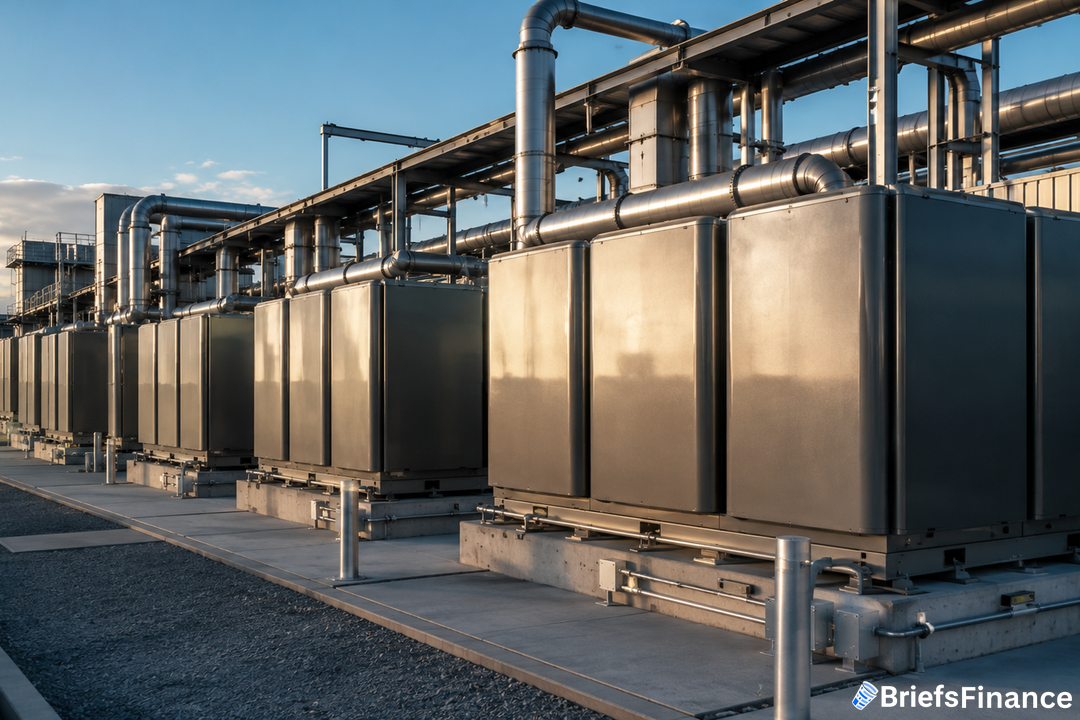
Bloom Energy says it does not rely on Chinese scandium for its fuel cells. A short-seller report claims the opposite is true. The contradiction sent the stock on a roller coaster this week.
The Report and the Denial
Hunterbrook Media published a report accusing Bloom of secretly sourcing scandium from China. Its affiliate, Hunterbrook Capital, holds a short position - a bet that the stock price will fall.
Bloom Energy called the report "false and misleading." COO Satish Chitoori said, "No single supplier determines our destiny. No single country does either." The company filed a regulatory statement saying it has "sufficient supply of scandium oxide to meet our current fuel cell demand and backlog, and our supply is not dependent on China."
The Global Scandium Market
Scandium, a rare metal, boosts fuel-cell efficiency by enabling lower operating temperatures and enhanced longevity. Global consumption is only 30 to 40 metric tons per year, according to the U.S. Geological Survey.
Get the market news that matters in a five-minute read with Market Briefs, our free daily newsletter
The Chinese government has added scandium to a list of strategic materials that require export licenses. Hunan Oriental Scandium, based in China, provides over 50% of the global supply of fuel-cell-grade scandium oxide, the firm states. That makes the supply chain tight for everyone.
Most non-Chinese projects are still years from significant production. The Pentagon gave $10 million to NioCorp Developments Ltd. last year for a U.S. scandium project. Rio Tinto, a major mining firm, extracts scandium as a byproduct of its titanium dioxide operations in Canada.
Another project comes from Australian firm Sunrise Energy Metals Ltd., which aims to increase production. But none of these can yet replace Chinese supply at scale.
Supply Chain Vulnerabilities
The controversy highlights how geopolitical tensions can disrupt clean-energy supply chains. With China dominating critical mineral processing, U.S. and allied companies face mounting pressure to diversify sources. The Pentagon's grant to NioCorp and Rio Tinto's Canadian efforts reflect a push to reduce dependence on Chinese materials. However, those projects remain years away from commercial output, keeping Bloom Energy's current supply chain under intense scrutiny.
What Analysts Say
Baird analyst Ben Kallo recommended buying Bloom shares. He said, "We think the scandium concern the short report called out isn't a major risk." He added that "the constraint the short report describes is one the supply chain has been actively resolving for years."
The company asserts that its supply chain is capable of sustaining an annual output of 25 gigawatts of fuel cells.
The Strategic Importance of Scandium for Bloom
The company's denial of Chinese dependence aims to reassure investors, but the short-seller report highlights ongoing vulnerability in the clean energy supply chain.
Join Market Briefs, our free daily newsletter, for a quick daily rundown of the markets