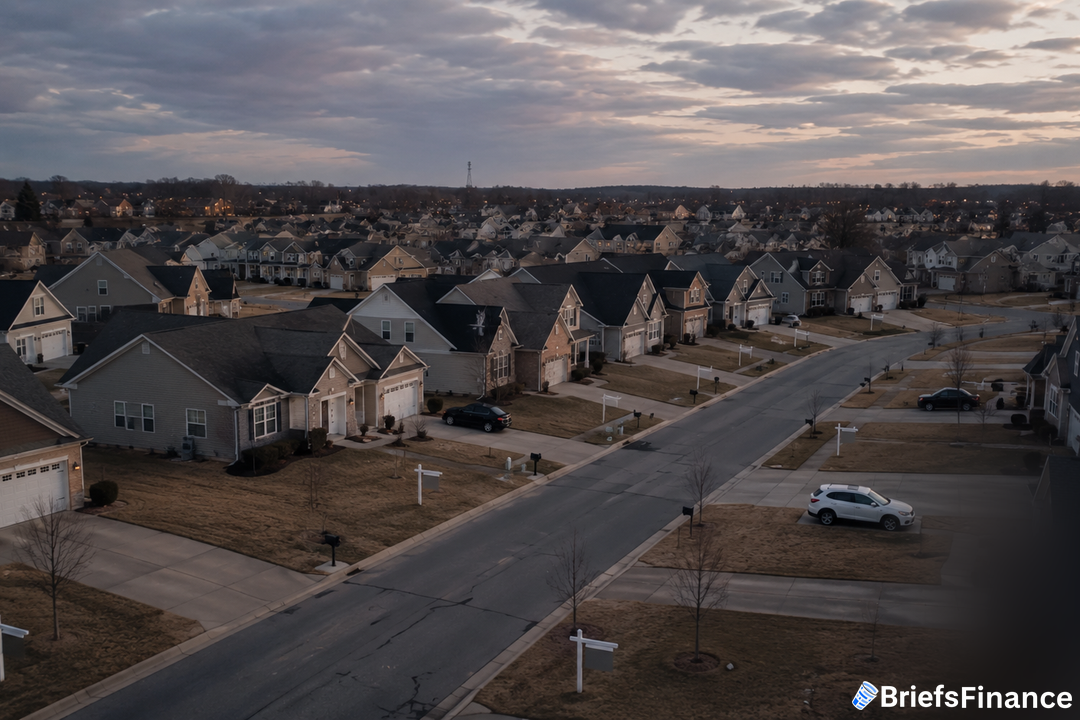
High mortgage rates are pushing buyers to the sidelines. Homeowners with cheap loans refuse to sell because they would lose their low rate. This standoff is why Goldman Sachs calls the U.S. housing market "stabilizing but subdued."
The resulting inventory shortage means that even with fewer buyers, home prices are unlikely to drop significantly. This low demand is a key reason behind Goldman's forecast of only a modest 0.8% price gain.
The Lock-In Effect That Freezes the Market
Almost 80% of homeowners with a mortgage have a rate below today's 6.5% level. That creates a powerful lock-in effect. Homeowners are stuck because swapping homes would mean a much higher monthly payment.
Sellers are scarce, and buyers face high borrowing costs. The result is a market where very few transactions happen. Existing home sales are far below the pace seen before the pandemic.
Get the full picture - sign up for our free daily newsletter and claim your investing masterclass bonus.
Get your free investing masterclass bonus when you join Market Briefs, our free daily newsletter
Goldman's Forecast: Sales Stay Low, Prices Creep Up
That is only a 3% improvement from the first half of the year. But it is still 22% below the 2019 level, which was already a slow year for housing.
Home prices will barely move. Next year, prices are expected to rise 2.3%. That is far below the gains seen in recent years. Goldman describes the demand for the third and fourth quarters of 2026 as "tepid."
Wage growth is also weak. The U.S. Bureau of Labor Statistics shows year-over-year wage growth at 3.7% or lower throughout 2026. That is a drop from 2025.
Lower wage growth means less buying power for potential homebuyers. Lower immigration is another factor that reduces demand.
Why Rates Stay High
Mortgage rates jumped after the U.S. and Israel attacked Iran in late February. Ongoing geopolitical uncertainty has kept rates elevated. The Federal Reserve is unlikely to cut rates in 2026 and may even raise them. According to the CME FedWatch tool, the likelihood of a rate hike increases for the September meeting.
Higher rates are a double blow. They make mortgages more expensive for new buyers. They also keep existing homeowners locked into their low-rate loans.
On the positive side, Goldman Sachs points to favorable demographic patterns and rising purchase intent indicators as encouraging signs. Still, the overall picture is one of slow activity.
What to Watch
Mortgage rates are likely to remain in the mid-6% range for the rest of 2026. The Federal Reserve may raise its benchmark rate in September, which would push borrowing costs even higher. That means the housing market will likely remain in a slow, subdued state through the end of 2026.
These demographic trends, particularly the large cohort of millennials entering their peak home-buying years, provide a long-term floor under demand. Rising purchase intent among younger households, measured by surveys and mortgage applications, suggests some pent-up buying power that could slowly push sales higher if rates eventually ease. However, given the rate outlook, that catalyst will not appear in 2026.
Stay ahead of the market - subscribe to our free daily newsletter and access your investing masterclass bonus.
Subscribe to Market Briefs, our free daily newsletter, and claim your bonus investing masterclass