Free NewsletterPro Login
S&P 500 6,287 +0.42%
DOW 44,521 -0.18%
NASDAQ 21,103 +0.71%
S&P 500 +12.4%
Briefs Finance Fund +24.8%
JOIN THE FUND →

Brazil's Uranium Mining Opens to Private Partners with State's Minimum 20% Share

Published Jul 13, 2026
[tts_player]
Share:
Summary:
  • The state-owned INB must keep at least 20% ownership in any uranium mining partnership.
  • Mining-rights holders have 12 months to report nuclear materials on their land.
  • INB plans to double annual uranium concentrate output to 800 metric tons at Caetite.

OPENING: Brazil has a monopoly on its own uranium, but it cannot produce enough fuel for its two nuclear reactors. Now the government wants to open the door to private companies. The catch: the state-owned firm must keep at least a 20% slice of every mining project. That rule could unlock new supplies just as global demand for nuclear power is rising.

Brazil currently relies on imported enriched uranium to power its Angra 1 and Angra 2 reactors, even though the country holds about 3% of the world's known uranium reserves. Domestic production is limited by INB's lack of capital and technical capacity. By inviting private partners to shoulder investment costs, Brazil hopes to reduce its import dependence and eventually export surplus nuclear fuel.

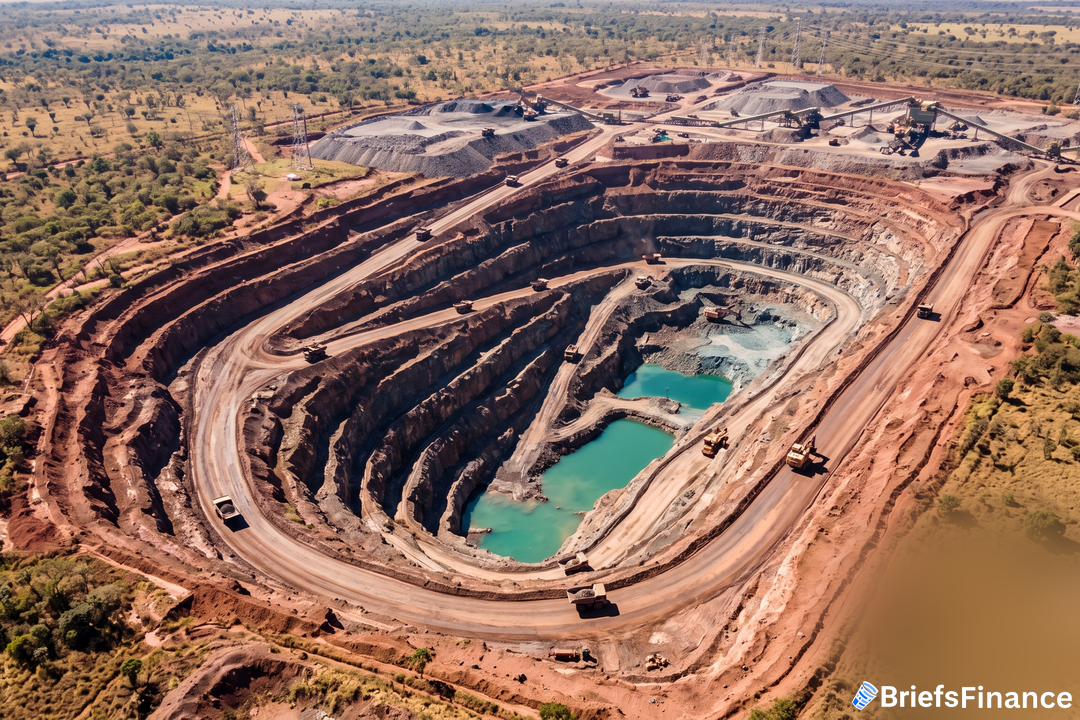
Brazil's sole uranium mine, located in Caetite, Bahia, currently produces around 400 metric tons of uranium concentrate annually, far below the country's potential. The lack of investment has left the facility operating below capacity, while the state-owned INB struggles to fund exploration of new deposits. Opening the sector to private companies could attract the capital needed to increase output and develop Brazil's significant uranium resources, which are the eighth-largest in the world.

Why Private Partners?

Nations worldwide are prolonging the operation of older nuclear plants and constructing new reactors to satisfy increasing power needs and climate objectives.

Get the market news that matters in a five-minute read with Market Briefs, our free daily newsletter

During a May interview, Tomás Albuquerque Figueiredo, president of INB, stated, "Global uranium output fell short of demand last year." He added, "With production from existing mines declining, new mines will be essential to supply the roughly 70 reactors expected to come online." To meet that future demand, INB wants to double its uranium concentrate production capacity at the Caetite facility.

Who Is Interested?

Foreign firms have already contacted INB about possible partnerships. Interest has come from companies in China, France, Russia, and Canada, all eyeing the Brazilian uranium market. The draft rule would allow private companies to form joint projects with INB as long as the state firm keeps at least a 20% ownership in each venture.

INB President Figueiredo explained the logic: "The idea is to bring private partners in to share the risk with INB and prepare for future demand." Private partners would cover the project's investment costs. In exchange, private partners would get a majority share if the value of INB's contributed mining assets falls short of the funds required to develop the venture.

The rule is still a draft. Brazil's Mines and Energy Ministry and the Chief of Staff's Office are reviewing it. They may make changes before finalizing the rule. According to Special Secretary Roberto Garibe, officials are reviewing the proposed measures and anticipate a decision soon.

What to Watch

The draft rule also includes a 12-month reporting period. After the rule takes effect, anyone who currently holds mining rights must report any nuclear materials found on their land.

Join Market Briefs, our free daily newsletter, for a quick daily rundown of the markets
Disclosure

Recent News

1 2 3 34

Get Market Briefs delivered to your inbox every morning for free!

No fluff. No noise. No politics. Just finance news you can read in 5 minutes.

Blogs

June 29, 2026
Portfolio Diversification: Why Putting All Your Eggs in One Basket Destroys Wealth
  • Real diversification means spreading investments across all 11 economic sectors plus bonds, alternatives, and cash so no single bet can sink the portfolio.
  • Different sectors perform at different times, so a diversified portfolio captures upswings while smoothing the brutal drawdowns that wipe out concentrated bets.
  • Total market index funds offer the simplest path to diversification, and annual rebalancing is what keeps the structure working over time.
Read More
June 29, 2026
Non Taxable Income: What It Is and Why It Matters
  • Non taxable income is money you receive that you don't owe income tax on.
  • The tax code treats workers, investors, and business owners very differently, and investors often come out ahead.
  • Learning how income is taxed is a quiet superpower for keeping more of what you earn.
Read More
June 29, 2026
Semiconductor Stocks: A Simple Guide for Investors
  • Semiconductor stocks are companies that design and make computer chips, the brains inside nearly every modern device.
  • The AI boom has turned chips into one of the market's most important and most watched groups.
  • They offer big growth potential, but come with high valuations and a notoriously cyclical history.
Read More
June 25, 2026
How Stocks Work: A Simple Guide for Beginners
  • A stock is a slice of ownership in a company - buy one, and you own a piece of the business.
  • You make money two ways: the share price rising over time, and dividends paid to shareholders.
  • The simplest path for most beginners is buying into the whole market through a low-cost index fund.
Read More
June 25, 2026
Stop Loss vs Stop Limit: What's the Difference?
  • A stop loss order sells your stock once it hits a trigger price, prioritizing getting you out.
  • A stop limit order only sells within a price range you set, prioritizing price over a guaranteed exit.
  • The trade-off: a stop loss almost always executes; a stop limit might not if the price moves too fast.
Read More
June 25, 2026
Energy Stocks: A Simple Guide for Investors
  • Energy stocks are companies that produce and supply the power the world runs on, from oil and gas to newer sources.
  • They make up one of the 11 sectors of the market and tend to move with energy prices and big-picture shifts.
  • Like any sector, the key is diversification and understanding the forces driving demand.
Read More
June 18, 2026
What Is a Stop Loss Order? A Simple Guide
  • A stop loss order automatically sells a stock once it falls to a price you set.
  • It's a tool to cap losses or lock in gains without watching the market all day.
  • It works best for active strategies, and can backfire if used carelessly on long-term holdings.
Read More
June 18, 2026
Best S&P 500 Index Fund: How to Choose One
  • The best S&P 500 index fund for most investors is simply the cheapest, most established one that tracks the index well.
  • Funds like VOO, IVV, and SPY all hold the same 500 companies, so the biggest difference is the fee.
  • Pick one, automate your buys, and let time do the heavy lifting.
Read More
June 17, 2026
What Are Penny Stocks? Risks and Rewards Explained
  • Penny stocks are very low-priced shares of very small companies, often trading for just a few dollars or less.
  • They promise huge gains but carry huge risks: low liquidity, high failure rates, and wild price swings.
  • Most investors are better served by quality companies and funds than by chasing cheap shares.
Read More
June 17, 2026
Best Stocks for Beginners With Little Money
  • The best stocks for beginners with little money usually aren't individual stocks at all - they're low-cost index funds.
  • You can start with $100 or less and use small, regular investments to build wealth over time.
  • Focus on diversification and consistency, not on picking the next big winner.
Read More
1 2 3 24
Share via
Copy link











