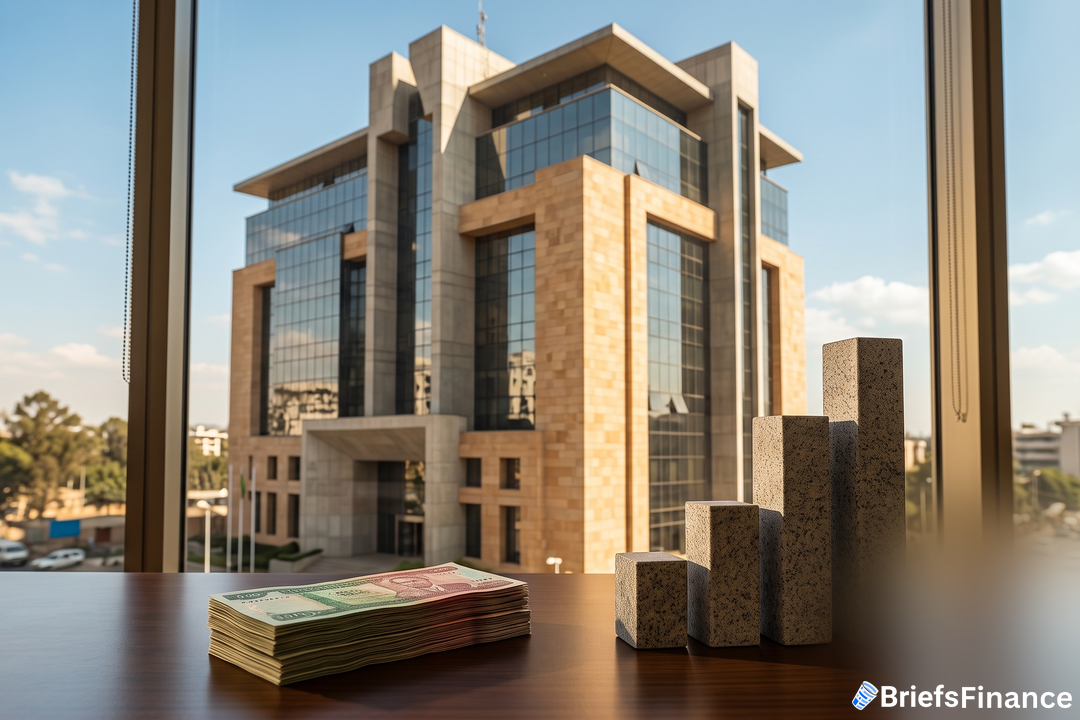
The National Bank of Ethiopia wants to slow rising prices. But it also just took away a limit on how much banks can lend.
What the Central Bank Did and Why
On July 13, 2026, the National Bank of Ethiopia's Monetary Policy Committee raised the main interest rate from 15% to 16%. Since it was first introduced in July 2024, the rate had remained unchanged for two years. The committee also ended a rule that capped annual credit growth at 24% for commercial banks.
The central bank acted because inflation climbed back above 10%. As of May 2026, Ethiopia's annual inflation rate was 13.4%. That rise came from a war that started in February 2026 between the US and Israel on Iran, which pushed up global fuel and fertilizer costs. In March 2026, the Ethiopian government started fuel subsidies to help offset those higher prices.
Get the market news that matters in a five-minute read with Market Briefs, our free daily newsletter
Reforms Behind the Rate Decision
The interest rate itself is a product of earlier reforms by Prime Minister Abiy Ahmed. Starting in 2024, his government let the Ethiopian birr trade more freely and opened the banking sector to foreign investment. The central bank introduced the benchmark rate in July 2024 as part of that same overhaul.
Until now, the rate had stayed at 15% for two years. The removal of the credit-growth ceiling is another step toward a more flexible monetary system. Commercial banks can now decide how much to lend each year without a government-imposed limit.
The 24% credit-growth ceiling had been in place since the introduction of the benchmark rate in July 2024. Its removal reflects the central bank's preference for using interest rates to control inflation rather than administrative caps. Economists note that the cap had constrained lending to businesses and households, particularly in agriculture and manufacturing. By eliminating it, the NBE hopes to encourage bank lending to support growth while relying on the higher interest rate to keep inflationary pressures in check.
The global conflict that erupted in February 2026 involving the US, Israel, and Iran has driven up the prices of fuel and fertilizer worldwide. The government introduced fuel subsidies in March 2026 to offset the impact.
The central bank's statement said, "The committee reaffirmed its commitment that the tight monetary policy stance should be maintained to achieve the NBE's goal of maintaining a single-digit inflation in the medium-term."
What's Next for Inflation and Borrowing
With the lending cap removed, commercial banks may increase credit, potentially stimulating economic activity but also adding to inflationary pressures. The rate hike is intended to offset that risk. The central bank's statement added, "While inflation is projected to moderate by December 2026, it will likely remain in double-digits over the six-month forecast horizon."
Join Market Briefs, our free daily newsletter, for a quick daily rundown of the markets