For two years, China's economic story has been the same: not enough demand, not enough price growth, and a government trying to nudge inflation up.
That just flipped. China's central bank warned in its latest quarterly report that imported inflation, the kind that arrives through higher oil prices rather than stronger domestic demand, now needs to be watched.
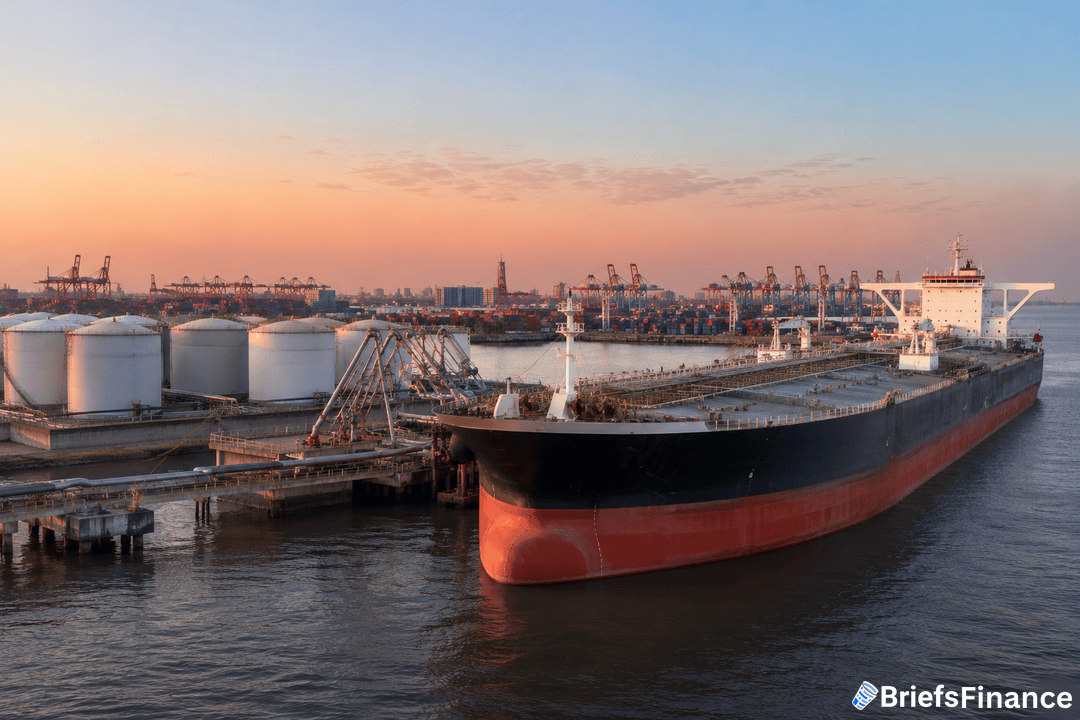
The fuel for the switch is the Iran war and what it has done to the price of crude.
What The PBOC Actually Said
The People's Bank of China released its first-quarter monetary policy report on Monday.
The key line: "The impact of imported inflation on the economy needs monitoring." That is unusual language for a central bank that has spent the better part of two years warning about the opposite problem, deflation, where prices stop rising or fall outright.
Beijing also said it will keep monetary policy "moderately loose" this year to support growth, even as the inflation risk grows. The trigger is energy, with Brent crude surging on the US-Israel war with Iran and pushing input costs higher for the Chinese factories and shippers that drive global trade.
Industrial inputs like chemicals and metals are climbing too.
We track the macro moves that ripple from one continent to another in Market Briefs, delivered every weekday morning with a free investing masterclass thrown in when you sign up.
Why The Switch Matters For Rate Cuts
China's central bank has held its main lending rates steady since June 2025.
The one-year loan prime rate sits at 3.0% and the five-year rate, the benchmark for mortgages, is at 3.5%. Investors had been pricing in further cuts to support growth, especially with the property sector still under pressure.
The new inflation warning makes those cuts harder to justify. PBOC monetary policy adviser Huang Yiping has said the bigger worry is that higher fuel costs will hit company profits before they show up in headline consumer prices, a squeeze that hurts the real economy without giving the central bank room to ease.
The Q1 Growth Cushion
There's one reason the PBOC can wait.
China's economy expanded 5% in the first quarter of 2026, accelerating from 4.5% in late 2025 and landing at the top of Beijing's full-year target. Resilient exports and early fiscal spending did most of the work, which gives policymakers breathing room to hold rates and watch how the oil shock plays out.
The risk is the rest of the year not looking like the first three months. If global demand slows and oil stays high, China could find itself stuck between an inflation problem at the border and a growth problem at home.
What To Watch
Three numbers will tell the story.
The first is the next CPI print, which will show whether oil costs are spilling into consumer prices.
The second is the PBOC's next loan prime rate decision, which will say whether the bank is leaning toward holding or easing.
The third is Brent crude itself: if it slides back below $100, the imported inflation chatter quiets down quickly.
The wait-and-see stance only works as long as the oil shock does not get worse.
For the daily five-minute read on how macro moves like this hit your portfolio, join 350,000+ Market Briefs readers here. You also get a free 45-minute investing course as a bonus.