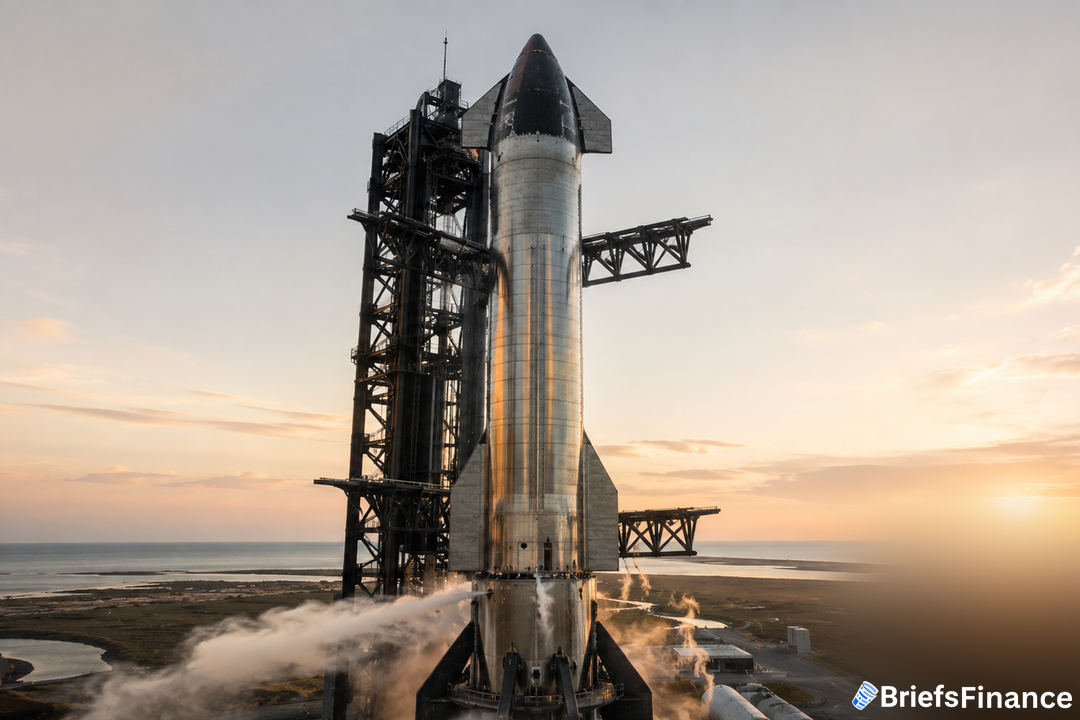
SpaceX just got the green light to fly its giant Starship rocket again. The last test ended with a booster that went sideways instead of returning to the launch pad. Now the company says it knows what went wrong and has fixed the problem.
FAA Clears Starship After May Failure
The agency identified two main causes for the booster failure during the May 22 test. "Heat effects on propulsion system components during the [rocket's] ascent and erroneous engine alarm system settings" were the most probable root causes, the FAA said.
SpaceX agreed. CEO Elon Musk calls such explosions "rapid unscheduled disassembly." SpaceX has made "several hardware and operational modifications" to prevent the same problem. The goal is to make the booster "more reliably flip in the desired direction" when it separates.
The V3 Starship stands 407 feet tall. During the May test, the rocket deployed 20 satellite simulators. Two modified Starlink satellites on board recorded footage of the failure. That data helped engineers figure out what went wrong.
Get the market news that matters in a five-minute read with Market Briefs, our free daily newsletter
What the Next Test Flight Will Do
It will be the second flight of the V3 Starship. Six of those satellites have cameras built in to take exterior photos during flight.
The V3 satellites are designed to increase network capacity and user speeds. They connect "via high-capacity lasers" to the larger Starlink constellation. About 20 minutes after deployment, the new satellites will burn up in the atmosphere.
This launch is critical for SpaceX. The company's long-range strategy rests on the V3 iterations of Starship and Starlink. Those plans include space-based data centers and interplanetary travel.
The booster's flip maneuver is essential for achieving reusability. SpaceX's hardware and operational modifications target the reignition sequence and engine alarm thresholds, aiming to ensure the booster reliably executes its flip and eventually lands for reuse - a key step toward cutting launch costs.
What to Watch
On June 12, 2026, SpaceX completed its initial public offering (IPO) - when a private company sells shares to the public for the first time. The IPO raised a record nearly $86 billion. SpaceX now trades on the Nasdaq stock exchange.
This next launch will be the second test of the Starship system and the first since becoming a publicly traded company, providing a gauge of investor sentiment toward SpaceX's iterative development strategy, often described as "fly, fail, fix." The next launch window opens July 16.
The success of this test is especially important for SpaceX as it works to prove the V3 design can reliably deploy satellites and eventually support missions beyond Earth orbit. A clean flight would build confidence in the fixes made after the May failure and move the company closer to operational use of its giant rocket.
Join Market Briefs, our free daily newsletter, for a quick daily rundown of the markets