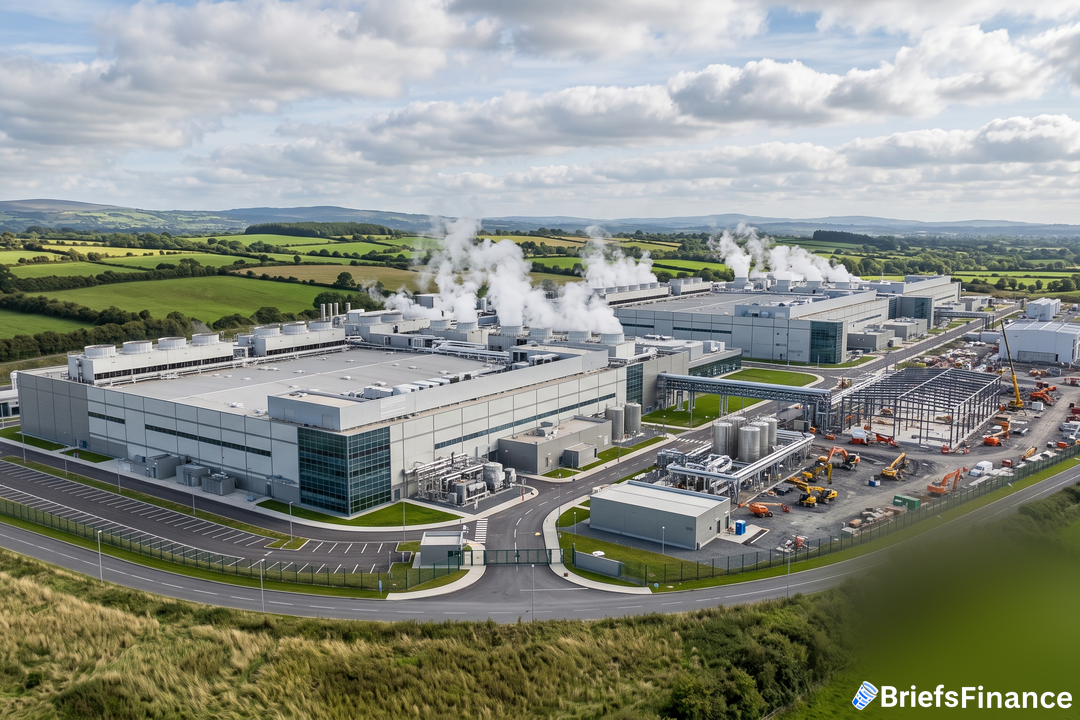
Intel wants to regain its lead in making chips for artificial intelligence. The company is betting that a big, expensive expansion in Ireland will help it catch up.
The Investment
Intel will spend €5 billion to boost production of computer processors used in data centers. The company also plans to improve its research and development work at the site. This is part of a global strategy to make Intel's foundry business - the part of the company that makes chips for other firms - more competitive.
Why This Matters for Intel
Intel's foundry business is in the early stages of winning new clients. The company wants to reduce the world's dependence on chips made in Taiwan and other regions. Naga Chandrasekaran, Intel's Executive Vice President, said: "With respect to this investment, I think the US government realizes that Intel's a global company and we will have to continue to invest both in our US resources as well as other areas."
Get the market news that matters in a five-minute read with Market Briefs, our free daily newsletter
The €5 billion expansion follows Intel's $14.2 billion repurchase of half of the Leixlip plant from Apollo Global Management in April, giving the company full control over the site. That move underscores Intel's determination to rebuild its manufacturing prowess after years of losing ground to rivals like TSMC. The company still has a steep hill to climb, however, as its foundry business has yet to attract major external clients.
In June, US President Donald Trump stated that Intel and Apple Inc. would collaborate on chip design and production within the US. Should that partnership come to fruition, it might draw additional customers to Intel.
The Risks for Ireland
Ireland relies heavily on a handful of big tech companies. According to Ireland's fiscal watchdog, a mere three corporations contribute nearly half of the nation's corporate tax revenue. Meta Platforms Inc., which has a large Irish workforce, recently cut about 20% of its staff in the country. This figure represented twice the anticipated global reduction rate, as the company redirects funds toward AI improvements.
Prime Minister Micheal Martin noted the global chip supply problem. "There's a global issue with supply of semiconductors and chips and it's very clear that the dependence on Taiwan and others has to be reduced by both America and Europe," he said. "Europe and the US should be working closely together." Intel's investment could help, but Ireland's economy is still vulnerable to tech industry slowdowns.
What to Watch
If Intel actually designs and makes chips for Apple in the US, that would signal the foundry business is gaining traction. More customers could follow. Meanwhile, Ireland faces potential job losses from AI and its dependence on a few large firms. Intel's Irish expansion may help, but the company must first prove it can win the AI chip race.
Join Market Briefs, our free daily newsletter, for a quick daily rundown of the markets