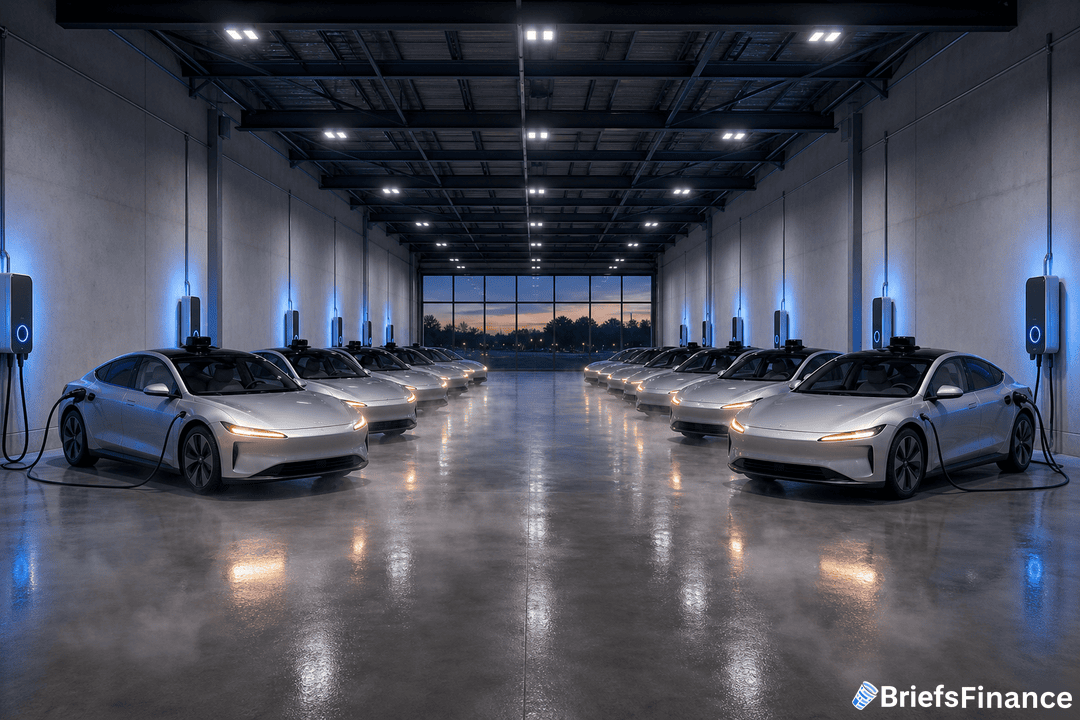
A robotaxi cannot clean itself. It cannot plug itself in.
It cannot fix itself when something breaks. Uber just hired Hertz to do all of it.
Inside The Deal
Hertz is launching a new unit called Oro Mobility. Its job is to run vehicle ops for Uber's robotaxi fleets.
That covers upkeep, charging, cleaning, and the daily work that keeps cars on the road. The first robotaxi service will use Lucid cars with Nuro self-driving tech.
It is set to launch in the San Francisco Bay Area later this year. More cities are lined up for 2027.
Hertz is also supplying and running fleets of cars driven by its own staff on Uber's app. That pilot is up and running in Los Angeles and San Francisco.
Hertz Is Not A Rental Company Anymore
The bigger story is what Hertz is becoming. The old rental car model relied on people walking up to a counter and signing for a car for a few days at a time.
The new model is fleet ops. It is centrally managed, on-demand, and more and more often, self-driving.
Hertz is now pitching itself as the system behind that model. Investors did not love the move on day one.
The stock fell 3.46% on the news. Hertz has had a rough run.
The firm filed for bankruptcy in 2020. Its stock has had big swings since.
Why Uber Said Yes
Uber's Andrew Macdonald said the deal lets Uber run a hybrid network. That means human drivers and self-driving cars side by side, at scale.
He pointed to fleet ops as the missing piece for autonomous rideshare. Uber wants to stay a platform.
Hertz wants to be the operator behind that platform. The split lets both run their preferred play.
Uber stock rose 0.68% on the news.
Why It Matters For Investors
For Uber, the deal cuts the lift of building its own fleet ops arm. For Hertz, it gives the firm a story past simple rentals.
The risk for Hertz is in the math. Fleet ops is a low-margin business.
Robotaxi roll outs can also slip from a launch date. For Lucid and Nuro, the deal is a stamp of approval that could open more doors.
Both have spent years pushing self-driving tech without a major fleet partner. That just changed.
Uber has also been busy on the robotaxi front. It struck a $1.25 billion deal with Rivian to put thousands of robotaxis on U.S. roads.
The Hertz deal slots in next to it. Together, they hint at the shape Uber wants its self-driving network to take.
For Hertz, the bet is bigger. The firm has cycled through CEOs in recent years.
It also took a hit on a deal to add Tesla cars to its fleet. The Uber tie-up is a reset on its growth story.
What To Watch
The robotaxi launch hits the Bay Area later this year. More cities are on the table for 2027.