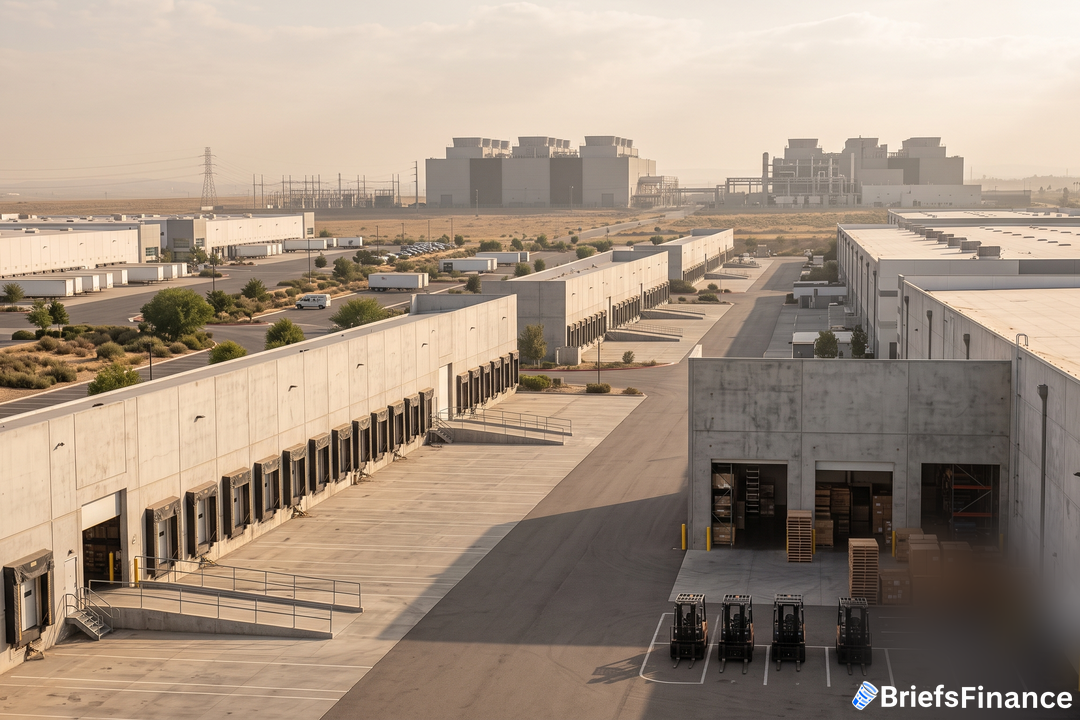
The artificial-intelligence boom is driving a wave of data-center construction. But building those centers involves delays, and tech giants need somewhere to stash equipment and materials while they wait. That need is spilling into the warehouse market, sources say.
Data centers require massive amounts of specialized gear. Much of that equipment arrives months ahead of installation, and delays are frequent due to the high volume of data centers being built. As a result, there is increasing demand for longer-term storage of materials and equipment. Additionally, companies providing construction, rigging, and electrical services are also driving demand.
"If you're building data centers or power generation, there's massive amounts of equipment that needs to be stored somewhere," "said David Levine, Blackstone Inc.'s head of Americas real estate". "One can assume every major data center user has a need for warehouse space."
That demand is already reshaping industrial markets. According to Jones Lang LaSalle Inc., data-center-linked tenants are expected to lease approximately 4 million square feet of warehouse space this year in the mid-Atlantic region, home to Northern Virginia's Data Center Alley, compared to roughly 2.8 million square feet last year. The brokerage forecasts that volume could hit 14 million square feet by 2030.
Rising Rents and Empty Space
The increased demand is pushing industrial rents higher.
Get your free investing masterclass bonus when you join Market Briefs, our free daily newsletter
Across the U.S., the industrial market continues to struggle with a 7.5% vacancy rate, compared to 3.3% in 2022, according to JLL's first-quarter report. Year-over-year asking rent growth was just 0.8% in the first quarter.
Data center firms can pay a premium. "Data center firms have the ability to pay a lot more than just a third-party logistics company," "said Jeffrey Small, chief executive officer of industrial landlord MDH Partners". "Right now, there's still enough hangover space from overbuilding in the last few years for them to absorb."
At Link Logistics, Blackstone's industrial arm, data center-linked tenants accounted for about 15% of new leases signed at its U.S. properties over the last nine months. QTS, a Blackstone-owned data center landlord, has both leased and purchased warehouse space for equipment storage, according to sources.
Industrial property sales in the D.C. metro area, including Northern Virginia, reached nearly $1 billion in 2025, roughly three times the total from the previous year, based on JLL data for deals over $25 million. Per-square-foot prices rose 39%.
The Risks Ahead
But the warehouse boom faces headwinds. Headwinds include ongoing adjustments by landlords, communities, and officials to the AI boom. JLL warns that warehouse leasing could slow if power grid constraints or tighter zoning and regulations impede data center construction. Just recently, QTS and Compass Datacenters scrapped their proposals to build large facilities adjacent to a historic Civil War site in Northern Virginia, facing community opposition.
If leasing activity broadens, it could lead to more pronounced rent increases, "potentially pricing out smaller tenants," as JLL noted.
Subscribe to Market Briefs, our free daily newsletter, and claim your bonus investing masterclass