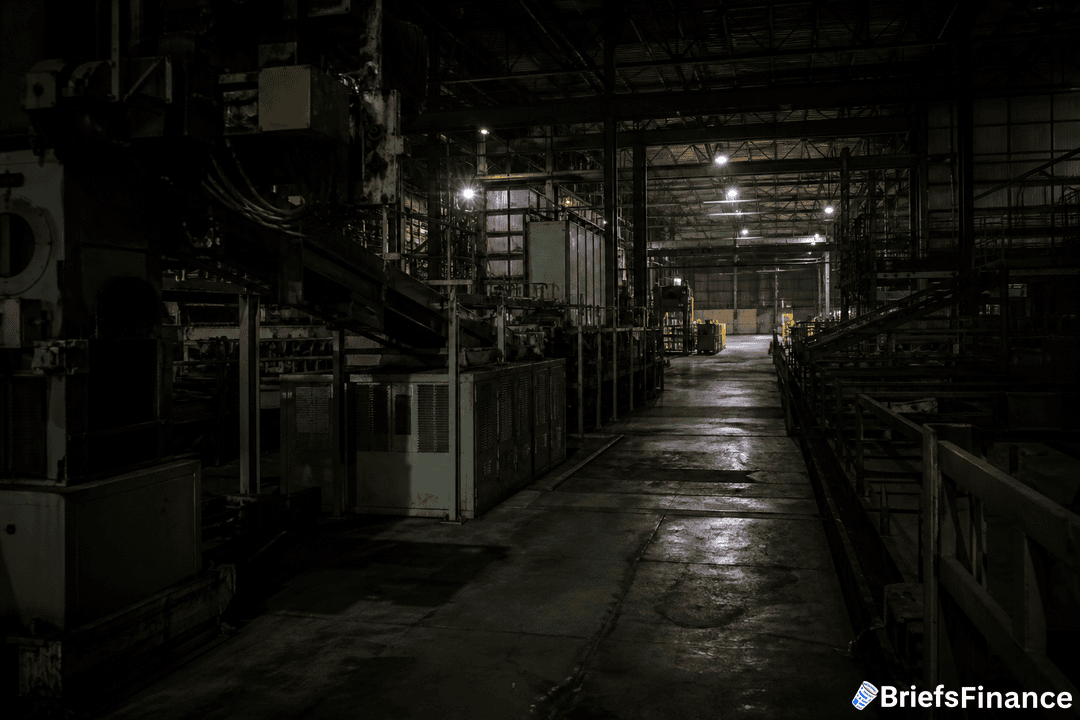
Power Failures Are Threatening the Recovery
Imagine trying to run a factory when the electricity disappears for hours at a time, day after day. That is the situation Venezuelan manufacturers faced in April through June, according to a survey that Conindustria, the country's largest industrial group, published on Tuesday, August 18, 2026.
Conindustria President Tito López said "electricity problems are having a major impact on the industrial sector, with some regions that concentrate much of the country's manufacturing and oil activity experiencing between eight and 12 hours of unplanned power cuts per day."
Those are not quick flickers. That is a factory standing still for hours.
The recovery had been building before this. Industrial production expanded 8.1% year over year during the first half.
Capacity utilization, which measures how close a factory is to running at full output, reached 51.7% in the second quarter.
Years of underinvestment and poor maintenance, plus US sanctions, have weakened the power grid. That fragility is now testing a rebound that had already survived runaway inflation, legal uncertainty, and the departure of skilled workers.
Manufacturers now call electricity their second-biggest production problem, behind taxes.
The latest figures extend a longer pattern. Factories had been operating far below capacity even before the second quarter, and the grid's deterioration had already pushed some companies to rely on backup generation or shift output schedules. The new data suggests those patches are becoming more expensive and less reliable, leaving less room for the broader manufacturing recovery to take hold.
The best financial decisions come from understanding the whole picture. Join Market Briefs free and get the full brief each morning.
Power Cuts Are Worse Outside Caracas
People in affected areas say blackouts have gotten worse since the June earthquakes. In some areas, lost power hours have doubled, while the capital has mostly been spared.
Companies Are Adapting, but the Fixes Are Costly
Smaller firms are the most exposed. They have fewer options when the grid fails.
Among large manufacturers, only 5% can generate all the electricity they need during a blackout.
Diesel for generators costs some small firms more than $2,500 a month, according to López.
Some factories have moved work to overnight shifts, when power is more dependable. Others are negotiating with authorities to set planned blackout times, so they can schedule production around the cuts.
The idea is to turn a surprise into something a factory can plan around.
These workarounds keep machines running, but they only go so far. They do not fix a grid that has been starved of investment for years.
What It Means for Investors
For anyone watching Venezuela as a market, the grid has become the bottleneck. A country cannot build a lasting industrial comeback if factories do not know whether the lights will stay on.
The trend matters more than any single quarterly number. If blackouts keep climbing, production gets harder, costs go up, and the growth story loses credibility.
The difference between a real recovery and a false start may come down to something as basic as reliable power.
For investors, the hours without power are a useful way to measure how real the recovery is.
If power stabilizes, the recovery has a real chance. For the people paying to keep the lights on, the survey is not an abstract report.
Every long blackout costs money, and every generator hour is money that could have been spent on other parts of the business.
Markets move every day, and most of it never reaches you in time. Get the free Market Briefs daily newsletter and stay ahead of it.