Free NewsletterPro Login
S&P 500 6,287 +0.42%
DOW 44,521 -0.18%
NASDAQ 21,103 +0.71%
S&P 500 +12.4%
Briefs Finance Fund +24.8%
JOIN THE FUND →

Low National Negative Equity Hides Risks in Sunbelt Markets Like Cape Coral

Published Jul 6, 2026
[tts_player]
Share:
Summary:
  • Only 1.5% of U.S. homeowner mortgages had negative equity as of late May 2026, up from 1% a year earlier but well below the 23% peak in 2009.
  • Cape Coral‑Fort Myers, Florida, leads the largest metros with 11.1% of mortgages underwater.
  • Nearly half of all outstanding mortgages (49.9%) carry rates below 4%, which accelerates principal repayment and equity building.

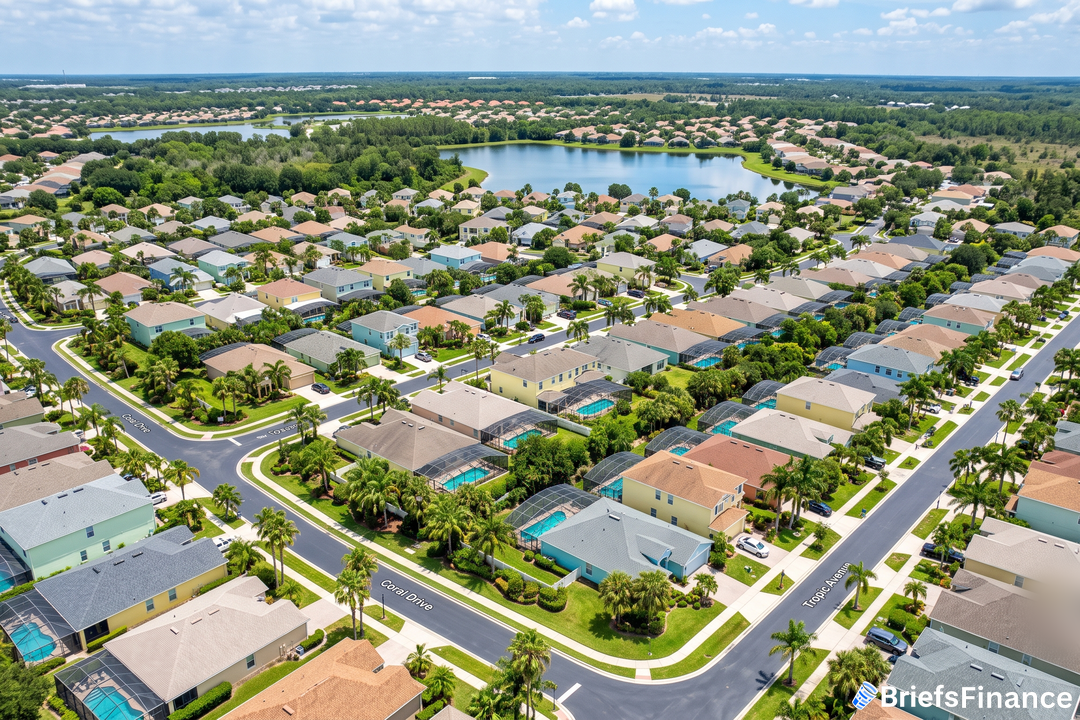
Most U.S. homeowners are sitting on plenty of equity. National home prices remain near record highs, and millions of borrowers locked in ultra-low rates during the pandemic. But a handful of Sunbelt markets tell a different story. There, home prices have fallen sharply from their peaks, and recent buyers are getting squeezed.

To put the current situation in perspective, the negative equity rate peaked at 23% during the Great Recession in September 2009. Since then, a combination of rising home prices, conservative lending standards, and pandemic‑era stimulus has dramatically improved homeowner balance sheets. Many borrowers who bought before 2020 have seen their home values double or more, while those with low‑rate mortgages are paying down principal faster than standard amortization schedules.

This financial cushion means that even if home prices dip moderately, the vast majority of homeowners remain above water. However, the recent downturn in Sunbelt markets highlights the vulnerability of buyers who entered at the peak of the pandemic boom.

Why National Negative Equity Is Low

As housing experts explain, "Being underwater means you owe more on your mortgage than your home is worth." It is also called negative equity. The low national rate is sustained by three key factors.

Get your free investing masterclass bonus when you join Market Briefs, our free daily newsletter

First, home prices across the country are still close to their historic peaks. Second, many homeowners locked in ultra-low mortgage rates during the pandemic, which means they have been paying down principal more aggressively; as of Q1 2026, 49.9% of outstanding mortgages still have rates below 4%. Third, tighter lending standards after the housing crisis mean that most borrowers have substantial down payments and solid credit, reducing the risk of negative equity.

These Sunbelt Markets Are Most at Risk

These cities saw huge home price jumps during the pandemic. Now they are giving back some of those gains. Home prices in Cape Coral‑Fort Myers have fallen 18.9% from their peak.

In Austin, the drop is even steeper at 27.3%. That hurts recent buyers most. Among Austin borrowers who bought in 2022, a striking 22.4% are underwater.

At the other end of the spectrum, Bridgeport, Connecticut, and San Jose, California, have just 0.1% of mortgages underwater. Boston, Los Angeles, and Hartford are at 0.2%. These markets never saw the same boom‑and‑bust pattern.

The pandemic-era housing boom was fueled by remote work, low interest rates, and demographic shifts toward warmer, more affordable regions. In Sunbelt cities like Cape Coral and Austin, prices surged as buyers competed for limited inventory. But once interest rates climbed and remote work patterns stabilized, demand cooled sharply, leaving recent purchasers with thin equity and heightened negative-equity risk.

ADVERTISEMENT

You can view the interactive version of the table covering all 100 metros analyzed by ICE Mortgage Technology here. While metros like Cape Coral (11.1%) and Austin (6.6%) have elevated underwater shares, these percentages remain far below the Great Financial Crisis peaks. In September 2009, Nevada saw 68% of borrowers underwater, Arizona 48%, and Florida 45%.

Currently, only recent borrowers from 2022-2025 are affected in these down markets. Furthermore, borrowers with thin equity - such as FHA and VA loans requiring as little as 3.5% down - are more likely to fall into negative equity. The key takeaway: if home prices continue to decline modestly in the Southwest, Southeast, and West, the underwater share among recent buyers will increase, but even then it won't approach the 2009-2010 levels.

Subscribe to Market Briefs, our free daily newsletter, and claim your bonus investing masterclass

Disclosure

Recent News

1 2 3 32

Get Market Briefs delivered to your inbox every morning for free!

No fluff. No noise. No politics. Just finance news you can read in 5 minutes.

Blogs

June 29, 2026
Portfolio Diversification: Why Putting All Your Eggs in One Basket Destroys Wealth
  • Real diversification means spreading investments across all 11 economic sectors plus bonds, alternatives, and cash so no single bet can sink the portfolio.
  • Different sectors perform at different times, so a diversified portfolio captures upswings while smoothing the brutal drawdowns that wipe out concentrated bets.
  • Total market index funds offer the simplest path to diversification, and annual rebalancing is what keeps the structure working over time.
Read More
June 29, 2026
Non Taxable Income: What It Is and Why It Matters
  • Non taxable income is money you receive that you don't owe income tax on.
  • The tax code treats workers, investors, and business owners very differently, and investors often come out ahead.
  • Learning how income is taxed is a quiet superpower for keeping more of what you earn.
Read More
June 29, 2026
Semiconductor Stocks: A Simple Guide for Investors
  • Semiconductor stocks are companies that design and make computer chips, the brains inside nearly every modern device.
  • The AI boom has turned chips into one of the market's most important and most watched groups.
  • They offer big growth potential, but come with high valuations and a notoriously cyclical history.
Read More
June 25, 2026
How Stocks Work: A Simple Guide for Beginners
  • A stock is a slice of ownership in a company - buy one, and you own a piece of the business.
  • You make money two ways: the share price rising over time, and dividends paid to shareholders.
  • The simplest path for most beginners is buying into the whole market through a low-cost index fund.
Read More
June 25, 2026
Stop Loss vs Stop Limit: What's the Difference?
  • A stop loss order sells your stock once it hits a trigger price, prioritizing getting you out.
  • A stop limit order only sells within a price range you set, prioritizing price over a guaranteed exit.
  • The trade-off: a stop loss almost always executes; a stop limit might not if the price moves too fast.
Read More
June 25, 2026
Energy Stocks: A Simple Guide for Investors
  • Energy stocks are companies that produce and supply the power the world runs on, from oil and gas to newer sources.
  • They make up one of the 11 sectors of the market and tend to move with energy prices and big-picture shifts.
  • Like any sector, the key is diversification and understanding the forces driving demand.
Read More
June 18, 2026
What Is a Stop Loss Order? A Simple Guide
  • A stop loss order automatically sells a stock once it falls to a price you set.
  • It's a tool to cap losses or lock in gains without watching the market all day.
  • It works best for active strategies, and can backfire if used carelessly on long-term holdings.
Read More
June 18, 2026
Best S&P 500 Index Fund: How to Choose One
  • The best S&P 500 index fund for most investors is simply the cheapest, most established one that tracks the index well.
  • Funds like VOO, IVV, and SPY all hold the same 500 companies, so the biggest difference is the fee.
  • Pick one, automate your buys, and let time do the heavy lifting.
Read More
June 17, 2026
What Are Penny Stocks? Risks and Rewards Explained
  • Penny stocks are very low-priced shares of very small companies, often trading for just a few dollars or less.
  • They promise huge gains but carry huge risks: low liquidity, high failure rates, and wild price swings.
  • Most investors are better served by quality companies and funds than by chasing cheap shares.
Read More
June 17, 2026
Best Stocks for Beginners With Little Money
  • The best stocks for beginners with little money usually aren't individual stocks at all - they're low-cost index funds.
  • You can start with $100 or less and use small, regular investments to build wealth over time.
  • Focus on diversification and consistency, not on picking the next big winner.
Read More
1 2 3 24
Share via
Copy link










