Free NewsletterPro Login

Warning: Undefined variable $stocks in /var/www/briefs.co/htdocs/wp-content/plugins/oxygen/component-framework/components/classes/code-block.class.php(133) : eval()'d code on line 448

Warning: foreach() argument must be of type array|object, null given in /var/www/briefs.co/htdocs/wp-content/plugins/oxygen/component-framework/components/classes/code-block.class.php(133) : eval()'d code on line 448

Warning: Undefined variable $funds in /var/www/briefs.co/htdocs/wp-content/plugins/oxygen/component-framework/components/classes/code-block.class.php(133) : eval()'d code on line 472

Warning: foreach() argument must be of type array|object, null given in /var/www/briefs.co/htdocs/wp-content/plugins/oxygen/component-framework/components/classes/code-block.class.php(133) : eval()'d code on line 472
/* the link was here */
×
Free investor livestream — Nov 17

How To Use ChatGPT & Claude To Research Stocks Like A Pro

01
The prompt we use to break down any stock
02
How to fact-check what AI tells you
03
How to compare two stocks in minutes

U.S. miner teams with Rwanda to rebuild tungsten supply chain beyond China

Published Sep 14, 2026
Share:
Summary:
  • Almonty Industries and Rwanda inked a binding deal Monday to source and process tungsten, part of a push to build a China-light supply chain.
  • By contributing a processing permit and an exploration concession, Rwanda will own 25% of an Almonty subsidiary based locally, with Almonty retaining the balance.
  • Shipments are aimed at customers in the U.S., Europe, Japan and South Korea while a local collection and processing network is built out.

The deal and who is involved

Almonty Industries Inc., headquartered in Dillon, Montana, signed a binding agreement with Rwanda that gives the government a 25% stake in a local Almonty subsidiary in return for a processing license and an exploration concession. Almonty retains the remaining ownership. CEO Lewis Black said Washington helped shape the partnership and provided political backing, but offered no funding. "Traders can play with the pirates," he said. "We're only interested in licensed domestic output."

The company portrays itself as a turnaround-focused investor and operator dedicated to conflict-free tungsten, collaborating with several governments. Beyond Rwanda, the company is commissioning a large mine in South Korea, runs operations in Portugal, and is pursuing further projects in Spain and the U.S. The Rwanda venture is intended to modernize and expand the country's industry while deepening trade links and enduring mineral-supply relationships between Rwanda and the U.S.

How the partners will supply tungsten quickly

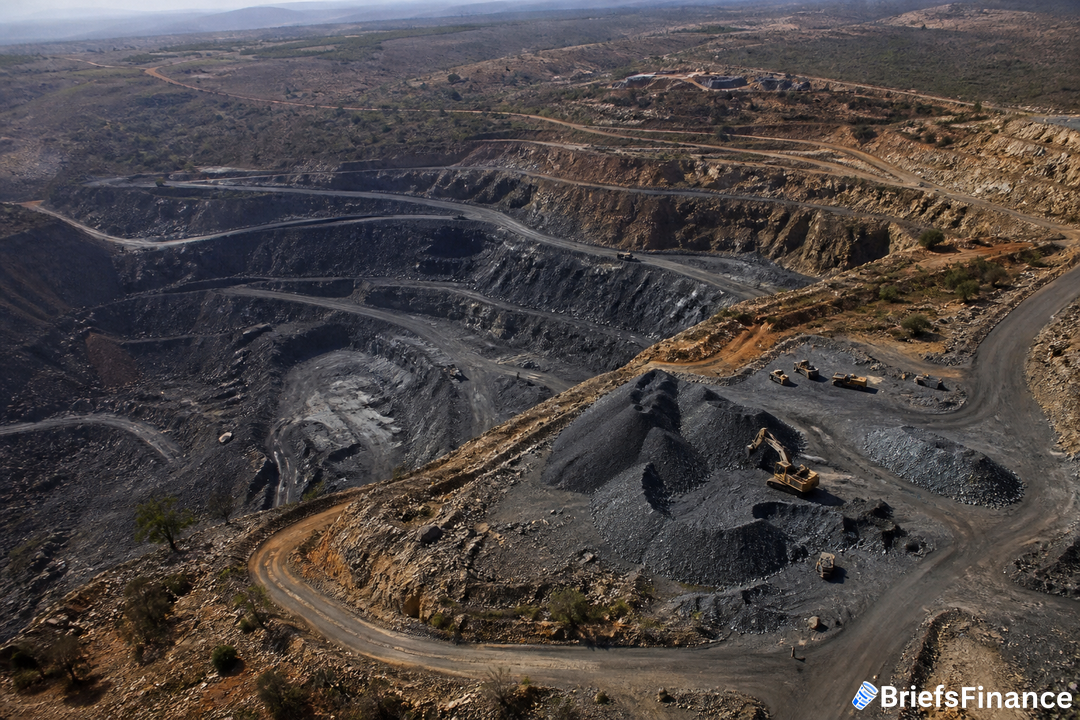
To accelerate timelines without sinking a new pit, the partners will buy ore, pre-concentrate it, and reclaim tailings sourced from Rwandan operations that hold current licenses, with participation from small-scale miners. That feedstock can be sold, upgraded or exported as the partners progress toward establishing a permanent hub for collection and processing in Rwanda.

In Rwanda, the partners intend to deploy a mobile plant near current tailings dams and commence work on the approximately 32 square kilometer (12 square mile) Shyorongi exploration area. This setup provides Almonty with nearer-term access to tungsten while it develops a broader homegrown processing and production platform, and Black sees it as a model for other countries with small-scale tungsten sectors.

Global context, prices and Rwanda's role

China dominates both mine output and processing of tungsten, while the U.S. produces zero. The surge accelerated earlier this year as buyers ran down inventories and Middle East conflict heightened focus on military demand, before steadying in recent months.

High prices alone likely will not solve the shortage. The Oregon Group points to financing, permitting and construction barriers, making government support and long-term offtake agreements more important. Also on Monday, the Pentagon pledged $450 million to Elmet Group to boost U.S. manufacturing and to back investments in tungsten mining and processing.

When supply chains change, staying disciplined helps protect and grow your savings. Join Briefs Finance CEO Jaspreet Singh on September 29th for a FREE live investor workshop, How to Profit From A Dollar That's Losing its Value, where he shows how we're spotting investment opportunities as the dollar falls. Save your spot.

Among the world's top 10 tungsten producers, Rwanda stands alone as the sole African country, giving it outsized relevance for diversification. Trinity Metals Ltd., operator of Rwanda's large-scale Nyakabingo mine, said in June that over 320 tons of high-grade concentrate had shipped to a Pennsylvania processing facility since an offtake deal last year, covering as much as 20% of U.S. primary tungsten concentrate consumption.

For years, Rwanda has been accused of allowing tungsten originating in the Democratic Republic of Congo and Burundi to be filtered through its supply network and shipped abroad under a Rwandan label. Black characterized the initiative as a short-term bridge, acknowledging the long timelines for mine development, while also serving to formalize local output and strengthen traceability.

What it means for your money

This metal sits at the intersection of chips and munitions, so policy moves and geopolitics can swing prices hard. By 10:30 a.m. in New York on Monday, Almonty shares were down 1.9%, trimming their year-to-date gain to 72%. Partnerships that channel small-scale output into verified, traceable supply could reduce shocks and make costs less beholden to Beijing's rulebook.

Diversifying patiently across reliable assets keeps your portfolio resilient through uncertainty. Our CEO Jaspreet Singh is hosting a FREE live investor workshop, How to Profit From A Dollar That's Losing its Value, on September 29th. Sign up free to join him live.

Disclosure

Recent News

1 2 3 … 117

Get Market Briefs delivered to your inbox every morning for free!

No fluff. No noise. No politics. Just finance news you can read in 5 minutes.

Blogs

November 2, 2026
Credit Utilization: How Paying Down Cards Can Help Your Score
  • Credit utilization is your card balances divided by your credit limits, checked overall and card by card.
  • Lower is generally better, and Experian says the effect becomes more noticeable around 30%.
  • Paying down balances and keeping new charges off your cards are the main ways to lower it.
Read More
November 2, 2026
How to Calculate Your Net Worth, With a Worked Example
  • Net worth is what you own minus what you owe, and it can be negative early on.
  • Use today's value for your assets and today's payoff balances for your debts.
  • Recalculate on the same date each quarter or year, since the trend matters more than the starting number.
Read More
November 2, 2026
How to Get Out of Debt on a Low Income, Step by Step
  • List every debt with its balance, APR, minimum and due date, then pause new charges.
  • An extra $50 a month on a $3,000 card at 22% cuts the payoff from about 44 months to about 26.
  • If nothing is left over, call your lenders and a nonprofit credit counselor, and avoid anyone who charges fees before settling debt.
Read More
November 2, 2026
How to Save Money on a Low Income, With a Budget Example
  • Saving 10% of a $2,000 paycheck is $200 a month, which reaches a first $2,000 in 10 months.
  • Set the transfer for payday and keep the money in a separate savings account.
  • Lower your biggest bills, cancel unused subscriptions and check programs like Lifeline and the EITC.
Read More
November 2, 2026
How to Budget With an Irregular Income, Even in Lean Months
  • Build your budget on your lowest recent month, not your average, so slow months don't leave you short.
  • Pay yourself a fixed salary from a holding account, and keep extra from good months as a cushion.
  • If no one withholds tax from your pay, set tax money aside every month.
Read More
November 2, 2026
How to Track Your Spending in 15 Minutes a Week
  • Start with last month's bank and card statements, receipts and any cash purchases.
  • Sort every purchase into a few groups that match your budget, like groceries and eating out.
  • Spend about 15 minutes each week adding purchases, checking each group and picking one change.
Read More
November 2, 2026
Should You Invest or Pay Off Debt? How to Decide
  • Card interest is a cost you can see ahead of time, while investing returns can go up or down.
  • A $3,000 card balance at 24% costs about $60 in interest in the first month.
  • Check whether you have a cushion, how high your rate is, whether your employer offers a match and how you'd handle a market drop.
Read More
November 2, 2026
Pay Yourself First: What It Means and How to Automate It
  • Paying yourself first means moving money to savings and investing on payday, before bills and spending.
  • The 75/15/10 split puts at least 10% toward savings and at least 15% toward investing.
  • Start smaller if money is tight, and automate the transfers so you only make the decision once.
Read More
November 2, 2026
What Is a Good Credit Score? Ranges and What Moves Yours
  • On the FICO scale, a good credit score is 670 to 739, and very good starts at 740.
  • Payment history (35%) and amounts owed (30%) are the two biggest parts of your score.
  • Paying every bill on time and paying down card balances are the two best places to start.
Read More
November 2, 2026
How to Lower Your Credit Card Interest Rate, With a Call Script
  • Before you call, have your APR, balance, card history, on-time record and any lower-rate offers ready.
  • Use the script to ask for a lower rate, then ask for a temporary cut or a hardship program if the answer is no.
  • On a $5,000 balance paid at $200 a month, dropping from 26.99% to 23.99% saves about $430 in interest.
Read More
1 2 3 … 31
Share via
Copy link