Free NewsletterPro Login
S&P 500 6,287 +0.42%
DOW 44,521 -0.18%
NASDAQ 21,103 +0.71%
S&P 500 +12.4%
Briefs Finance Fund +24.8%
JOIN THE FUND →

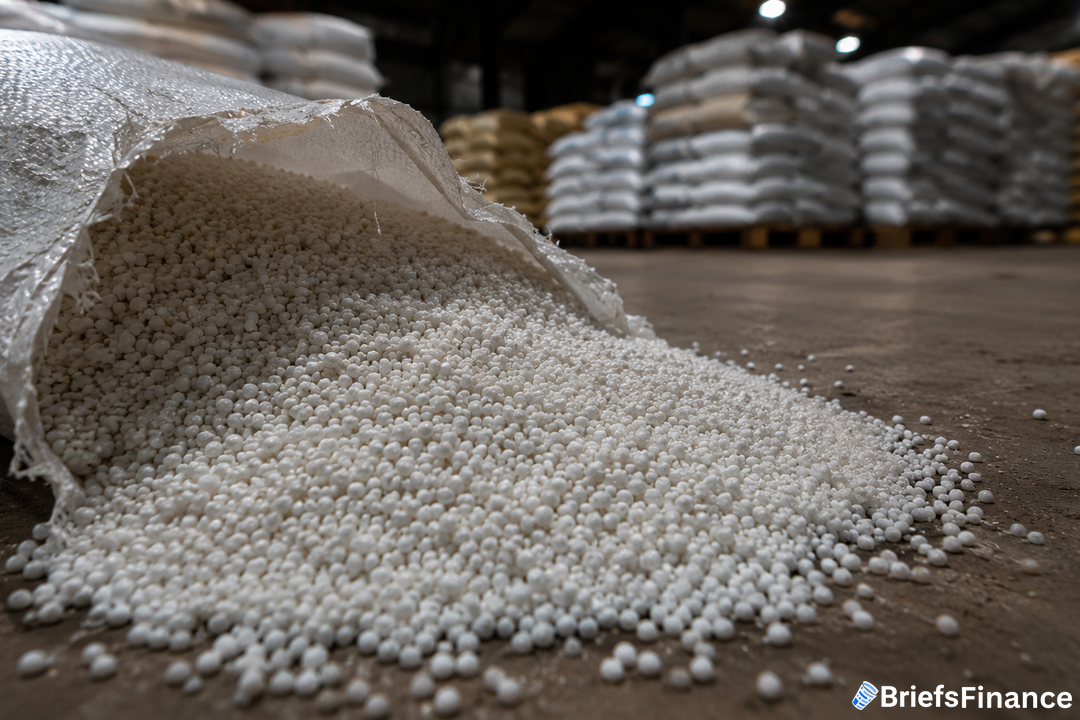
Urea Fertilizer Prices Soar 50% After Hormuz Strait Blockade

Published Jul 5, 2026
[tts_player]
Share:
Summary:
  • On Feb. 28, 2026, U.S. and Israeli strikes against Iran severely disrupted traffic through the Strait of Hormuz.
  • Urea prices surged around 50% since the conflict began, now around $700 per metric ton, up from $400-$490.
  • According to the United Nations, the Strait of Hormuz typically handles about a third of all fertilizer cargo transported by sea globally.

Now the route is essentially closed, as multiple vessels have been struck by ordnance while in or around the strait. Fertilizer costs have already spiked, but the worst may come when spring planting begins.

Fertilizer is not oil or gas - without it, crop yields suffer, leading to higher food prices.

Why Fertilizer Prices Are Surging

On February 28, 2026, the United States and Israel carried out military attacks against Iran. Since then, shipping movements through the Strait of Hormuz - a tight channel off Iran's southern coast - have faced major interruptions. Major fertilizer-producing countries in the region, including Saudi Arabia, Qatar, Bahrain, Iran, Kuwait, and the United Arab Emirates, have stopped or reduced shipments.

Chris Lawson, a CRU vice president focusing on market intelligence and pricing, said, "With the Strait of Hormuz essentially cut off, there's a big chunk of global trade that isn't able to move right now."

Sarah Marlow, who leads fertilizer pricing globally at the price reporting agency Argus, explained: "Almost 50% of all globally traded sulfur comes from that region. For urea, it's around a third of all globally traded urea that comes from that region and for ammonia, it's close to 25%."

Get your free investing masterclass bonus when you join Market Briefs, our free daily newsletter

According to Oxford Economics' Alpine Macro, urea prices surged around 50% and ammonia prices around 20% since the war began. Additionally, prices for other fertilizers, including potash and sulfur, have increased as well since the conflict started.

This disruption echoes the 2022 Russia-Ukraine war, which also sent fertilizer costs soaring. However, analysts note that the current closure is even more disruptive because of the high concentration of production in Gulf states. "I'm a lot more concerned about the current crisis than I was when Russia-Ukraine happened four years ago," said Dawid Heyl, co-manager of the natural resources team at Ninety One.

One energy company, QatarEnergy, said it would halt further downstream urea output after pausing its LNG production. China also put restrictions on fertilizer exports to protect its domestic market, Reuters reported last week.

Why Nitrogen Matters Most

Not all fertilizers are equal. Unlike potash or phosphates, which farmers can skip for a season, nitrogen is essential every year.

"You can skip a season of potash, you can skip a season of phosphates, but you can't skip a season of nitrogen," Heyl said. He added: "There's a direct correlation to your nitrogen application and your agricultural yield in the end."

Iran itself ranks as a significant manufacturer of nitrogen fertilizers and is among the world's top exporters.

What to Watch

Heyl noted that markets entered 2026 with fairly high stocks of basic food commodities reliant on fertilizer, providing "buffer stocks" that might help offset some shortages. "If agricultural yields were [hypothetically] impacted by 5% this year, I don't think we'll be looking at starvation, but it would certainly cause food inflation," he said. He noted that developing nations would probably bear the brunt of the effects.

The ripple effects of the Hormuz closure extend beyond immediate price spikes. Developing countries that depend on imported fertilizers face the greatest risk, as they lack the financial buffers to absorb higher costs. Without swift resolution, the disruption could lead to reduced fertilizer application and lower crop yields in key agricultural regions, ultimately exacerbating global food insecurity.

With the conflict ongoing and no clear timeline for reopening, fertilizer prices may continue rising until shipping resumes or alternative supply routes emerge.

Subscribe to Market Briefs, our free daily newsletter, and claim your bonus investing masterclass

Disclosure

Recent News

1 2 3 32

Get Market Briefs delivered to your inbox every morning for free!

No fluff. No noise. No politics. Just finance news you can read in 5 minutes.

Blogs

June 29, 2026
Portfolio Diversification: Why Putting All Your Eggs in One Basket Destroys Wealth
  • Real diversification means spreading investments across all 11 economic sectors plus bonds, alternatives, and cash so no single bet can sink the portfolio.
  • Different sectors perform at different times, so a diversified portfolio captures upswings while smoothing the brutal drawdowns that wipe out concentrated bets.
  • Total market index funds offer the simplest path to diversification, and annual rebalancing is what keeps the structure working over time.
Read More
June 29, 2026
Non Taxable Income: What It Is and Why It Matters
  • Non taxable income is money you receive that you don't owe income tax on.
  • The tax code treats workers, investors, and business owners very differently, and investors often come out ahead.
  • Learning how income is taxed is a quiet superpower for keeping more of what you earn.
Read More
June 29, 2026
Semiconductor Stocks: A Simple Guide for Investors
  • Semiconductor stocks are companies that design and make computer chips, the brains inside nearly every modern device.
  • The AI boom has turned chips into one of the market's most important and most watched groups.
  • They offer big growth potential, but come with high valuations and a notoriously cyclical history.
Read More
June 25, 2026
How Stocks Work: A Simple Guide for Beginners
  • A stock is a slice of ownership in a company - buy one, and you own a piece of the business.
  • You make money two ways: the share price rising over time, and dividends paid to shareholders.
  • The simplest path for most beginners is buying into the whole market through a low-cost index fund.
Read More
June 25, 2026
Stop Loss vs Stop Limit: What's the Difference?
  • A stop loss order sells your stock once it hits a trigger price, prioritizing getting you out.
  • A stop limit order only sells within a price range you set, prioritizing price over a guaranteed exit.
  • The trade-off: a stop loss almost always executes; a stop limit might not if the price moves too fast.
Read More
June 25, 2026
Energy Stocks: A Simple Guide for Investors
  • Energy stocks are companies that produce and supply the power the world runs on, from oil and gas to newer sources.
  • They make up one of the 11 sectors of the market and tend to move with energy prices and big-picture shifts.
  • Like any sector, the key is diversification and understanding the forces driving demand.
Read More
June 18, 2026
What Is a Stop Loss Order? A Simple Guide
  • A stop loss order automatically sells a stock once it falls to a price you set.
  • It's a tool to cap losses or lock in gains without watching the market all day.
  • It works best for active strategies, and can backfire if used carelessly on long-term holdings.
Read More
June 18, 2026
Best S&P 500 Index Fund: How to Choose One
  • The best S&P 500 index fund for most investors is simply the cheapest, most established one that tracks the index well.
  • Funds like VOO, IVV, and SPY all hold the same 500 companies, so the biggest difference is the fee.
  • Pick one, automate your buys, and let time do the heavy lifting.
Read More
June 17, 2026
What Are Penny Stocks? Risks and Rewards Explained
  • Penny stocks are very low-priced shares of very small companies, often trading for just a few dollars or less.
  • They promise huge gains but carry huge risks: low liquidity, high failure rates, and wild price swings.
  • Most investors are better served by quality companies and funds than by chasing cheap shares.
Read More
June 17, 2026
Best Stocks for Beginners With Little Money
  • The best stocks for beginners with little money usually aren't individual stocks at all - they're low-cost index funds.
  • You can start with $100 or less and use small, regular investments to build wealth over time.
  • Focus on diversification and consistency, not on picking the next big winner.
Read More
1 2 3 24
Share via
Copy link










