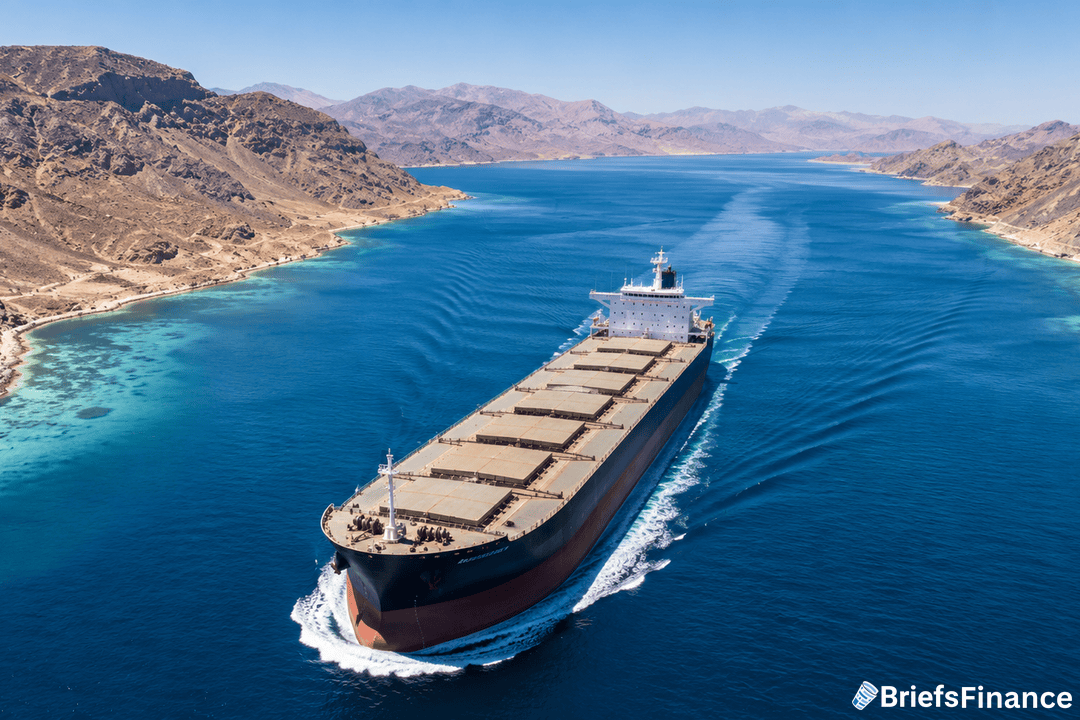
The Strait of Hormuz has been mostly shut since late February. That one closed waterway did real damage. It pushed up the price of bread and cooking oil. It also raised the cost of fertilizer. Now a US-Iran deal could open it back up, and crop prices are already sliding.
Why A Shipping Lane Moves Your Grocery Bill
Hormuz is a narrow strip of water. It sits at the mouth of the Persian Gulf. It is one of the busiest routes on earth. Oil, fuel, and fertilizer all pass through it.
Picture the main road into a city shutting down. Everything still has to get in. It just moves slower and costs more. That is what the closure did to fertilizer.
Pricier fertilizer makes crops cost more to grow. So grain prices climbed. The deal flips that. Wheat and corn futures fell more than 1% in Chicago. Soybeans slipped too, and palm oil fell as much as 0.8% in Kuala Lumpur.
We explain how far-off events like this hit your money every morning in Market Briefs, plus a free investing masterclass when you sign up.
This Won't Fix Overnight
A signed deal does not mean clear water tomorrow. One executive at fertilizer maker Mosaic gave a warning. Global supplies could still run 20% to 30% short of demand.
The reason is simple. Ships have sat idle near the strait for months. It takes time to get them moving again.
The strait also handles about half the world's sulfur. Fertilizer makers can't work without it. One strategist put it plainly. Markets want proof, not just an announcement.
The strait carries a big share of the world's oil too. Idle ships have been stacking up near it for weeks. Some fertilizer plants had to pause work during the shutdown.
The Bigger Picture
The conflict ran for about four months. Pakistan's prime minister helped broker the deal. President Trump said he would open the strait and pull back the US naval blockade. The official signing is set for Friday in Switzerland.
The closure forced importers to use far-off ports. Many were never built to handle grain. That slowed everything down and pushed up shipping costs.
The war also lifted crude oil and fuel prices. That raised demand for biofuels like ethanol, which is made from crops. A reopening could reverse that. Some of the price spike had already faded, thanks to big global stockpiles.
What To Watch
The United Nations gave a warning in May. A long closure could spark a global food price crisis within a year. A real reopening takes that threat off the table.
For now, the futures market is voting yes. Grain traders started pricing in cheaper food right away.
The deal still has to hold. But food buyers just got their first good news in months. A failed deal could send prices right back up.
If you want the global stories that move prices broken down daily, join Market Briefs here and get a 45-minute investing course thrown in.