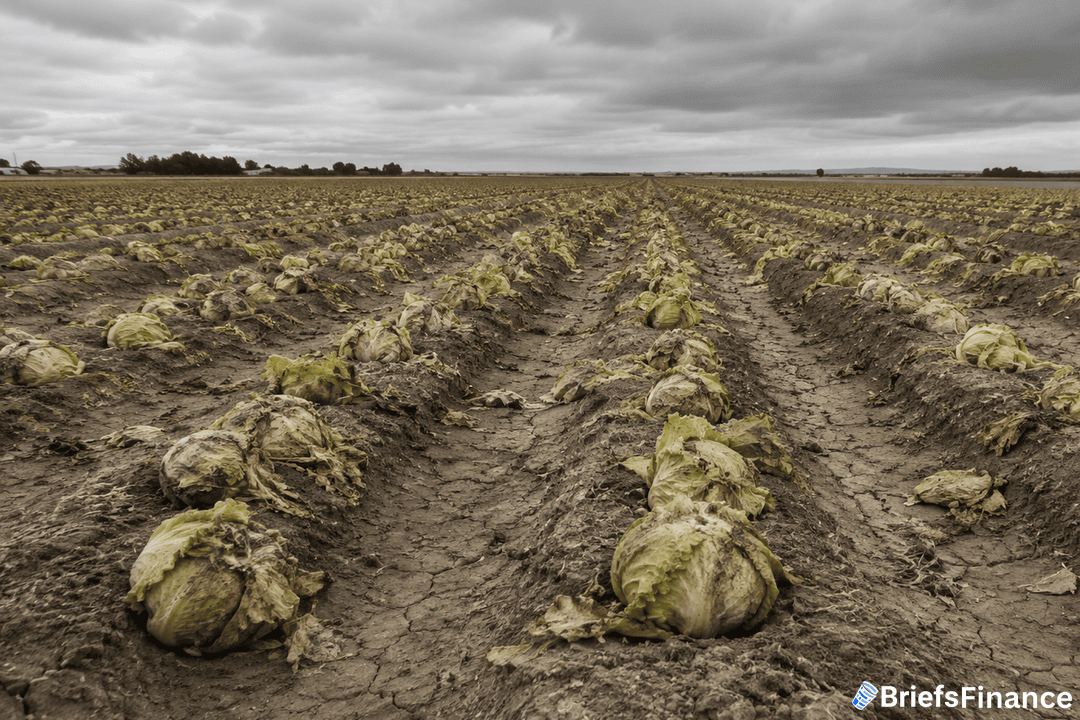
The Great Lettuce Crash
Here is a sentence you do not hear every day: nobody wants lettuce right now. And that lack of demand just sent prices tumbling at a record pace.
Lettuce also posted the largest month-over-month price drop in the CPI's food category for July, a month when overall food prices rose just 0.1%.
The reason is not a sudden surplus of greens. It is fear.
A cyclospora outbreak was traced to iceberg lettuce from a Taylor Farms processing site in central Mexico, and Taylor Farms voluntarily recalled products from that location. The parasite has sickened thousands of people, and consumers are responding the only way they know how: by skipping the salad aisle entirely.
"It's very likely due to the cyclospora outbreak and consumers just not wanting to buy lettuce right now," said Jeremy Horpedahl, an economist who has been tracking the numbers. "It's fallen because nobody wants it."
Restaurants Feel the Chill
The outbreak did not stop at grocery stores. It hit restaurant chains too, even the ones that never touched the contaminated supply.
Get the free Always Be Buying eBook and learn the simple system for building wealth on any income
Chipotle said cyclospora cut its sales by roughly 2 percentage points in the second half of July. Executives assured analysts its lettuce supply was unaffected and called its food safety program very robust, but the damage to customer confidence was already done.
Several other chains reported similar pain. Cava CEO Brett Schulman said broader consumer concerns about leafy greens and fresh produce dented near-term sales around the end of the company's second quarter, though sales trends have started recovering. Yum Brands CEO Chris Turner said in late July the outbreak, which was first linked to lettuce at the company's Taco Bell chain, caused a meaningful near-term sales hit. His one piece of good news: sales were steadily improving.
Sweetgreen had the roughest week. The chain reported reduced demand from the outbreak, could not predict when a rebound would come, and cut its full-year guidance, triggering a selloff in its shares.
What the Price Drop Really Means
Here is the twist: cheap lettuce is not actually cheap. Not compared to history, anyway.
The reason prices got so high in the first place is a perfect storm of bad luck. Higher fertilizer costs tied to the Iran war and increased farm labor expenses from President Trump's mass deportations had driven lettuce to all-time highs earlier this summer. Then the outbreak hit, and demand vanished.
The catch: a price drop driven by fear is not the same as a price drop driven by abundance. "Consumers are not going to rush out and buy this now just because it's cheaper," Horpedahl said. "The consumer is just wanting to stay away from this product."
For your wallet, the near-term math is simple enough. If you are comfortable buying lettuce, you are getting a deal right now. If you are not, you are not missing much, since the savings are modest compared to where prices stood last year.
The bigger question is what happens next. Outbreak fears tend to fade, and demand usually returns. When it does, those pre-crash cost pressures are still there.
Cheap lettuce may not last long, so if you have been waiting for a good price, this might be the moment. Just wash it well.
Download the free Always Be Buying eBook and start putting your money to work today