The launch and the hardware
Alphabet is set to put its own AI silicon into low Earth orbit on Thursday, hitching a ride on SpaceX's Falcon 9. As part of SpaceX's uncrewed Transporter-18 mission, liftoff from Vandenberg Air Force Base in California's Santa Barbara County is set for 11:15 am PT.
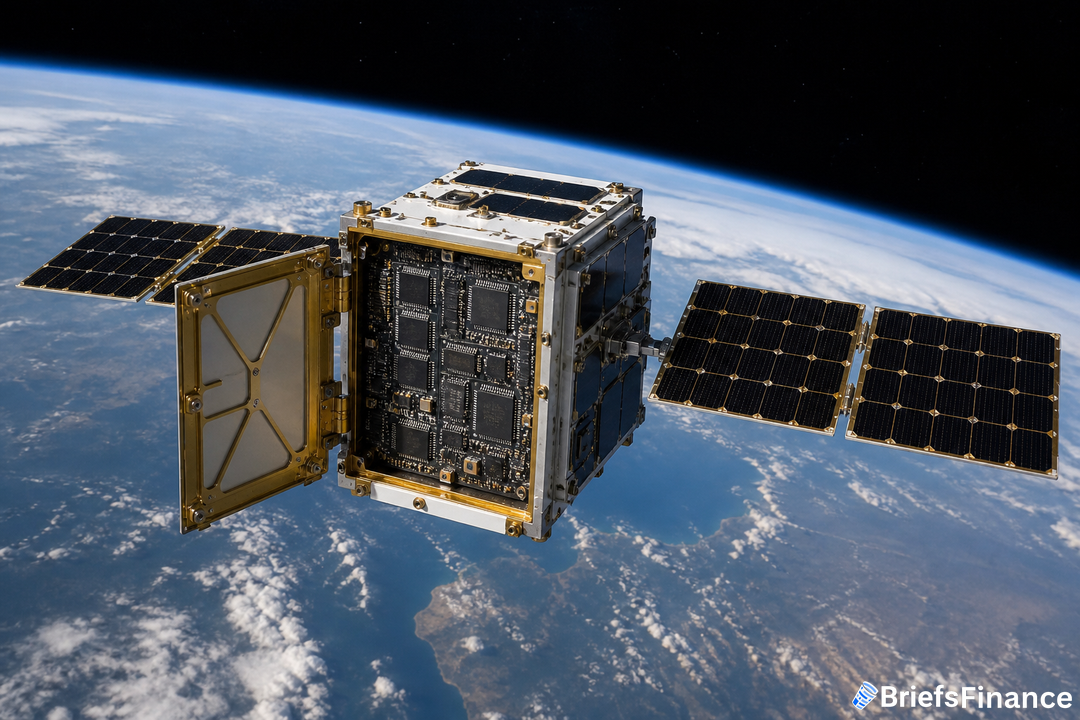
The manifest features satellites from Planet Labs, one of which is a solar-powered prototype that carries Google's TPUs. Alphabet says this is the first in-space experiment for Project Suncatcher, the company's moonshot effort first disclosed in November 2025.
What Project Suncatcher aims to test
Suncatcher's goal is to prove out dependable AI computing that can run continuously in orbit using sunlight alone. In announcing the plan, Alphabet framed the effort as "exploring whether space could one day host scalable machine learning infrastructure."
According to the company, low Earth orbit offers almost continuous sunshine, yielding as much as eight times the solar power available on the ground. Over time, Alphabet envisions linking multiple satellite constellations so they can take on larger AI workloads while still in orbit. Prior to this mission, Google's TPUs were exercised on AI workloads at the University of California at Davis facility, yet the team still must understand how the chips handle the harsher conditions of low Earth orbit.
When innovation catches the spotlight, disciplined saving and investing pay off over time, get the free Always Be Buying E-Book
The players and the road ahead
Alphabet is a major SpaceX backer, and the two work closely even as their AI groups compete. In June, SpaceX went public in a record IPO; Alphabet's stake is valued at over $82 billion. SpaceX has pitched "supercomputers in space" as the next AI buildout, calling orbit "infinite real estate" that avoids the pushback facing data centers on the ground.
Led by Elon Musk, SpaceX has also outlined plans for proprietary orbital data centers: fleets of satellites to be built in Redmond, Washington, carrying graphics processing units and solar arrays that the company aims to produce with Tesla. Earlier this year, Musk said training AI in space would be the cheapest route "and that will be true within two years, maybe three at the latest." In September, COO Gwynne Shotwell said the company will deploy "supercompute in space" in 2027.
Experts say there are stiff hurdles: limited and costly launch capacity, the need for cooling in vacuum, chip resilience to extreme temperatures, radiation shielding, and growing orbital debris. Even so, Thursday could be a packed day for SpaceX. If schedules hold, Transporter-18 would be the second potentially historic launch, alongside a NASA mission from Florida's Space Coast carrying astronauts to the International Space Station for a six-month stay.
Why it matters for your money
Alphabet and SpaceX are testing whether the next wave of AI infrastructure grows off-planet, where sunlight is plentiful and real estate is, well, orbital. If the tech holds up and costs slide, it could shift where and how the most powerful AI systems get built. If not, the center of gravity stays on Earth. Either way, the experiment is about turning long-shot engineering into a platform regular investors can actually size up.
Even amid technological excitement, steady contributions matter more than timing; claim your free Always Be Buying E-Book