What the government announced
Prime Minister Mark Carney said Thursday he is speeding up approvals for a major new oil pipeline called Pacific Link, with a target to start construction in September 2027. He declared it a "project of national interest," tapping new powers from last year's legislation to move big projects faster by treating them as approved while regulators set the terms for construction. The move also lets the federal cabinet grant exemptions from various laws and regulations if it decides they are warranted.
Carney framed the stakes this way: "Today, 90% of Alberta's oil goes to the United States. Pacific Link will materially reduce that dependence by allowing us to export an additional one million barrels a day to growing markets in Asia." He added that a west coast pipeline fits his goal to "double our non-US exports over the next decade," saying it would create hundreds of thousands of jobs while drawing "tens and tens of billions of dollars of new investment into the Canadian economy."
Project structure, route, and costs
A new operating company will run Pacific Link, jointly owned by the federal and Alberta governments. Pembina Pipeline Corp., based in Calgary, will initially own 10% with an option to lift that to 20%, and at least 10% ownership will be offered to Indigenous groups. Development will be headed by Trans Mountain Corp., the government-owned operator responsible for the Trans Mountain expansion.
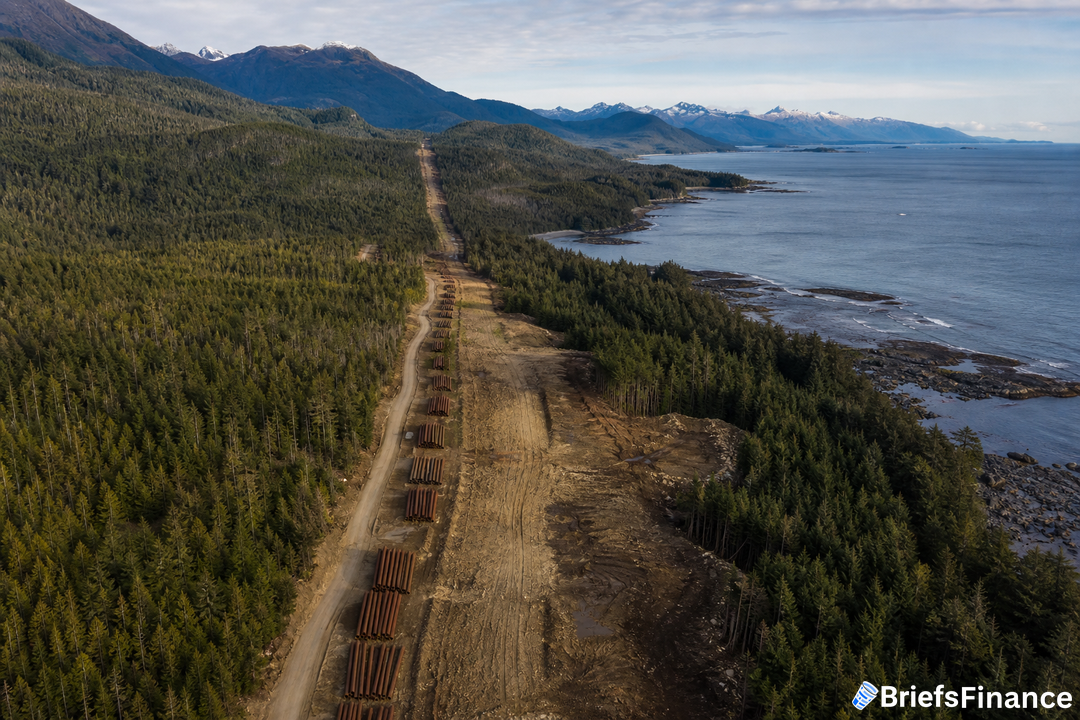
The line will link the oil sands in northern Alberta to a new terminal near Vancouver, with capacity to move up to 1 million barrels of bitumen each day onto ships bound for the Pacific. Most of the route would track the existing Trans Mountain corridor through the Rockies, but it will end at a different location because the plan includes a new deepwater port that can receive Very Large Crude Carriers. That capability is intended to sharpen the economics of longer-haul deliveries to destinations like India. The government is funding a new terminal at Roberts Bank in Delta, close to the US border.
According to Alberta, the construction price tag may fall in the range of C$35.2 billion ($24.7 billion) to C$43.7 billion if investment is approved within three years. Asked about price tags, Carney said only that "the Canadian taxpayer is going to make a lot of money off this pipeline."
When big plans stretch over years, keeping steady habits matters; download the free Always Be Buying E-Book today
Environmental, legal, and political headwinds
Carney acknowledged that previous projects got bogged down. "Over time, the way we built became weighed down by well-intentioned, but arduous and often duplicative regulatory processes," he said. Alongside the pipeline, the government is pushing a large carbon capture system in the oil sands, which Carney has pitched as a "grand bargain" to expand exports to Asia while cutting the emissions intensity of Canadian barrels.
Expect friction. The route crosses tough mountain terrain that drove big cost increases on the last build along this path, the Trans Mountain expansion. Environmental groups and some Indigenous communities are likely to challenge the project in court and in politics.
Concern is especially high around the Vancouver area, where the new terminus would increase tanker traffic. To blunt that, Carney this week pledged C$1.2 billion for ocean and marine conservation, including more capacity to track shipping, measures to reduce ocean noise, and a nationwide oil-spill response program focused on marine mammals.
Why this is happening now, and what to watch
Carney tied Pacific Link to two big forces: tariffs from President Donald Trump and the push to diversify away from a US‑centric export model. The Trans Mountain expansion that opened in May 2024 already boosted west coast capacity, and Statistics Canada data show Asia‑Pacific shipments climbed after that opening. Carney also told reporters he expects producers to ramp up, calling it "a tremendous commercial opportunity for them, given diversification of markets."
Politics are front and center. The project is also meant to signal support for Alberta's energy sector ahead of an Oct. 19 referendum on whether the province should move toward independence. Alberta Premier Danielle Smith welcomed the designation, saying it "sends a clear message: Canada is ready to build again."
Bottom line for your wallet: if Pacific Link moves on schedule, more Canadian barrels could aim for Asia on VLCCs out of Roberts Bank, which could ripple into demand for terminal services, shipping, and related infrastructure. It is a long road with real risks, but if it advances, the story to watch is how quickly Canadian producers lean into growth and how that shifts pricing and market access outside the US.
As plans unfold over many years, embrace regular investing habits and download Always Be Buying E-Book for free