What the Pentagon is weighing
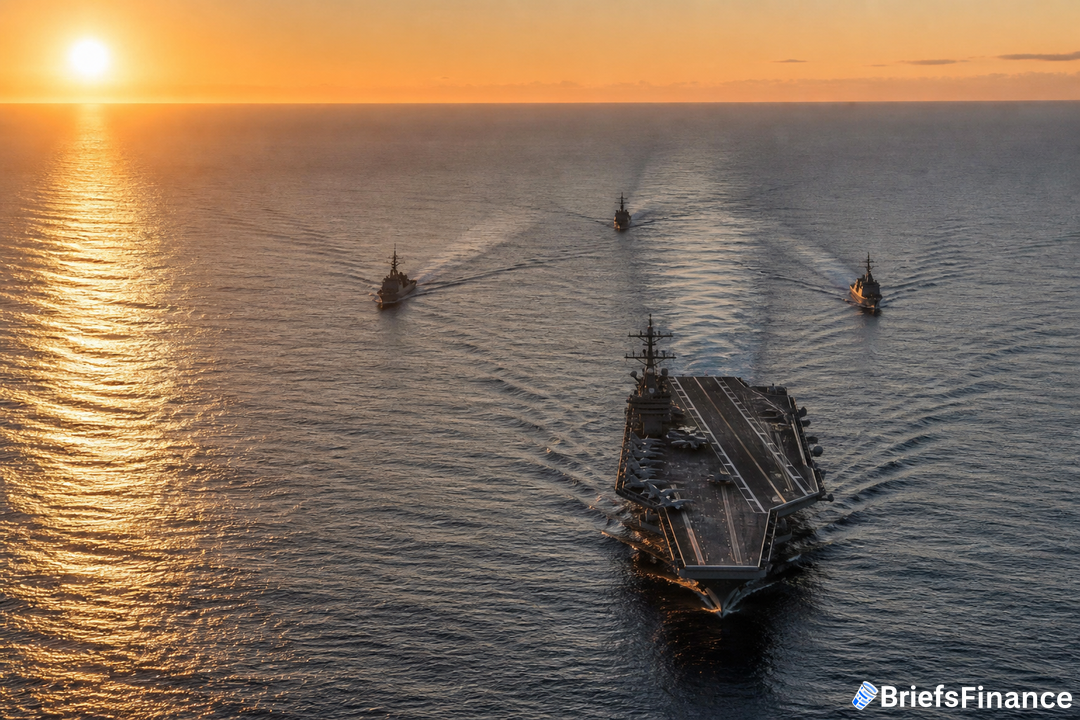
The official added that the USS Theodore Roosevelt got underway from San Diego on Sunday, though its destination has not been decided. Its movement alone gives US Central Command more flexibility in the theater.
If the Roosevelt is sent to the Middle East, the region would again host three carrier strike groups, matching the posture at the start of the war against Iran. Along with the carrier's roughly 5,000 sailors and Marines, thousands more would be spread across its escort ships.
Current forces and recent moves
Two other carriers, the USS George H.W. Bush and the USS George Washington, will stay on station in the region. Separately, the USS Boxer amphibious readiness group, meanwhile, operates near the Strait of Hormuz.
US Central Command said in a statement that "we don't discuss unit schedules for operational security reasons." The carrier activity comes as Trump has said increased military strikes against Iran are "possible" after the November midterm elections.
When news focuses on strategy and choices, steady investing still matters, so get the free Always Be Buying E-Book to start building wealth
Strain on the carrier force
Keeping three carriers in the Middle East could deepen the Navy's readiness headaches, said Ronald O'Rourke, a long-time naval analyst who has since retired from the Congressional Research Service. "Maintaining even a two-carrier presence in that area over an extended period of time would be a strain for the carrier force," he said. "But maintaining a three-carrier presence in that area for an extended period would be a significantly greater strain."
Recent cruises highlight the pressure: the USS Abraham Lincoln reached Thailand last month after nine months at sea, and the USS Gerald Ford, sent to the Middle East after supporting operations against Venezuela, spent 11 months underway. Prior to the 2026 operations against Iran, the most recent instance of three US carrier strike groups being in the Middle East occurred in 2003, in the opening phase of the invasion of Iraq.
Diplomacy watch and why it matters for your money
For everyday investors, the takeaway is simple: if a third carrier heads to the Gulf, the military footprint around a critical energy chokepoint would grow even as diplomacy wobbles, a setup that can swing oil and shipping costs. Keep an eye on any official word about carrier destinations and on whether talks show signs of life.
Stick with a steady approach through uncertainty and download the free Always Be Buying E-Book for practical steps