The US military fired a lot of hardware during the conflict with Iran. Pentagon officials say American forces struck more than 13,000 targets. Now comes the bill, and it is not just about money.
A Bloomberg Economics analysis released Tuesday warns that the US is sitting on "dangerously low" stocks of the weapons that matter most. The Pentagon's supply of air-defense interceptors - the missiles that shoot down incoming threats - is "critically low," while long-range missile supplies are "under pressure."
The analysts drew on Pentagon budget documents and public reporting about stockpile levels. As of Tuesday, the Defense Department had not answered a request for comment.
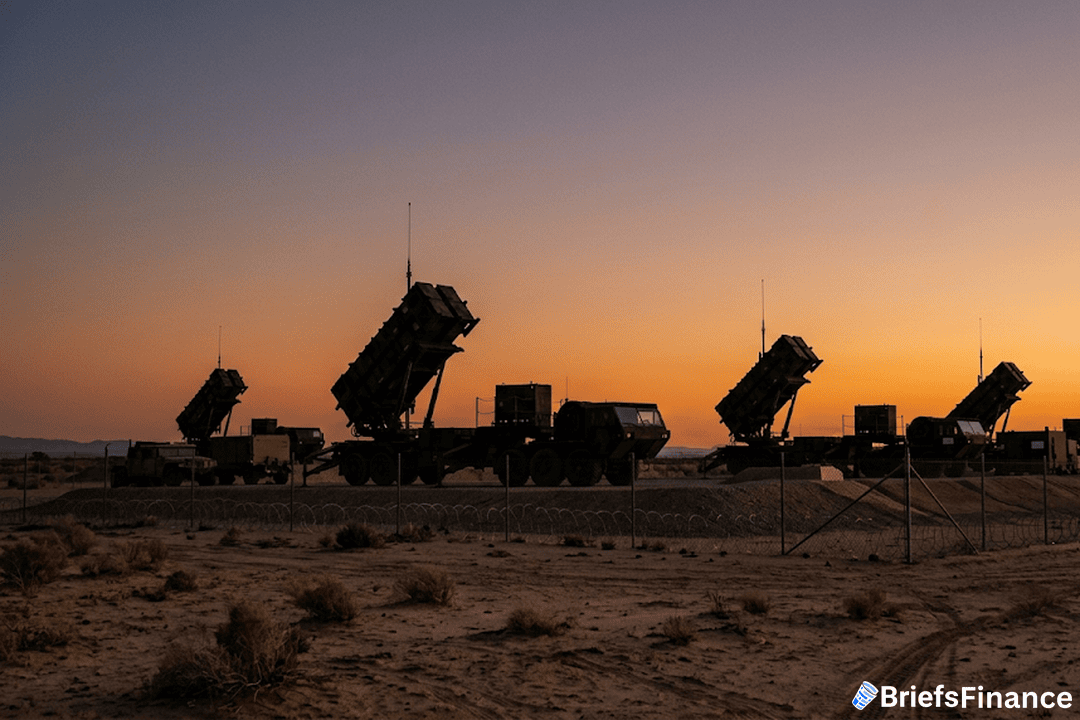
According to the analysis, US forces probably expended more than 50 percent of the most sophisticated Patriot version, the PAC-3 MSE, and close to 40 percent of Terminal High Altitude Area Defense interceptors while defending against Iranian retaliation. At the start of the conflict, commanders worked to keep US personnel out of combat zones, and the inventory of Precision Strike Missiles may now be gone; other standoff weapons also ran down quickly.
The Cost of Rebuilding
In testimony to Congress, Defense Secretary Pete Hegseth put the cost of the Iran war at roughly $37.5 billion, although analysts think the final number may exceed that.
Get the free Always Be Buying eBook and learn the simple system for building wealth on any income
For the current fiscal year, the Pentagon has asked for an emergency package of $67 billion, including $18.2 billion for munitions that saw heavy use against Iran. According to the report, rebuilding these inventories is a years-long effort that will require billions.
"The war has consumed important weapons faster than they can be bought and built," wrote analysts Becca Wasser and Courtney McBride. "That is creating a generational gap in US stockpiles of air defense interceptors and exquisite long-range munitions that cannot be quickly overcome."
The intensity of the fighting is underscored by the Pentagon's estimate that US forces hit more than 13,000 targets. With air-defense systems operating at high tempo and factories unable to match wartime consumption, the report says the result is a gap in stocks that will not close quickly.
What the Officials Are Saying
President Trump and Hegseth have generally pushed back against claims of shortfalls, insisting American troops have sufficient supplies. In the Oval Office the other day, President Trump told journalists the US possesses an almost inexhaustible inventory of "certain types of munitions that are very powerful," while acknowledging, "we have others where it's a little bit tighter, and we're getting them in on a daily basis."
Such inventory pressures now appear to be shaping US operational choices.
The choices ahead are all tradeoffs, as the Bloomberg Economics analysts put it. "The US isn't out of missiles, but it is running low on the right ones," Wasser and McBride wrote. "And the choices that remain all come at a cost."
Bottom Line
Adversaries like China are watching closely. "Munitions availability will increasingly shape which operations the US can undertake at an acceptable level of risk," the analysts wrote.
Download the free Always Be Buying eBook and start putting your money to work today