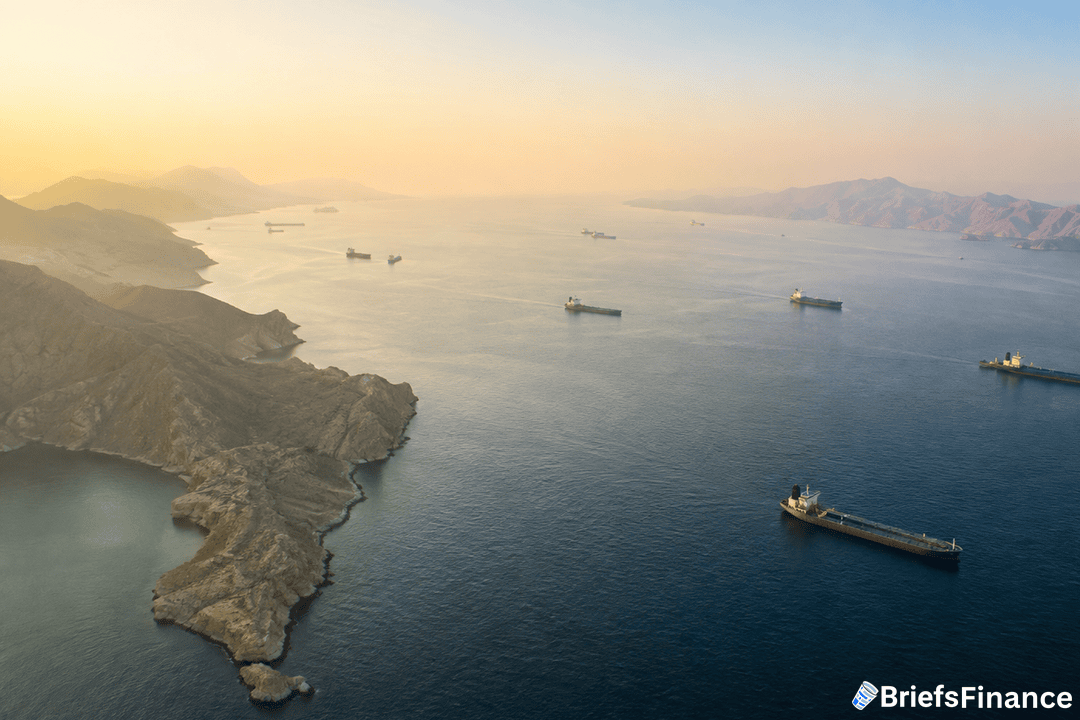
The waterway that moves about one-fifth of the world's oil is getting quiet again. And for anyone who has noticed gas prices creeping up, this matters more than most headlines out of Washington.
The waterway's strategic importance has made it a recurring flashpoint. Past conflicts have shown that even the threat of closure can send oil prices soaring, and the current standoff has already added a risk premium to crude. For consumers, that means higher costs at the pump, and for businesses, it means unpredictable input costs.
The strait's strategic importance has made it a recurring flashpoint, and past conflicts have shown that even the threat of closure can send oil prices soaring. The current standoff has already added a risk premium to crude, meaning consumers and businesses are feeling the pinch. With daily crossings now at roughly 13, the lowest since May, the market is bracing for prolonged uncertainty.
The interim deal on June 17 briefly restored optimism, but the unresolved shipping routes quickly brought back tensions. As long as Washington and Tehran fail to agree on the details, the risk of further disruption remains high, and that risk is reflected in the prices at the pump. For investors, this volatility cuts both ways: energy stocks may gain from higher crude, but broader markets suffer when inflation expectations rise and supply chains are disrupted.
Get the free Always Be Buying eBook and learn the simple system for building wealth on any income
The fragile state of the waterway underscores how diplomatic breakdowns can reverberate far beyond the region.
The Strait of Hormuz sits between Iran and the Gulf coast, and it is the chokepoint for about 20 million barrels per day of crude oil and refined products that used to flow through before the conflict. That is roughly one-fifth of global consumption, and when it gets disrupted, the effects show up in prices everywhere. CNBC's analysis of Kpler data showed around 13 vessel transits per day on average over the five days ending Tuesday.
The figure includes every kind of vessel, from cargo ships to oil tankers, and is almost as low as it has been since May 12. Tuesday's traffic was about 80% below the peak reached after the interim deal, when crossings jumped to a per-day average of roughly 60 over five days on June 26. The drop is a clear sign that the post-deal optimism has faded.
Washington and Tehran inked a temporary accord on June 17 to restore passage through the strait, and for a brief moment, traffic picked up. Then the agreement crumbled after the two sides disputed shipping routes that the deal had not defined. Iran attacked.
The recent escalation is not without precedent. The strait has been a flashpoint for decades, most notably during the Iran-Iraq War in the 1980s, when tankers were attacked in what became known as the Tanker War. More recently, tensions flared in 2019 after a series of limpet mine attacks and drone strikes on Saudi oil facilities.
However, the current standoff is unique in that both sides have publicly signaled a willingness to negotiate, even as they maintain maximal pressure. The June 17 interim deal was seen as a breakthrough, but its collapse over the definition of shipping routes highlights how fragile these agreements can be. For global markets, the uncertainty is the real enemy.
While Energy Secretary Chris Wright argues that exports remain near 9 million barrels per day, the sharp drop in actual transits suggests that insurers and shipping companies are already factoring in a higher risk of conflict. This risk premium is what drives up prices at the pump, even if physical supply has not yet been severely curtailed.
Download the free Always Be Buying eBook and start putting your money to work today