A Small Step Beyond China's Borders
The C919 just left the neighborhood.
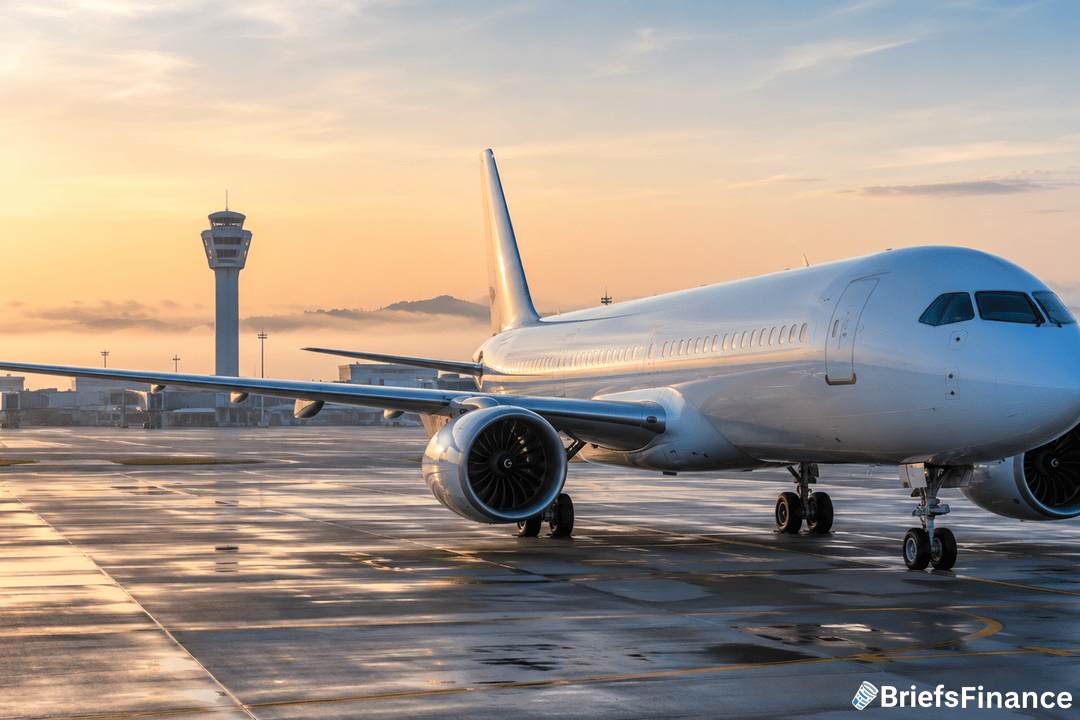
On Aug 12, 2026, an Air China C919 departed the Chinese capital at three in the afternoon and arrived in Mongolia's capital about two hours later. It was the jet's first scheduled commercial flight outside China, and the route will now run daily.
The plane is China's answer to the Boeing 737 MAX and Airbus A320neo. It is a single-aisle jet built by COMAC, a state-owned company that wants to break the Boeing-Airbus grip on global air travel.
The Gap Between the Goal and Reality
COMAC's dream is to become the world's third major passenger jet maker. The reality is that the plane still depends on outside suppliers for critical pieces.
Get the free Always Be Buying eBook and learn the simple system for building wealth on any income
Andreas Mischer of the Mercator Institute for China Studies (MERICS) said that the C919's production relies on foreign parts, especially CFM International engines - the joint venture of America's GE Aerospace and France's Safran Aircraft Engines. He also noted that COMAC fell short of the "Made in China 2025" goal of having domestically produced large jets hold a 10% share of China's domestic market.
The aircraft lacks approval from key American and European aviation authorities, which restricts its appeal to airlines outside China. This overseas flight is a symbolic step, but it does not yet signal a commercial breakthrough. Because critical systems come from Western suppliers, China still lacks full control over its own production line.
The C919's chances of gaining customers in many foreign markets are limited because it lacks approval from leading U.S. and European regulators. COMAC's strategy has been to court airlines outside the traditional Western markets, and the Dubai Airshow appearance in November 2025 brought the C919 and C909 to a stage where Boeing and Airbus have long dominated. The company has signaled that it is open to international partnerships, but none of those efforts have yet produced a major overseas commitment.
Every new route like the Beijing-Ulaanbaatar flight helps build operating experience, but the aircraft's success ultimately depends on whether COMAC can expand production, earn the trust of foreign carriers, and reduce its reliance on imported components - challenges that will take years to resolve.
A Long Road Ahead
COMAC has been stepping up international promotions of its jets.
For now, the C919's presence in Mongolia is more symbolic than transformative. The airline industry's established players have spent decades building maintenance networks, pilot training programs, and parts supplies that COMAC cannot yet replicate. The C919's prospects of attracting buyers abroad are constrained because it hasn't received approval from leading American and European air-safety bodies. That reality underscores the steep climb COMAC faces.
The aviation duopoly has decades of experience, a proven supply chain, and the trust of airlines worldwide. The C919 has a daily flight to Mongolia and a long road ahead.
Beyond the immediate operational milestone, the C919's journey reflects broader industrial ambitions. Beijing has poured billions into developing a homegrown jet to reduce dependence on foreign aircraft makers and to elevate its manufacturing prowess. Yet the very reliance on imported engines and other foreign components shows how integrated global aerospace remains.
Even as COMAC pushes for more routes and showcases its planes at international events, it must overcome technical, regulatory, and reputational hurdles. The Ulaanbaatar service is a first step, but analysts agree that winning over major carriers in mature markets will require years of consistent performance, safety records, and supply chain independence - none of which comes quickly.
Download the free Always Be Buying eBook and start putting your money to work today