Free NewsletterPro Login

Warning: Undefined variable $stocks in /var/www/briefs.co/htdocs/wp-content/plugins/oxygen/component-framework/components/classes/code-block.class.php(133) : eval()'d code on line 448

Warning: foreach() argument must be of type array|object, null given in /var/www/briefs.co/htdocs/wp-content/plugins/oxygen/component-framework/components/classes/code-block.class.php(133) : eval()'d code on line 448

Warning: Undefined variable $funds in /var/www/briefs.co/htdocs/wp-content/plugins/oxygen/component-framework/components/classes/code-block.class.php(133) : eval()'d code on line 472

Warning: foreach() argument must be of type array|object, null given in /var/www/briefs.co/htdocs/wp-content/plugins/oxygen/component-framework/components/classes/code-block.class.php(133) : eval()'d code on line 472
/* the link was here */

Tesla's Cybercab Gets Built-In Starlink for Seamless Autonomous Connectivity

Published Aug 11, 2026
Share:
Summary:
  • Tesla revealed images of a Cybercab with Starlink satellite hardware integrated into its roof, announced on August 10, 2026.
  • Elon Musk said passengers can watch live sports, movies, or games in 4K, or do work, during autonomous rides.
  • The move deepens Tesla-SpaceX collaboration, including Grok integration, Megapack purchases, and the Terafab chip venture.

A Satellite Dish for a Self-Driving Taxi

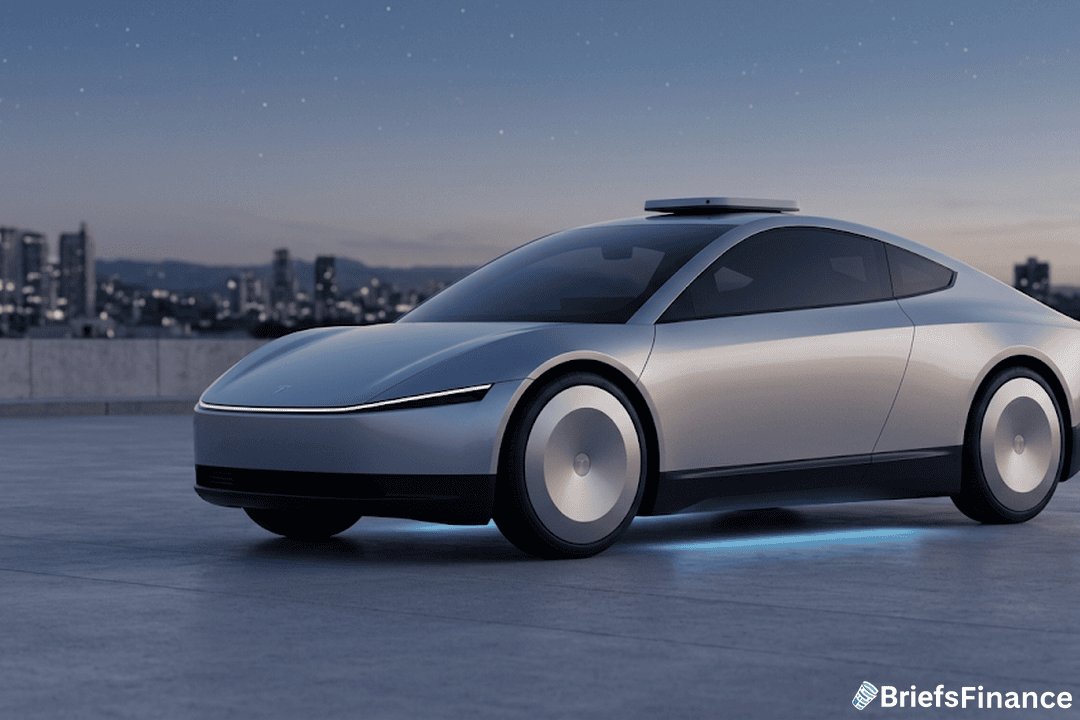
On Monday, August 10, 2026, Tesla posted images on X highlighting what it designated the "First Cybercab with Starlink integration." The photographs reveal a square-shaped roof cutout where the satellite internet hardware has been seamlessly incorporated into the vehicle's design.

The Cybercab represents Tesla's two-seat autonomous vehicle concept. The company intends to maintain connectivity across its forthcoming driverless fleet, with the Starlink roof equipment serving as a cornerstone of that strategy. On the automaker's second-quarter earnings call, Musk explained that Starlink would resolve cellular network dead zones as the company broadens its autonomous ride-hailing operations.

"We can't have robotaxis getting stuck in these Bermuda Triangles of lack of cellular connectivity," the CEO told investors.

"Starlink, with its ability to do connectivity anywhere, is actually quite important, so we don't have robotaxis missing in action."

Entertainment and Productivity on the Go

In a follow-up X post, Musk described how passengers inside the autonomous vehicle could "watch live sports in 4k or movies or games or productivity." Since the Cybercab operates without a human driver, occupants can dedicate their travel time to these various activities.

Get the free Always Be Buying eBook and learn the simple system for building wealth on any income

The vehicle's autonomous nature fundamentally changes the passenger experience. Rather than focusing on the road, riders can transform their commute into entertainment time, a workspace, or a gaming session. This capability aligns with Tesla's broader vision of autonomous vehicles as mobile living spaces rather than simple transportation tools.

Growing Synergy Between Musk's Enterprises

The relationship between Tesla and Musk's other ventures has expanded considerably over recent years. The Cybercab's Starlink integration represents just one facet of this interconnection. Tesla currently employs Grok, SpaceX's AI assistant, as a voice interface throughout its vehicle lineup.

SpaceX has committed to purchasing substantial quantities of Tesla energy storage systems and automobiles, with investments reaching into the hundreds of millions. Additionally, both organizations have joined forces on the Terafab initiative, a collaborative semiconductor manufacturing venture.

These cooperative efforts have fueled speculation about a possible merger between the two companies. The Cybercab announcement also demonstrates Tesla's approach to maintaining connectivity for its autonomous fleet operations.

Background on Tesla's Robotaxi Ambitions

The Cybercab represents Tesla's entry into the competitive autonomous ride-hailing market. The company has positioned the vehicle as a purpose-built robotaxi rather than adapting existing models for autonomous service. Tesla's strategy involves deploying the Cybercab across its planned ride-sharing network, with the vehicle's design optimized for passenger comfort and operational efficiency.

The Starlink integration addresses a practical concern for autonomous fleets: maintaining reliable communication links in areas where traditional cellular coverage proves inadequate. By leveraging satellite connectivity, Tesla aims to ensure its robotaxis remain operational and reachable regardless of location. This approach could provide a competitive advantage as the company scales its autonomous transportation services to new markets.

Musk has previously emphasized that full autonomy will unlock significant value for Tesla owners, allowing their vehicles to generate income through the ride-hailing network while not in personal use. The Cybercab with Starlink represents a concrete step toward realizing that vision, combining the company's expertise in electric vehicles, autonomy, and now satellite communications under one roof.

Download the free Always Be Buying eBook and start putting your money to work today
Disclosure

Recent News

1 2 3 … 90

Get Market Briefs delivered to your inbox every morning for free!

No fluff. No noise. No politics. Just finance news you can read in 5 minutes.

Blogs

October 1, 2026
Housing Market 2026: Why Office Buildings Are Cracking Before Houses Do
  • Office buildings are selling for 80% to 95% off because their five-year loans are resetting at much higher rates while half-empty floors have gutted the income those buildings are valued on.
  • Housing is under pressure, not cracking: a $400,000 mortgage costs $975 more a month than at 3%, but six of every seven mortgages are still under 6% and those owners are staying put.
  • Whether pressure turns into cracks is a race between unaffordability and the economy, and either way Jaspreet's rule is to treat your house as a liability and buy only what you can afford.
Read More
September 30, 2026
Dividend Investing vs. Growth Investing: Why the Slower Portfolio Can End Up Bigger
  • "What stock should I buy?" is the wrong first question. Growth, income, or wealth preservation comes first, and the goal changes which stocks even make sense.
  • At $500 a month for 30 years, 13% growth builds about $1.75 million. 10% growth plus a reinvested 4% dividend builds a little more than $2.2 million and pays a little more than $80,000 a year.
  • Income investors have US dividend ETFs, REITs, and international dividend funds to study. Growth investors have the Nasdaq 100, AI and chip funds, and small caps. None of it is a recommendation.
Read More
September 29, 2026
Why Is Gold Going Down? A 5.2% Treasury Yield Just Took Its Job
  • President Trump rejected Iran's deal to reopen the Strait of Hormuz, oil prices jumped back up, and gold fell instead of rising.
  • Treasury yields hit their highest level in more than 20 years, so investors sold gold and bought Treasuries that pay interest.
  • Higher Treasury yields make the national debt, mortgages, car loans, and credit cards more expensive, with the Fed's next rate decision due October 28.
Read More
September 28, 2026
The Strategic Bitcoin Reserve: Why the Government Wants Bitcoin to Explode
  • The US government holds about 328,000 Bitcoin, worth roughly $25 billion, and since a 2025 executive order it keeps seized coins instead of selling them.
  • Washington wants a bigger pile of assets so its $40 trillion national debt looks smaller next to them, which lets it keep borrowing and spending.
  • Bitcoin's wild price swings, and a government holding a coin built to escape governments, are the two risks investors need to watch.
Read More
September 25, 2026
BRIEFS EXCLUSIVE: 43% Of Respondents Say Bills Outran Their Income Over Past Two Years
  • 43% of the 494 Market Briefs readers surveyed said their bills grew faster than their income over the past two years, even though 79% could cover a surprise $5,000 expense tomorrow.
  • Half of readers own gold or crypto, the two classic bets against a weaker dollar, and only 13% bought nothing at all in the last 12 months.
  • The median reader says it takes $150,000 a year to feel financially secure, about $62,000 above the U.S. median household income.
Read More
September 25, 2026
The Economy Is Booming. So Why Did Stocks and Bonds Fall Together?
  • S&P Global says the US economy is growing at its fastest rate since 2021, with corporate profits up 28.9% in a year, almost four times the historical average.
  • Stocks and bonds fell at the same time, which is not how the two markets normally behave, because Treasury yields above 5% now compete with stocks for investors' money.
  • Jaspreet Singh lays out three ways to invest through a shift like this: always be buying, buy the crash, or follow the money before it hits the headlines.
Read More
September 24, 2026
The 2026 Economic Reset Is Starting: Are We in a Recession, or Is the Pain Still Ahead?
  • The Federal Reserve has flipped from stimulating the economy to fighting inflation with higher interest rates, while the White House still wants growth at almost any cost.
  • The national debt tops $40 trillion, has outgrown the entire U.S. economy, and its interest payments are now the government's fastest-growing expense.
  • Higher rates bring pain for private equity, private credit, and speculative assets, but they open opportunities for investors holding cash, treasuries, and value assets.
Read More
September 23, 2026
Are We in a Recession? Without AI, America Might Already Be in One - and Washington Knows It
  • The White House attributes about three quarters of U.S. economic growth to AI, and many believe the economy would already be in a recession without it.
  • Washington has three reasons it cannot let the AI boom slow down: staying the world's superpower, outgrowing $40 trillion in national debt, and protecting a government stock portfolio worth billions.
  • Every market goes through booms and busts, and investors who understand the cycle get to buy the downturn instead of panic-selling with the crowd.
Read More
September 22, 2026
Will Interest Rates Go Down in 2026? Where the Money Moves Either Way
  • The Fed is leaning toward higher rates to fight 4% inflation, while the White House and a cracking job market push the other way.
  • If rates rise, money has tended to move toward short-term Treasuries, floating-rate loans, energy, banks and dividend payers.
  • If rates fall, it has tended to move toward gold, silver and Bitcoin, real estate, small caps, the S&P 500 and speculative bets.
Read More
September 21, 2026
How the Federal Reserve Makes Money - and Why It Just Posted Its Biggest Loss Ever
  • For 109 years the Federal Reserve created money, lent it to the U.S. government and handed the interest it collected back to Washington - almost $1 trillion in the decade starting in 2011.
  • Pandemic-era lending locked the Fed into earning about 2% on trillions of dollars while it now pays banks around 4%, producing a record loss of hundreds of billions in 2026.
  • The Fed covers its losses by creating money and the government covers its lost revenue by borrowing, and both feed the inflation that eats at the dollars in your account.
Read More
1 2 3 … 28
Share via
Copy link











