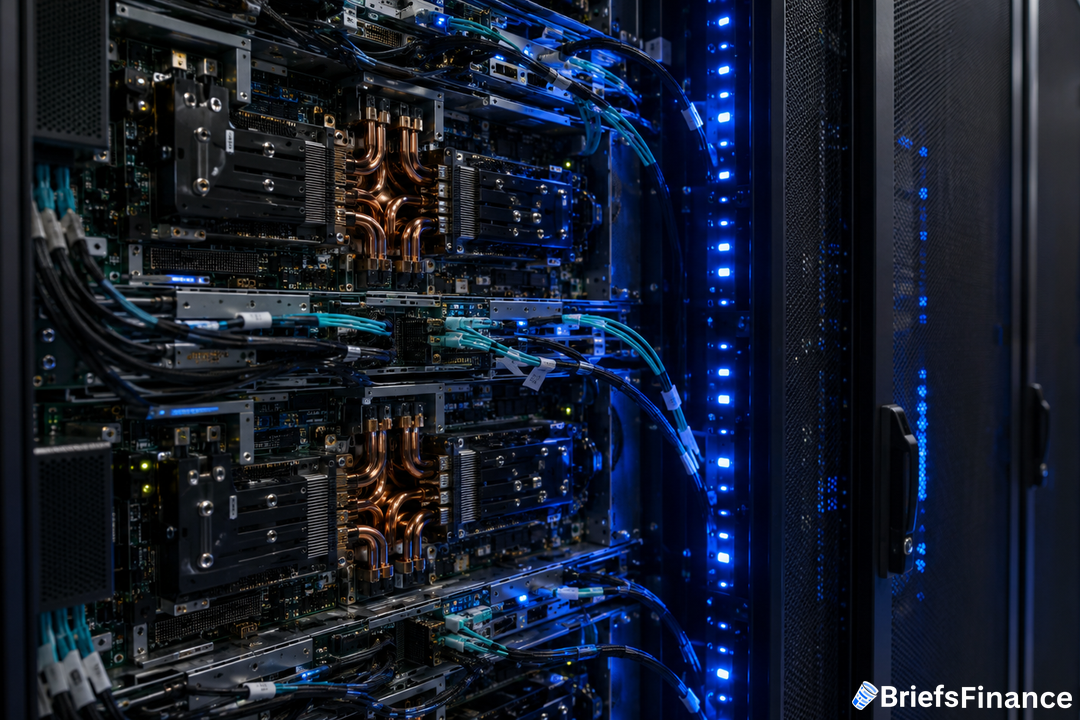
"Our product roadmap is intact," an Nvidia spokesperson said. Fabricating that board is proving to be a tough challenge.
The Manufacturing Hangup
SemiAnalysis also reported that the larger NVL576 system, which uses optical connections to join eight racks, faces delays or will see limited production.
Nvidia has faced similar production hurdles before. Paul Triolo, a partner with the consulting firm DGA-Albright Stonebridge Group, said, "The company has faced these kinds of challenges before, and has worked with vendors to overcome technical issues."
Rivals and Reality
According to SemiAnalysis, the postponement might provide competitors like AMD and Google an unusual opportunity in the premium segment. Huawei and other domestic manufacturers "will potentially gain some time," Triolo said. SemiAnalysis further forecasts that the company's data-center compute revenue will exceed Wall Street estimates by 20% during the latter half of fiscal 2027.
Get your free investing masterclass bonus when you join Market Briefs, our free daily newsletter
Triolo pointed out that electricity availability is still the primary bottleneck for U.S. AI data center investment, and "delays in getting to more advanced systems could just mean that the new systems are ready by the time the U.S. can work to overcome some of the critical bottlenecks on power now dogging the industry."
On China, Triolo said: "The issue is no longer really catching up, but how good will China's alternative AI stack be by 2030."
Cancelled Backup Plan
This gap in Nvidia's product timeline highlights the growing complexity of AI server hardware. High-speed interconnects rely on multi-layered advanced PCBs, and scaling production of such components is a well-known semiconductor challenge. Nvidia has faced similar production bottlenecks before and has typically resolved them with supplier collaboration, as Triolo noted. Meanwhile, the company's Rubin systems will provide a bridge, but cloud providers may need to adjust their data center plans given the longer wait for Kyber.
Nvidia's history of addressing such technical hurdles - like the earlier issues with its Blackwell architecture - offers some reassurance, though the scale of the Kyber midplane problem is unprecedented. Cloud providers, already constrained by power availability, now face additional timeline adjustments for their next-generation deployments. This situation underscores how hardware integration complexity is becoming as critical as chip design itself in the AI infrastructure race.
The manufacturing challenge also reflects a broader industry trend: as data centers demand faster interconnects, producing these intricate PCBs becomes a critical bottleneck. Nvidia's ability to resolve these production issues will influence whether it can maintain its lead in the AI chip market, especially as rivals like AMD and Google refine their own solutions.
Nvidia rejected the SemiAnalysis report. Shares of the artificial intelligence chip giant climbed about 1% on Monday.
Subscribe to Market Briefs, our free daily newsletter, and claim your bonus investing masterclass