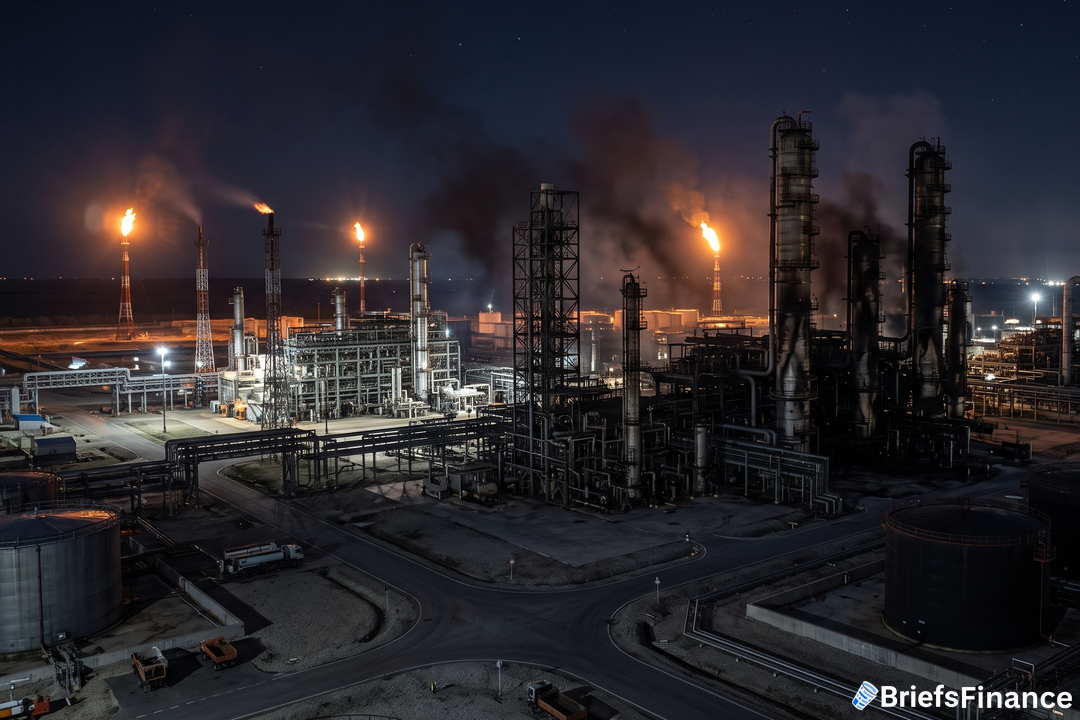
Russia's oil refineries are supposed to turn crude into gasoline, diesel, and jet fuel. But a wave of drone strikes has broken that system.
Ukraine is hitting processing plants deep inside Russia. The result: fuel lines at home and a global diesel shortage abroad.
The Collapse in Processing
Russian refineries are running at their slowest pace in more than 21 years. That is a drop of more than 1.4 million barrels per day compared with the same period last year.
The International Energy Agency called the attacks "a blistering wave of Ukrainian assaults" in a report on Friday. The agency estimates that Russian processing fell to 3.8 million barrels per day in June, down 1.6 million barrels from a year earlier.
According to the IEA, more than half of Russia's refinery infrastructure is either damaged or offline.
Get the market news that matters in a five-minute read with Market Briefs, our free daily newsletter
Drones Reaching Deep Into Russia
Ukraine's unmanned aircraft now possess a striking range exceeding 1,500 miles from the border, enabling them to hit the Omsk refinery far inside Russia.
The attacks are designed to pressure the Kremlin into negotiations. Russia's Deputy Prime Minister Alexander Novak said, "There are problems and shortages, which is why we see queues or sometimes gas stations don't work stably."
The Russian Energy Ministry did not respond to a request for comment.
The result on the ground is a domestic fuel crunch. Gas station queues have grown, pump costs have climbed, and several regions now enforce a short-term rationing scheme that depends on license plates. Some local authorities advised businesses to bring back work-from-home policies to cut fuel usage. The desperation shows up in search data:
Global Diesel Market Feels the Pain
Russia is a key supplier of diesel to world markets. With its refineries hobbled, global diesel supplies have tightened. Prices are at multiyear highs.
To keep what fuel it has at home, Russia banned most diesel exports through the end of July. Earlier restrictions on gasoline and jet fuel remain in place. Those bans squeeze the global market further and hurt Russia's own export revenue.
The data firm EA Analytics, a division of Energy Aspects Ltd., provided the crude-processing rate numbers. Bloomberg News first reported the story with the headline "Russian Refinery Runs Plunge to Lowest in More Than Two Decades."
Worth Noting
The domestic fuel crisis has forced emergency measures across several Russian regions. Motorists face long lines at gas stations, and some areas have adopted license-plate-based rationing. Local authorities have even recommended remote work to cut fuel consumption. The Kremlin's ban on diesel exports, extended through July, further strains international markets and reduces Russia's export earnings.
Join Market Briefs, our free daily newsletter, for a quick daily rundown of the markets