Free NewsletterPro Login

Free Live Investors Workshop

Seats limited

Tue, Sep 29

The dollar is losing value.

Here’s how investors can still profit.

Hosted By

Jaspreet Singh

Founder, Briefs Finance

X

Warning: Undefined variable $stocks in /var/www/briefs.co/htdocs/wp-content/plugins/oxygen/component-framework/components/classes/code-block.class.php(133) : eval()'d code on line 448

Warning: foreach() argument must be of type array|object, null given in /var/www/briefs.co/htdocs/wp-content/plugins/oxygen/component-framework/components/classes/code-block.class.php(133) : eval()'d code on line 448

Warning: Undefined variable $funds in /var/www/briefs.co/htdocs/wp-content/plugins/oxygen/component-framework/components/classes/code-block.class.php(133) : eval()'d code on line 472

Warning: foreach() argument must be of type array|object, null given in /var/www/briefs.co/htdocs/wp-content/plugins/oxygen/component-framework/components/classes/code-block.class.php(133) : eval()'d code on line 472
/* the link was here */

Global Maritime Body Rejects US Plan for Strait of Hormuz Transit Fee

Published Jul 13, 2026
[tts_player]
Share:
Summary:
  • The International Maritime Organization (IMO) stated that charging mandatory fees for Strait of Hormuz transit violates international law.
  • U.S. President Donald Trump called for a 20% levy on vessel cargo value to fund naval protection through the strait.
  • Iran temporarily halted its own toll demand in a June 17 agreement with the U.S. but later restarted attacks on merchant ships.

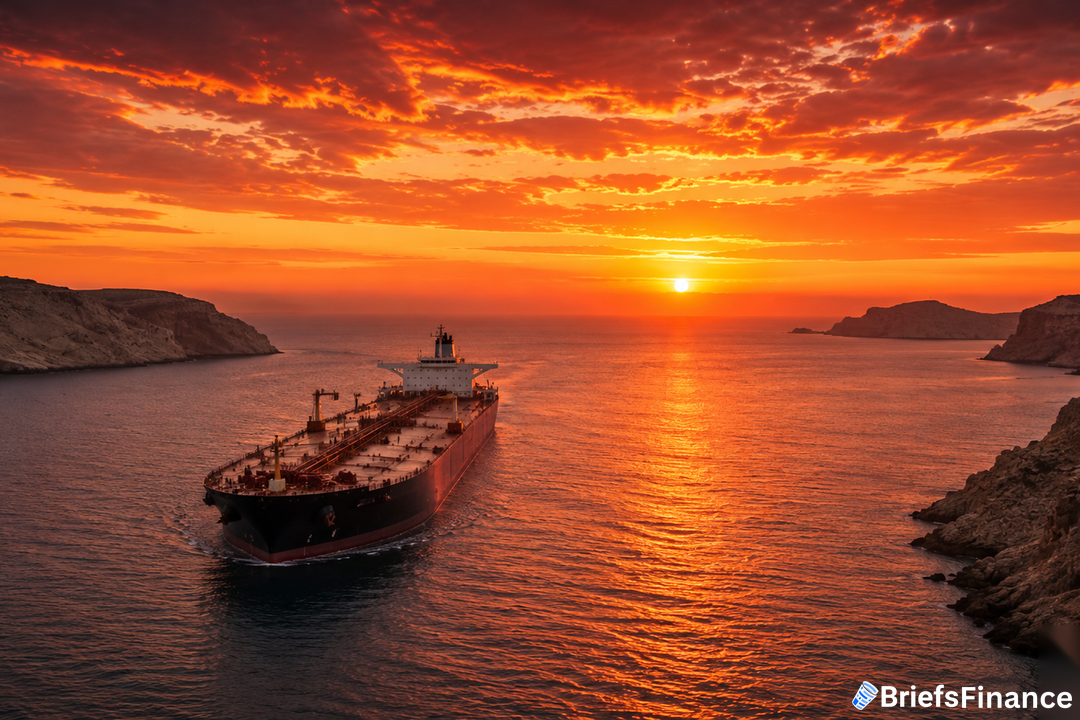
The Strait of Hormuz is a narrow waterway connecting the Persian Gulf to the open ocean, through which nearly a fifth of the world's petroleum transits. Any disruption to shipping there quickly affects global oil prices and supply chains.

The IMO's position is rooted in the United Nations Convention on the Law of the Sea, which ensures unimpeded transit passage through international straits. Imposing a unilateral toll would contravene these long-established norms and risk destabilizing the global energy market.

The Strait, which narrows to just 33 kilometers at its most constricted point, has long been a geopolitical flashpoint. Iran has periodically threatened to close it during past confrontations, and the June 17 agreement represented a brief respite. However, the resumption of attacks has heightened insurance premiums for vessels and raised concerns about alternative shipping routes.

The Legal Dispute

The IMO made its position clear Monday. "There is no legal basis through which to introduce mandatory tolls simply to transit through a strait," an IMO spokesperson said. "We have always been consistent on our stance on fees - IMO stands firmly against charging fees for passage through straits used for international navigation."

Get the market news that matters in a five-minute read with Market Briefs, our free daily newsletter

James Kraska, a maritime law specialist from the U.S. Naval War College, holds the same opinion. He states that imposing fees for passage through the Strait of Hormuz breaches international law, and that all nations possess an unrestricted right to navigate the waterway. Furthermore, Kraska argued that no country, including Iran, can single-handedly alter established shipping lanes in Hormuz, as this would violate the IMO conventions and the Safety of Life at Sea treaty.

The Escalating Crisis

The conflict extends beyond legal arguments. Over the past week, Iran has struck several merchant vessels traveling through the Strait and insisted that vessels must take a northern path within Iranian territorial waters. As a response, the U.S. Navy has been guiding vessels along a southern route adjacent to Oman's coast. President Trump ordered the Navy to reimpose a blockade of Iranian ships.

"The Hormuz Strait is OPEN, and will remain OPEN, with or without Iran," Trump said. "We are reinstating the THE IRANIAN BLOCKADE, so named because it is only stopping Iran's ships or customers from entering or leaving. All other countries will have fair and open use of the Strait."

Herbjorn Hansson, CEO of tanker company Nordic American Tankers, informed CNBC that his firm won't dispatch any vessels to traverse the Strait of Hormuz again. "Iran is suffering, America is suffering, 192 countries outside the Hormuz Strait are suffering," he said.

Hansson further stated he considers the proposed 20% levy impractical. He added that Washington and Tehran must reach a consensus on managing the Strait.

What to Watch

In retaliation for the attacks on vessels, the United States has conducted several rounds of airstrikes targeting Iranian positions. In turn, Tehran has opened fire on American allies in the Gulf.

Join Market Briefs, our free daily newsletter, for a quick daily rundown of the markets
Disclosure

Recent News

1 2 3 70

Get Market Briefs delivered to your inbox every morning for free!

No fluff. No noise. No politics. Just finance news you can read in 5 minutes.

Blogs

September 8, 2026
Why Is Everything So Expensive? Why Prices May Never Come Back Down
  • Official inflation is 3.4% and prices are up 32% since 2020, but rent (41%), gas (47%), car insurance (64%) and ground beef (79%) all outran the 28% median wage.
  • The Federal Reserve targets 2% inflation on purpose. Rising prices push extra dollars to investors and shrink the real cost of a $40 trillion national debt.
  • Investors who simply owned the S&P 500 gained about 150% over the same six years, and the Fed's September 16 decision will show whether it protects the dollar or the economy first.
Read More
September 7, 2026
The U.S. Housing Market Just Flipped: Renting a Home Now Beats Buying One
  • The US is in a buyer's market in 41 of the 50 largest metro areas, but prices sit near record highs and mortgage rates are close to 7%.
  • The same median house costs 27% more than it did in 2021 while the monthly payment costs 90% more, and incomes rose a little more than 10%.
  • A 2008-style crash is not showing up in the data, so the pressure is landing on buyers instead of prices.
Read More
September 4, 2026
An Interest Rate Hike in 2026? The Fed Just Broke Its Own Script
  • The Federal Reserve spent a year signaling cheaper money, and its new chairman just warned that an interest rate hike may be coming instead.
  • The Fed is stuck between high inflation and a weak job market, and fixing one makes the other worse.
  • Higher rates also reprice roughly a third of America's $40 trillion national debt this year, which is why Washington wants cuts so badly.
Read More
September 3, 2026
5 Passive Income Ideas That Pay You Whether You Work or Not
  • School teaches one formula: work, earn, spend. Stop working and the money stops, so the wheel never ends.
  • Five assets pay you without your labor - dividends, rent, interest, royalties, and the things you already own.
  • $80,000 a year of cash flow takes about $1 million invested at 8%, or roughly 20 years of $1,000 a month.
Read More
September 2, 2026
The Best Way to Invest 10k: Three Options To Transform 10K into 10 Million
  • Passive investing in stocks or real estate targets around 10% a year, and time in the market matters more than the price you get in at.
  • Active investing means putting your time in alongside your money, which raises the target to roughly 20% a year and raises the risk of losing it all.
  • Investing in yourself has no ceiling, because a new skill can create a new income that no market return can match.
Read More
September 1, 2026
The Tax Write Offs the Rich Are Using in 2026 While the IRS Shrinks
  • The 2026 tax brackets landed lower than they were headed, and the standard deduction jumped from a planned $8,350 to $16,100 for single filers.
  • New write offs for overtime, tips, seniors and car loan interest are live now, and most of them are written to expire in 2028.
  • About a third of IRS auditors have been fired, and four assets do most of the work for people who want income without a matching tax bill.
Read More
August 31, 2026
America Is Running Out of Debt Buyers. Treasury Bills Are the Government's Fix
  • The government took in about $5 trillion in taxes in 2025 and spent about $7 trillion, and the national debt is now over $40 trillion.
  • Investors, banks, and foreign countries are all lending less to the U.S., so starting September 9 the government plans to sell more short-term treasury bills and use that cash to buy back its long-term debt.
  • Government interest rates set the floor for your mortgage, your car loan, and your credit card, and short-term Treasury ETFs like SGOV are one way investors are playing it.
Read More
August 23, 2026
How to Get the Most From Your Guideline 401k
  • Guideline is a company that provides low-cost 401k plans, popular with small businesses and their employees.
  • A "Guideline 401k" follows the same core rules as any 401k: tax-advantaged growth, contribution limits, and often an employer match.
  • The biggest results come from capturing the full match, choosing low-cost funds, and picking Roth or traditional to fit your situation.
Read More
August 23, 2026
Principal 401k: What to Know About Your Plan
  • Principal is one of many companies that manage workplace 401k plans, so a "Principal 401k" is simply a 401k where Principal is the provider.
  • The rules of a 401k are the same no matter who runs it: pre-tax or Roth contributions, tax-advantaged growth, and often an employer match.
  • The biggest wins come from grabbing the full match, picking low-cost funds, and knowing whether Roth or traditional fits you.
Read More
August 23, 2026
What a Tariff Dividend Means for Your Money
  • A "tariff dividend" is the idea of taking money the government collects from tariffs and paying some of it back to citizens.
  • To judge the idea, you first need to know what a tariff is: a tax on imported goods, usually paid by the companies bringing them in.
  • Tariffs ripple through prices, businesses, and your investments, so the smart move is understanding those ripples, not just the headline.
Read More
1 2 3 26
Share via
Copy link











