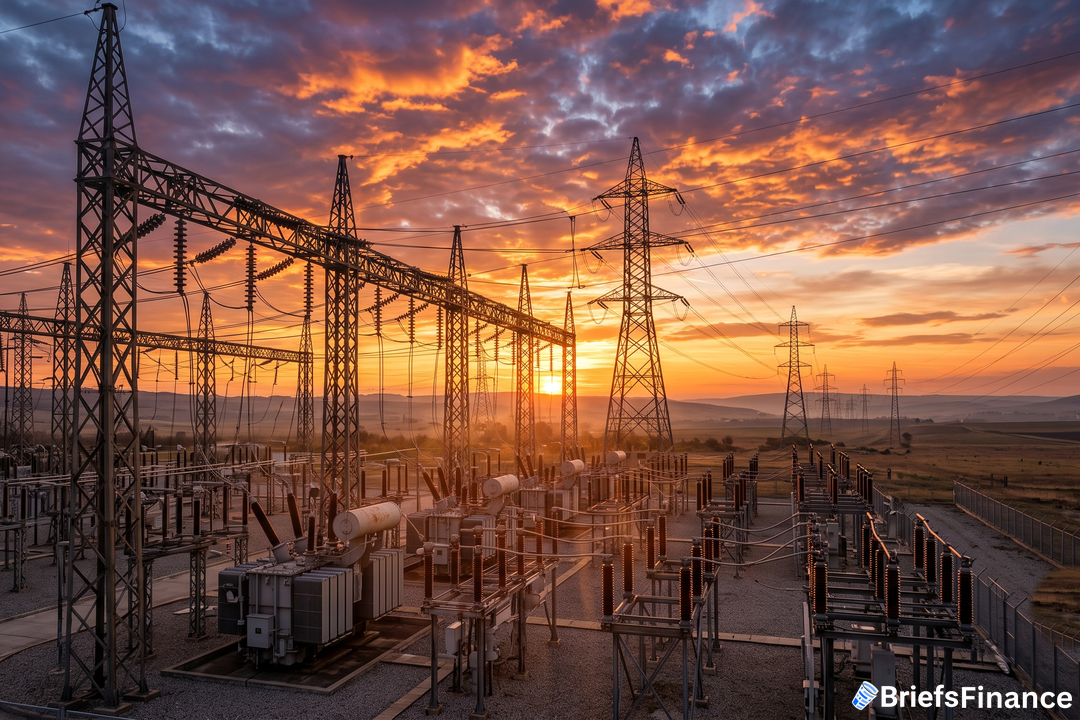
What This Auction Actually Does
Every so often, it holds something called a capacity auction. The auction aims to obtain promises from power producers and other electricity providers to supply power for a future period. The results of the latest auction, which covers June 2028 through May 2029, are due out Tuesday.
Why the Grid Is Feeling Squeezed
Data centers powering artificial intelligence need a staggering amount of electricity. Recent heat waves have already pushed the system to its limits.
Adam Keech, PJM senior vice president, said in a blog post, "The challenges facing the electric system will not be solved overnight. These challenges require longer-term solutions."
Get the market news that matters in a five-minute read with Market Briefs, our free daily newsletter
PJM Interconnection operates the largest U.S. grid, covering 67 million people across 13 states. Its capacity auctions are intended to ensure enough power is available during peak demand, but the grid operator has struggled to keep pace with surging electricity use from data centers and severe weather. When commitments fall short, the region faces a heightened risk of blackouts during extreme events, which has prompted PJM to consider rule changes aimed at attracting more generation and demand-side resources.
But the market is already reacting in real time. Analysts Nicholas Amicucci and Sharon Wang of Evercore ISI stated in a research note that "the tightness the auction is meant to price is playing out live."
PJM has been conducting capacity auctions since 2007, and the current squeeze is unlike anything seen in recent years. The operator has already implemented interim measures, including extending the life of some retiring plants, to avoid shortfalls while longer-term solutions are debated.
Implications for Electricity Bills
Capacity auctions are designed to ensure that the grid has enough generation to meet peak demand, especially during extreme weather. When auction prices rise, that cost is passed on to consumers through higher electricity bills. Consumers and businesses will get a better sense of potential electricity cost increases for 2028 once the auction outcomes are released.
What It Means for Your Portfolio
The companies that own power plants are the clearest winners here. When capacity prices go up, generators like Constellation Energy, Talen Energy, and Vistra Corp. pocket more money for promising to deliver electricity. Constellation's stock sits at $262.88, up 2.06% on the day.
Talen is at $408.02, up 2.94%. These stocks tend to move when the auction results come out.
There is also a political side to this. The Federal Energy Regulatory Commission has scheduled a technical conference for July 23 to talk about reforming how PJM is run. The meeting follows significant criticism that PJM is falling short in addressing the rapid growth in data center electricity needs while safeguarding consumers from higher expenses.
Join Market Briefs, our free daily newsletter, for a quick daily rundown of the markets