The New Normal for Buy Now, Pay Later
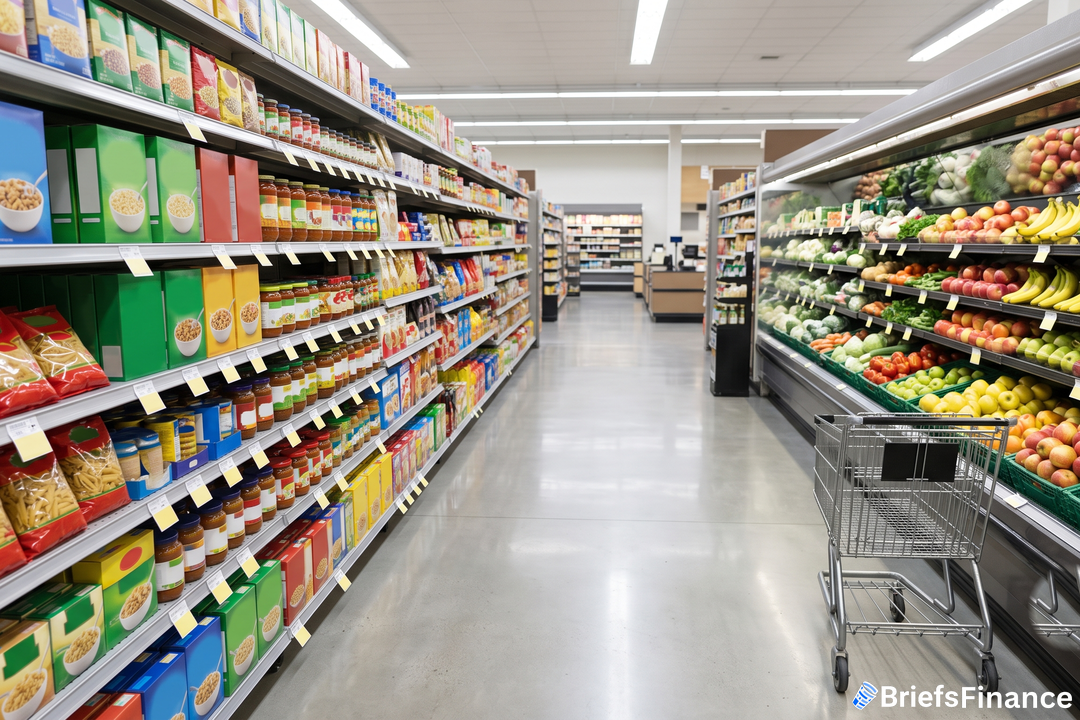
BNPL companies designed their product for a new jacket or a flight. Now it is paying for milk and rent.
A lot of that money went to covering the basics.
Another survey from the consumer group Protect Borrowers found 42 percent used BNPL for medical or dental care, and 39 percent used it for utility bills.
This shift matters for investors. When borrowing covers basic needs, the cash usually ran out somewhere else.
Why Credit Cards Weren't Enough
According to the New York Fed, total credit card debt hit $1.25 trillion by Q1 2025, a 5.9% increase from the year before.
For a lot of people, the plastic is maxed out.
Jim Triggs, who runs the non-profit credit counseling firm Money Management International, sees it every day. "Often they just, they've exhausted their credit cards, and buy now, pay later is their only option," he said.
Get the market news that matters in a five-minute read with Market Briefs, our free daily newsletter
Ashley Reed is one of those people. The paraeducator and part-time radiology assistant said she maxed out her credit cards covering caregiving costs for her mother.
A single ambulance ride cost about $2,500. "I wound up maxing out my credit cards to get hotel rooms and things like that," Reed said. Now she uses BNPL for groceries.
Rising gasoline costs due to the U.S. conflict with Iran are compounding the problem, driving more spending onto credit cards and BNPL.
The shift from discretionary purchases to essentials underscores deep financial strain among households. Many consumers have already exhausted savings and traditional credit lines, making BNPL a default option for survival rather than a convenience tool.
How Small Loans Can Turn Into Big Debt
BNPL seems harmless on the surface. You pay in four chunks with no interest - unless you miss a payment.
But more loans are carrying interest now. According to Protect Borrowers, installment loans that carry interest made up more than 37% of total BNPL lending in 2026, almost twice the proportion seen in 2021.
Late fees add up fast, too. Some BNPL providers charge late fees of $7 or $8 per missed installment, and when combined with interest and financing charges, the total can climb to 36%.
"That can make a small loan turn into something that looks more like a payday loan," Mike Pierce, executive director of Protect Borrowers, said. "It's the equivalent of an interest rate of 100% APR or more because you have these late fees that stack on top of each other."
"I can't get caught up, and then when I do pay it, something else comes up," Reed said. She described it as a "never-ending cycle of doom."
What It Means for Your Portfolio
Regulators and consumer advocates are watching these trends closely. They worry that easy access to BNPL for essentials creates hidden debt that acts like a high-interest trap.
The industry sees the same numbers and draws a different conclusion. Miranda Margowsky, who represents the Financial Technology Association, said, "Splitting the cost of a purchase into four installments with zero to low interest is smart money management, not financial risk." Phil Goldfeder, CEO of the American Fintech Council, wrote in a statement that "consumers are increasingly choosing the flexibility that pay-over-time options with clear, transparent terms provide."
The bottom line for your portfolio: BNPL is now a nearly $157 billion piece of the financial system. When it is used for groceries and rent, it stops looking like a smart budgeting tool and starts looking like high-cost debt.
If late payments keep rising, lenders may tighten access or raise fees. That ripples through retail, banking, and consumer finance stocks. It is worth watching how this story plays out - especially for the people using these loans just to get by.
Join Market Briefs, our free daily newsletter, for a quick daily rundown of the markets