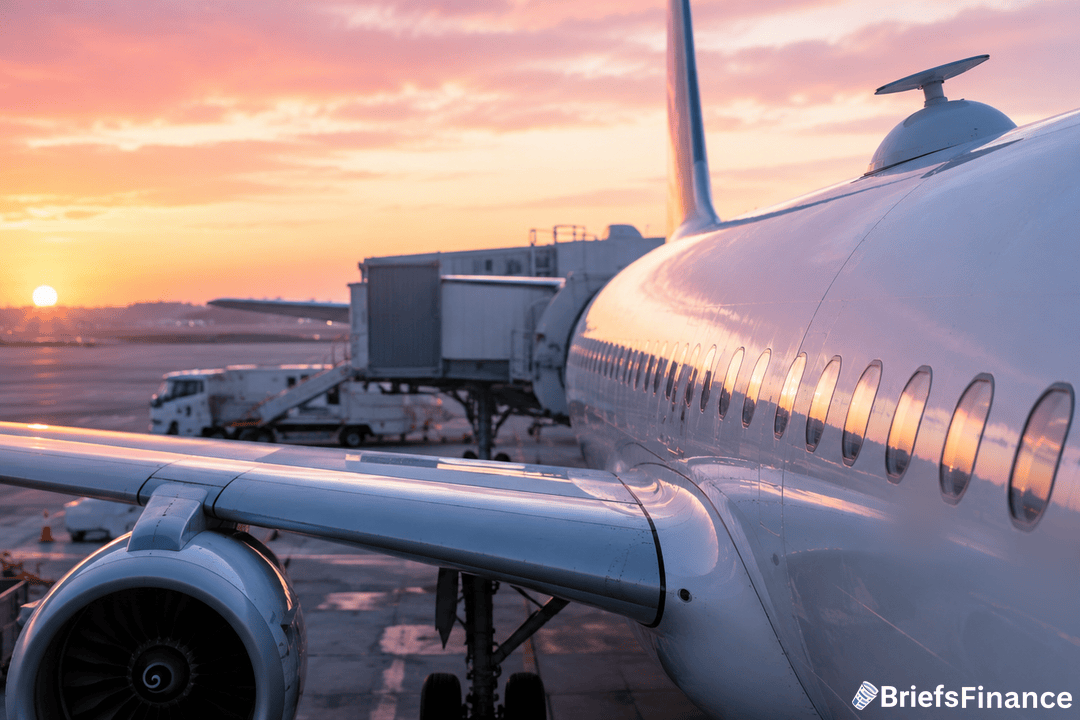
The New Upsell: Paying for Space
United Airlines plans to offer passengers the ability to pay extra for a row where the center seat remains vacant. A United spokesperson said, "A specific row on our Airbus A321XLR aircraft will feature an empty middle seat, complete with a shared tray table for those in the aisle and window positions." The seats are in the extra legroom section, an area that already commands a premium for additional legroom.
The booking option will become available later in 2026, and the additional fee has not yet been disclosed. United also indicated the possibility of extending this feature to other aircraft types beyond the initial long-range narrow-body models.
Get the market news that matters in a five-minute read with Market Briefs, our free daily newsletter
This type of offering is already prevalent in Europe, where it is marketed as a short-haul business-class product. European carriers such as Air France and British Airways offer similar "empty middle seat" options on short-haul flights, often with enhanced meal service and priority boarding. United's version is designed for longer trips, given the A321XLR's extended range.
United is not the only airline adding new fees. Delta Air Lines has similarly introduced stripped-down business-class and premium-economy tickets that exclude amenities previously standard. Specifically, Delta's lowest-priced long-haul business-class fares no longer grant entry to the Delta One lounge or allow advance seat selection.
This development typifies an enduring industry shift in which carriers dismantle all-inclusive pricing to boost ancillary income. Carriers have gradually separated items once included in base fares - such as checked bags, priority boarding, and seat assignments - and begun charging for them separately. The empty middle seat upsell is an extension of this logic, offering a premium comfort option that targets passengers willing to pay for extra personal space.
United's new Airbus A321XLR, designed for long, thin routes, provides a platform for such product experimentation. Meanwhile, the airline's planned "Relax Row" and Delta's simplified fare structures demonstrate how carriers are segmenting their cabins more finely to capture revenue from different traveler segments.
Ancillary fees have become a major profit center for U.S. airlines, often accounting for 10% or more of total revenue. United has been particularly aggressive in introducing new premium products, from premium economy to expanded business-class sections. The empty middle seat upsell is the latest attempt to monetize cabin space that would otherwise remain empty.
The A321XLR's long range opens new route possibilities, allowing United to test these concepts on flights to secondary European cities. Additionally, the airline's "Relax Row" concept, which offers extra space without full business-class pricing, underscores the growing segmentation of cabin inventory.
For years, carriers have been increasing the number of premium-class seats, expanding business-class sections that have shown stronger spending resilience. The complexity of these increasingly sophisticated seats has created supply bottlenecks, even delaying aircraft deliveries.
Join Market Briefs, our free daily newsletter, for a quick daily rundown of the markets