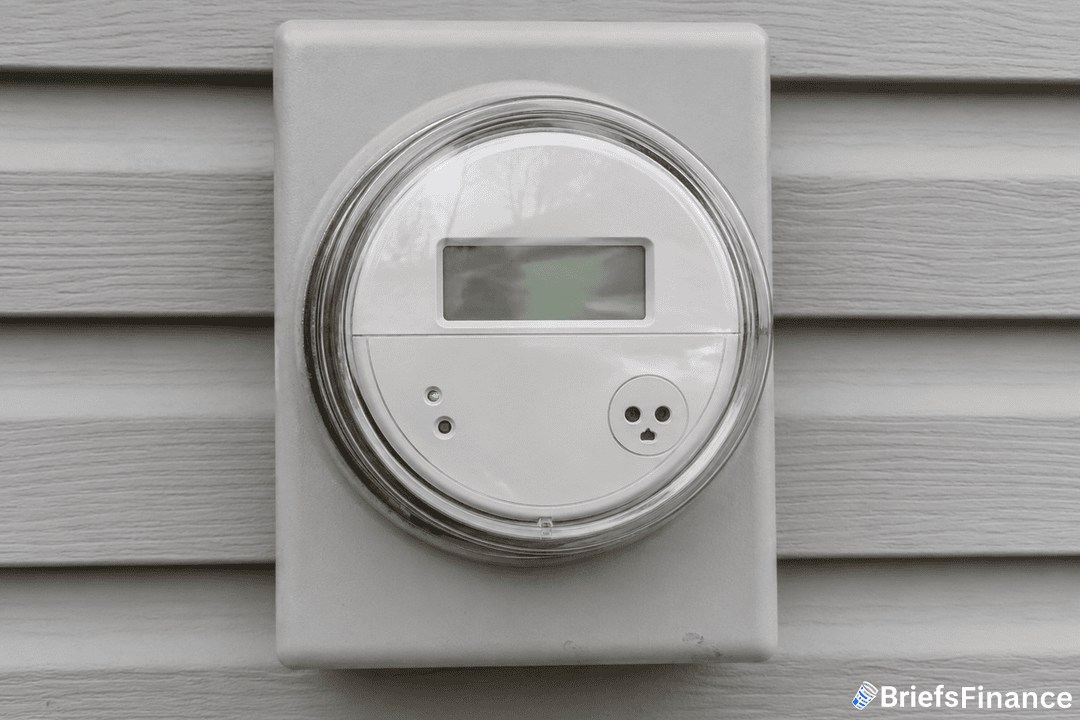
The cheapest way to find out who pays for the AI buildout is to open your electric bill.
In the PJM grid, the price for backup power jumped from $28.92 per megawatt-day in 2024/2025 to $329.17 per megawatt-day for 2026/2027. PJM serves 67 million people across 13 states.
It runs from Illinois to North Carolina. The jump is 833%.
It hit the FERC-approved price ceiling.
The December 2025 auction hit the cap again. The 2027/2028 year cleared at $333.44 per megawatt-day.
It still came up 6,623 megawatts short of the safety margin needed.
How A Capacity Auction Works
PJM doesn't just run the grid. It also runs an auction.
The auction pays power makers to be on standby three years out, when peak demand hits.
Think of it as an insurance market for power supply.
Those payments get baked into bills. So when prices spike, rates follow.
PJM's market monitor thinks data centers caused 63% of the price jump. That was in the 2025/2026 auction.
That's about $9.3 billion in added costs. The costs flow to buyers across the region.
Where Customers Are Feeling It
In Washington D.C., Pepco buyers saw bills rise about $21 a month. The hikes started in June 2025.
About half of that bump traces to the supply market spike, per the D.C. Office of Consumers' Counsel.
In Virginia, Dominion Energy buyers face a $11.24 monthly bump in 2026. Western Maryland homes are looking at $18 more a month.
Ohio homes are paying around $16 a month more.
A Carnegie Mellon study thinks the average U.S. home power bill could rise 8% by 2030. The cause is data center and crypto mining demand.
In high-demand markets like central and northern Virginia, the bump could top 25%.
Why The Story Matters For Investors
For investors, the rising bills are the cleanest sign that the AI buildout is real. The PJM auction prices are forward-looking.
They show what power will be worth three years from now. The cap keeps getting hit, which means demand isn't slowing.
That's why power names like Constellation Energy (CEG), Vistra (VST), and Talen Energy (TLN) have run hard. The AI story is the driver.
They're getting paid more for the supply they already have.
The grid runners don't make money from these price spikes. But the power makers behind them do.
Worth Noting
PJM agreed to a deal with state heads in early 2025. The group was led by Pennsylvania's Josh Shapiro.
The deal caps auction prices. That move stopped an even bigger spike.
Without the cap, the 2026/2027 auction would have cleared closer to $390 per megawatt-day, per models.
The cap saved buyers an about $21 billion. It didn't make the underlying problem go away.
The supply gap is still wide open.
What To Watch
The next PJM auction is set for June 2026. If it hits the cap again, the case for a long-term price spike grows.
That's the next read on how big the AI power story really is.