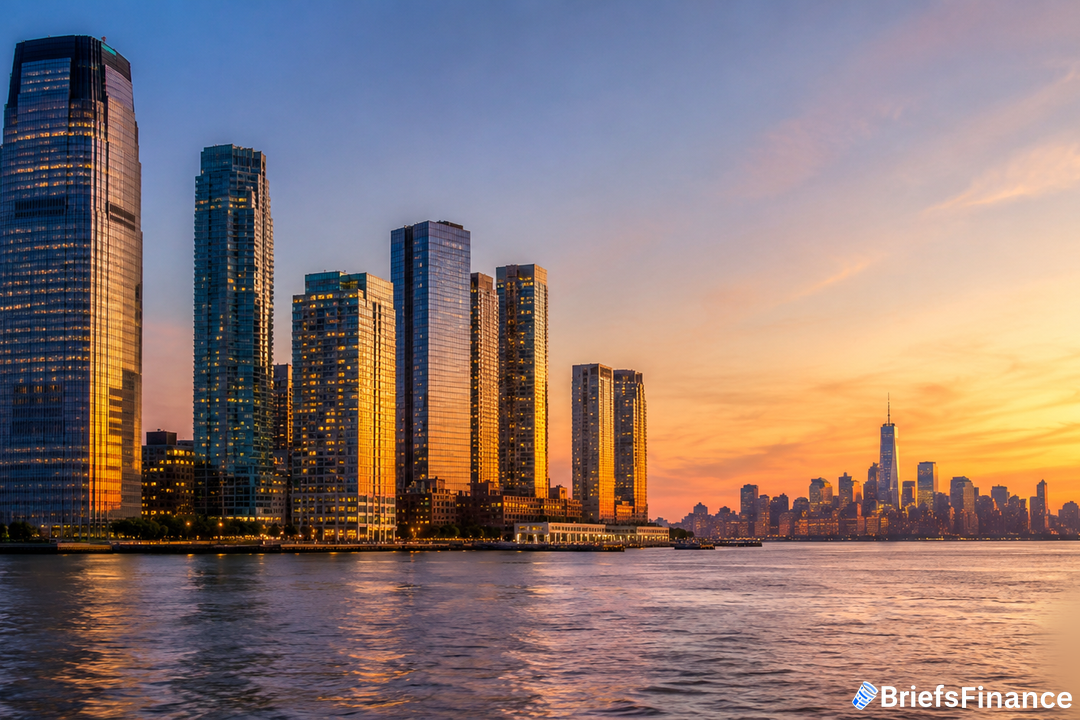
Jersey City boomed for decades. Its population grew 33% since 1990 to about 300,000 people. Luxury towers rose in Journal Square.
The money is gone. For years, the city spent more than it collected in taxes. The gap grew bigger.
To bridge the deficit, the city sold off municipal assets, accumulated more debt, and relied on federal pandemic aid. Now homeowners face a property tax increase to fill the gap.
The previous administration under former Mayor Steven Fulop issued more than $200 million in emergency debt. Additionally, $100 million from federal COVID-19 relief was spent on a one-time reduction in property taxes. That bought time but not a fix.
Meanwhile, the city gave generous tax breaks called abatements to developers. By 2010, the value of exempted property hit $2 billion. That cost the city $120 million in lost revenue every year. Those towers pay almost no city tax.
Marc Pfeiffer, associate director at Rutgers and head of the city's budget advisory committee, put it bluntly: "The effects we are seeing here are decisions that were driven by political forces that were not in the best long-term financial interest of the city. Now they're coming due."
Get the market news that matters in a five-minute read with Market Briefs, our free daily newsletter
The Tax Hike and the Pushback
Mayor Solomon first proposed a 20% property tax rise. After residents and council members complained, he dropped it to 15%. For a home assessed at $487,000, the extra cost is about $1,600 a year. The total tax bill would hit $13,012.
The city council unanimously rejected the plan. Councilman Rolando Lavarro said, "I don't think Jersey City residents can bear the weight of cleaning up this mess."
Solomon acknowledged the pain. "I've heard from residents across the city who are worried about their ability to stay in their homes through this and I wouldn't diminish it for a second. "It's going to be deeply painful for us as a city, but we'll be able to maintain our city services"."
Former Mayor Fulop, now running for governor, pushed back, saying, "Solomon served on the city council for eight years with full budget responsibilities." Fulop defended his approach: "You can either find alternative revenues, which may not be recurring, to plug the budget gap, or you can raise taxes every single year. My choice was not to raise taxes."
Solomon blames the abatements. "The abatement that those towers got was so generous that they basically pay zero city tax - and there is no affordable housing, no community benefits. Those are the types of sweetheart deals we have to now work out of and get through."
The city's credit rating fell. Moody's downgraded Jersey City to A2 in December, still investment grade. It had already cut the rating in 2023. Analyst Susanne Murray said, "Covid - I think that was the inflection point." The federal money helped cover deficits until it ran out.
A $120 million rescue package was provided by the state of New Jersey. That includes the largest loan the state has ever given a city. But it's a bandage, not a cure.
What to Watch
Mayor Solomon plans to release a full budget proposal later in July 2026 with the 15% tax hike inside it. The city council already said no. Pressure is building for alternatives such as draining reserves or borrowing again.
Join Market Briefs, our free daily newsletter, for a quick daily rundown of the markets