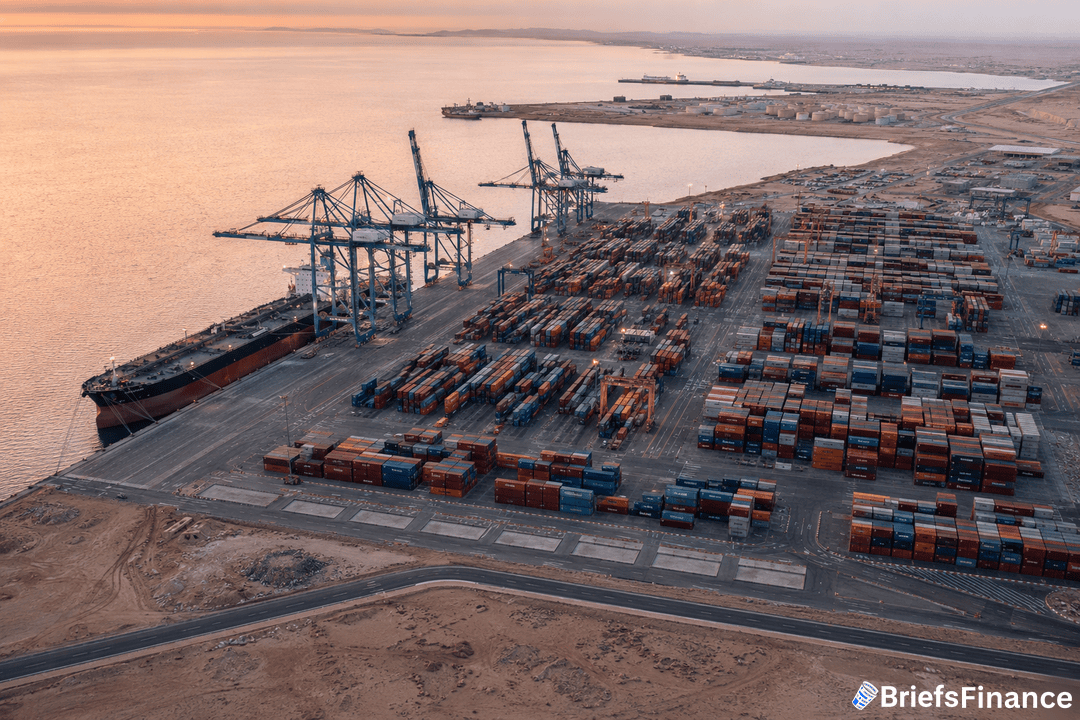
The Iran war shut down the Strait of Hormuz, and about a quarter of the world's oil ships through it. So Saudi Arabia did the only thing it could - it built a new way out, and the bill for that pivot just landed.
That bill came in larger than any quarterly deficit the kingdom has reported since 2018.
A Pivot Paid For With Debt
Q1 spending on new projects rose more than 50% from a year earlier, with military and transport budgets leading the way.
The money is going somewhere specific. Mawani, the Saudi Ports Authority, just opened a 1 million square meter truck staging area at Jeddah Islamic Port that can move 40,000 trucks a day - and that port sits on the Red Sea, far from Hormuz.
The government paid for most of the spending by borrowing from local banks rather than tapping its foreign reserves, which means total debt rose by the most in years. The National Debt Management Office said any further raises this year would also stick to local markets and private deals.
The kingdom raised most of its 2026 financing needs before the Iran war started, so the Q1 jump in borrowing was about funding the war response rather than rebuilding a depleted cash pile.
Oil Is Still Funding The Move
Here's the part the deficit number hides: Saudi oil revenues are actually up.
Goldman Sachs estimates oil sales rose about 10% as global crude prices climbed on the Hormuz closure. Tim Callen, the former IMF mission chief to Saudi Arabia, told Asharq Business he expects that revenue boost to land harder in the second quarter, since payments lag exports.
So the deficit isn't a sign the Saudis are running out of cash. It's a sign they're choosing to spend faster than oil money is coming in, partly because the Public Investment Fund is also front-loading projects ahead of the Hajj pilgrimage in late May.
Goldman's read also matches what oil traders have been pricing all spring, with crude prices holding above pre-war levels even as Saudi exports kept moving through alternate ports.
Worth Noting
The kingdom is essentially betting that turning Jeddah into the Gulf's new shipping hub pays off long after the war ends. The catch: if Hormuz reopens cleanly and trade flows back, Saudi Arabia is left holding extra port capacity and a bigger debt load.
If it doesn't, every other Gulf country has a reason to keep shipping through Saudi infrastructure for years - and that's the kind of bet that doesn't show up in a one-quarter deficit number.
The next reads to watch are Q2 oil revenue, where the price lag should land in full, and any further bond issuance from the National Debt Management Office. Both will tell investors whether the kingdom plans to keep spending at this pace or start to pull back.